

I have watched this pattern unfold more times than I can count.
A woman moves through pregnancy with a body that feels more stable than it has in years. Symptoms that had been quietly persistent seem to quiet further. Joints that ached become more manageable. The immune system, in its profound effort to sustain the pregnancy, settles into something that resembles calm.
And then she gives birth.
Within weeks or months, something shifts. Fatigue that does not resolve with sleep. Joint pain that was not present before. Thyroid irregularities. Skin reactivity. Digestive changes that feel new but also, somehow, chronic. A body that no longer responds the way it once did.
She brings these symptoms to her providers. She is told it is hormones. Sleep deprivation. The demands of new motherhood. She is reassured that this is normal, or that the tests are unremarkable, or that she should give it time.
Years later she receives a diagnosis.
Autoimmune disease.
And by then, postpartum is no longer part of the clinical picture. It has been absorbed into the background, treated as irrelevant, disconnected from the condition that is now being managed. The disease is understood as something that appeared. Not something that developed. Not something whose earliest conditions were present years before a name was assigned to it.
Over more than fifteen years of studying postpartum physiology, working with mothers, and training providers across disciplines, I have come to understand this pattern not as coincidence but as consequence. The connection between the postpartum window and the development of autoimmune disease is one of the most significant and most overlooked relationships in women's long-term health. It is not visible in the six-week visit. It rarely surfaces in standard perinatal care. And it is almost never part of the training that providers receive.
That gap has a cost. And it is being paid by women who were never told what their bodies were navigating.
This article is original research synthesis by
Maranda Bower, founder of Postpartum University®.
You’re welcome to share excerpts or discuss these ideas publicly. When doing so, please credit the original work to Maranda Bower / Postpartum University® and link back to this article when possible.
To cite this article:
Bower M. Postpartum and Autoimmune Disease: The Missing Link in Women’s Health. 2026. https://postpartumu.com/research/postpartum-and-autoimmune-disease/
----------------------------------------------------------------------------------------------
Looking for more published research? Access Maranda Bower’s external peer-reviewed work, including "Postpartum Digestion Is Not Normal Digestion: Why Nutrition Must Change After Birth," hosted by the Association for Prenatal and Perinatal Psychology and Health.
Citation:
Bower, M. (2026). Postpartum Digestion Is Not Normal Digestion: Why Nutrition Must Change After Birth. Journal of Prenatal and Perinatal Psychology and Health, 40(1), 101–111.
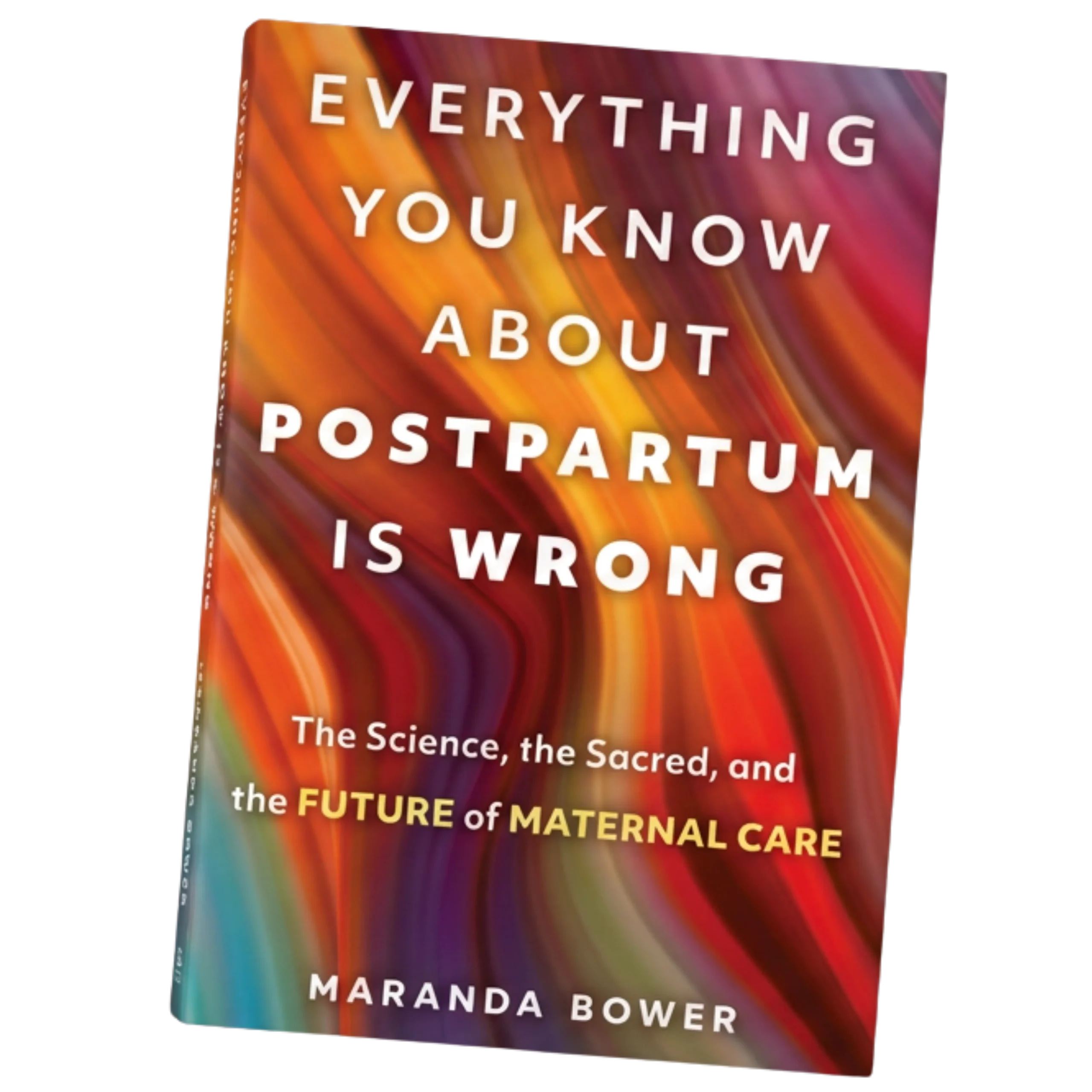
The New Book from Postpartum University®
Everything You Know About Postpartum Is Wrong
Now available for pre-order! For every provider who's felt the ache of offering more in a system built for less. And for every mother who knew something was wrong long before anyone believed her.
Pre-Order on AmazonPostpartum and Autoimmune Disease: What We Are Not Accounting For
Autoimmune disease is not a rare condition in women. It is, by current measures, the fastest-growing category of chronic illness in the female population, with women representing nearly 80% of those affected across most autoimmune diagnoses.
What is less clearly defined, and almost entirely absent from postpartum discourse, is when these conditions begin.
Emerging evidence and observational data consistently identify the first year postpartum as a period of significantly elevated vulnerability for the onset or reactivation of autoimmune conditions. The incidence of autoimmune disease peaks postpartum before rising again near midlife — a pattern documented across multiple population-based studies and suggestive of a specific immunological window rather than random onset across the lifespan. Thyroid disorders provide the clearest and most thoroughly documented example: postpartum thyroiditis affects an estimated 5–22% of women globally. Beyond thyroid disease, elevated postpartum risk has been documented for rheumatoid arthritis, systemic autoimmune rheumatic diseases, Graves' disease, and multiple sclerosis relapse, with risk ratios for some conditions remaining elevated for up to five years following birth.
These are not isolated findings.
And yet the average time from symptom onset to formal diagnosis for autoimmune conditions ranges from four or more years depending on the condition. Which means the postpartum period, as a physiological context for onset, is almost never visible in the clinical picture by the time a diagnosis is made. The window has closed. The symptoms have been reattributed. The opportunity to understand the trajectory from the beginning has passed.
This is not a diagnostic failure, though it often becomes one. It is a conceptual failure. We have not established postpartum as a relevant context for autoimmune development because we have not trained providers to look there. And we have not trained providers to look there because postpartum has never been studied with the depth, timeline, or systems-level attention that this connection requires.
What follows is an attempt to make that connection legible.
How Pregnancy Changes the Immune System
To understand why postpartum represents a meaningful window for autoimmune disease, it is necessary to first understand what pregnancy requires of the maternal immune system, and what the transition out of pregnancy demands.
Pregnancy poses a fundamental immunological challenge. The developing fetus carries paternal genetic material that the maternal immune system would, under ordinary circumstances, recognize as foreign and mount a response against. That this does not happen — that the vast majority of pregnancies proceed without immunological rejection — represents one of the most remarkable feats of coordinated immune regulation in human biology.
The mechanisms by which this is accomplished involve a broad shift in immune function. Pro-inflammatory pathways are selectively downregulated. Immune tolerance increases. Regulatory T cells, which suppress immune activity against the fetus, are expanded. Key hormones — estrogen, progesterone, cortisol — contribute to this anti-inflammatory environment, and do so across the duration of the pregnancy.
The relevance of this shift is most visible in women who already carry an autoimmune diagnosis. Women with rheumatoid arthritis experience significant symptom reduction during pregnancy in approximately 50–75% of cases. Relapse rates in multiple sclerosis decline during pregnancy, particularly in the third trimester. Lupus, while more variable, often stabilizes under the immune modulation that pregnancy provides. For many of these women, pregnancy represents the most symptom-free period they have known in years.
This is not coincidental. It is biological.
But that biological state does not persist after birth.
After delivery, the immune modulation that sustained the pregnancy begins to reverse. Estrogen and progesterone drop sharply. The regulatory environment that suppressed immune activity relaxes. Inflammatory signaling — deliberately downregulated during pregnancy — reactivates. Immune surveillance increases. The body transitions from a state of elevated tolerance back toward a state of defense.
This transition is necessary and expected. The body must repair tissue, clear debris, restore immune competence, and initiate the physiological processes of recovery. Inflammation is the primary mechanism by which all of this is coordinated.
But inflammation is only protective when it resolves.
The postpartum period, across multiple physiological dimensions, contains many of the conditions that impair resolution.
Postpartum Inflammation: When a Normal Response Doesn’t Resolve
Birth is not a neutral biological event. It involves tissue injury, significant blood loss, immune activation, and the initiation of repair processes that extend well beyond the immediate postpartum period. These are coordinated through inflammation — acute inflammation, appropriate in its scale and design, intended to rise with the demands of birth and resolve as healing progresses.
In a physiologically supported postpartum, that resolution occurs. Inflammatory signaling rises, completes its function, and subsides. The immune system recalibrates. The body returns to a state of regulation.
When the conditions required for resolution are absent, the inflammatory response does not complete. It persists — reduced in intensity but sustained over time. And chronic, unresolved inflammation is among the most well-established drivers of autoimmune disease initiation and progression (See the full research on Inflammation in Postpartum here).
The postpartum body faces an unusual convergence of factors that compromise resolution.
Nutritional depletion enters the picture first and most consistently. Pregnancy and lactation represent the most nutritionally demanding period of a woman's life. Iron, zinc, selenium, omega-3 fatty acids, iodine, B vitamins, vitamin D, and multiple other micronutrients are transferred to support fetal development, blood volume expansion, and milk production. Most women enter postpartum recovery already operating at a deficit. Nutrient availability is not a peripheral concern in immune regulation — it is central to it. Zinc and selenium are directly involved in the function of regulatory pathways that resolve inflammatory signaling. Omega-3 fatty acids contribute to the production of pro-resolving mediators that bring inflammatory cascades to completion. When these resources are insufficient, the immune system loses precision. Inflammatory responses are harder to downregulate. Cytokine signaling remains elevated beyond its functional window.
Digestive compromise compounds the depletion. Postpartum digestion does not function at full capacity. Reduced gastric acid secretion, altered enzyme activity, slowed intestinal motility, and neurological constraint reduce the body's ability to absorb nutrients even when intake appears adequate, The gut microbiome — which houses a substantial portion of the immune system and plays a significant role in immune regulation — is disrupted by birth, by antibiotics commonly administered during labor, by blood loss, and by stress. When intestinal permeability increases, as it does in states of dysbiosis and acute physiological stress, immune reactivity to luminal antigens rises. The resulting low-grade systemic inflammatory signal may persist and interact with an immune system already navigating recalibration.
Neurological dysregulation amplifies both. Sleep fragmentation, constant sensory demand, and the sustained vigilance required to care for a newborn maintain the nervous system in a state of heightened sympathetic activation. This state has direct immune consequences: sympathetic tone influences cytokine production, alters immune cell trafficking, and impairs the parasympathetic conditions under which inflammatory resolution preferentially occurs. A nervous system that cannot downregulate sustains an immune system that cannot either.
These systems are not independent. Nutritional depletion limits immune regulation. Impaired digestion limits nutritional repletion. Nervous system dysregulation amplifies inflammatory signaling. Persistent inflammation further depletes nutritional reserves. The loop does not close.
This is the physiological architecture of unsupported modern postpartum. Not a series of unrelated symptoms to be managed individually. A self-reinforcing system in which the conditions required for immune resolution are systematically absent.
Why Modern Postpartum Disrupts Inflammatory Recovery
Here is what must be stated precisely, because it is frequently misunderstood:
Postpartum physiology does not cause autoimmune disease.
The immune shifts, the inflammatory activation, and the hormonal transitions are not design failures. They are coordinated biological responses to real physiological demands. In a postpartum recovery that is adequately supported nutritionally, structurally, and neurologically, these processes complete. Inflammation resolves. Immune signaling stabilizes. The body returns to regulation.
What this evidence suggests is that modern postpartum — defined by early return to full activity, nutritional insufficiency, fragmented sleep without structural support, absence of extended recovery time, and the near-total removal of the sustained postpartum care practices that were normative across human history — creates the conditions under which the natural immune transition of postpartum cannot complete.
Across virtually every traditional culture and historical period, the postpartum window was treated as a protected recovery phase requiring specific, structured support: extended rest, warm and easily digestible foods, reduction of external demand, and sustained community presence. These practices were not incidental. When examined physiologically, they map directly onto what the postpartum body requires to resolve inflammation, restore nutrient stores, and allow immune recalibration to complete. They were refined over generations because, in populations where they were consistently practiced, postpartum breakdown — including the longer-term immune consequences we are now documenting — was significantly less common.
The biology has not changed.
The environment in which that biology is expected to recover has.
This matters clinically, because it reframes the question. The question is no longer whether postpartum triggers autoimmune disease. The question is what conditions, present or absent during this specific window, determine whether the inflammatory transition of postpartum resolves or persists — and what the downstream consequences of that persistence are.
Microchimerism and the Postpartum Immune System
There is an additional layer to the postpartum immune picture that deserves careful attention, in part because it has not yet been resolved by the research, and in part because the implications are significant in both directions.
During pregnancy, fetal cells cross the placenta and enter the maternal bloodstream. They are not simply passing visitors. These cells integrate into maternal tissues — detected in the thyroid, liver, brain, skin, heart, and bone marrow — and persist there for decades. Science is now able to determine from a blood sample not only whether a woman has been pregnant, but how many pregnancies she has carried and the biological sex of each child. This phenomenon is called fetal-maternal microchimerism.
The immunological implications are genuinely complex.
From one direction, research suggests that in conditions of low inflammation, adequate nutrition, and immune regulation — that is, in a physiologically supported maternal environment — fetal microchimeric cells may contribute to tissue repair and regeneration. They carry regenerative properties. They may modulate immune responses in ways that protect rather than dysregulate. This has led some researchers to describe microchimerism as a biological gift from child to mother: a healing mechanism embedded in pregnancy itself.
From the other direction, when the maternal environment is characterized by persistent inflammation, nutritional depletion, and immune dysregulation — precisely the conditions that modern unsupported postpartum often produces — the immune system may begin to recognize microchimeric cells, which carry foreign genetic material, as targets. The response against tissues that contain these cells may contribute to autoimmune activation. This has been proposed as a mechanism in the postpartum onset of thyroid autoimmunity, among other conditions.
The determining variable, across both interpretations, is the environment.
The same cells may function as a mechanism of healing in one physiological context and as a contributor to immune dysregulation in another. The research on this remains an active area of investigation, and a fuller treatment of microchimerism will follow in a subsequent article. But the core implication for postpartum care is clear: the postpartum body contains biological elements — present nowhere else across a woman's lifespan — that interact with immune function in ways whose outcome depends substantially on the conditions surrounding them.
This is not a peripheral detail. It is part of the argument for why this window matters as much as it does.
Two Postpartum Pathways to Autoimmune Disease
The relationship between postpartum physiology and autoimmune disease does not present uniformly. It tends to emerge along two distinct pathways, each of which is under-recognized in current practice.
The first involves women with a pre-existing autoimmune diagnosis. For many, as described earlier, pregnancy provided a period of relative remission. After birth, as immune modulation reverses and inflammatory activity increases, symptoms return — often with greater intensity than was present before pregnancy. This postpartum flare pattern has been documented in rheumatoid arthritis, multiple sclerosis, thyroid conditions, inflammatory bowel disease, and others. It is expected physiologically and not surprising. What is surprising is how rarely it is anticipated and supported in advance.
The second pathway involves women with no prior diagnosis. For these women, the postpartum period is not a flare but a first appearance. Symptoms emerge — fatigue, musculoskeletal pain, digestive changes, skin reactivity, neurological symptoms — that do not yet meet diagnostic criteria for any specific condition. They are non-specific. They are intermittent. They are attributed to the expected demands of new motherhood, and they are not investigated further.
Over months and years, those early signals consolidate. Patterns become more apparent. Markers that were initially borderline cross a threshold. A diagnosis is eventually made.
Both pathways share a common feature: they emerge within the same immunological window. A period defined by immune recalibration, elevated inflammatory activity, potential physical and emotional trauma from the birth itself, and variable capacity for physiological resolution. And in both cases, the postpartum context is almost never part of how the disease is subsequently understood or treated.
This matters clinically not only because it represents a missed opportunity for early recognition, but because the trajectory of autoimmune disease — including its severity, its progression, and its responsiveness to support — may look different when the conditions that initiated it are understood and addressed, versus when it is first encountered years later with no reference to where it began.
Postpartum Inflammation Means for Long-Term Health
If the postpartum period is a meaningful window in the development and trajectory of autoimmune disease — and the convergence of evidence, basic physiology, and observational data suggests that it is — several things follow for practice.
The early postpartum symptoms that currently go unrecognized carry more weight than standard care frameworks assign them. Fatigue that persists beyond the first months. Joint pain without prior history. Thyroid irregularities. Immune reactivity that is new. These are not necessarily attributable to normal postpartum experience. They may be early signals of an inflammatory trajectory that is not resolving — signals that, recognized early and responded to appropriately, might represent an opportunity to support the body before a pattern becomes fixed.
There is a phase in the development of autoimmune disease that exists before diagnosis. A phase where physiology is active, symptoms are present, and the condition has not yet consolidated into something formally named. Most care frameworks do not address this phase because it does not produce a diagnostic code. But it exists, and it is more accessible to influence than the condition is once it has been established for years.
Recognizing this phase requires understanding postpartum physiology at a systems level: how nutritional depletion intersects with immune regulation, how digestive compromise limits repletion, how nervous system dysregulation amplifies inflammation, and how these systems interact over the multi-month trajectory of postpartum recovery. It requires knowing what patterns to look for, and what questions to ask, in the absence of clear diagnostic markers.
This is not knowledge that standard perinatal training provides. It requires a framework built specifically for postpartum physiology — for its complexity, its duration, and the multi-system interdependencies that determine whether recovery completes or whether the body remains caught in a state of unresolved physiological strain.
The Postpartum Nutrition Certification program exists because that framework is what is missing. Not surface-level symptom management, but deep understanding of the physiological architecture of postpartum — including its immune dimension — and the necessary tools to recognize and respond to what is happening within it.
Rethinking the Timeline of Autoimmune Disease
Autoimmune disease, in the way it is currently treated, appears to appear.
A diagnosis is given. A treatment protocol is initiated. The condition is managed from that point forward, with reference to its current presentation and with little examination of what preceded it.
But for a significant number of women, the process did not begin at diagnosis. It began in a period that preceded formal recognition by years. In the early postpartum months when symptoms were present but uninterpreted. When the body was signaling a trajectory that, had it been seen clearly, might have been met with something other than reassurance or benign dismissal.
The question that this evidence asks is not whether postpartum is relevant to autoimmune disease.
The question is how many times it has been part of the story, and how rarely we have asked.
This article is original research synthesis by
Maranda Bower, founder of Postpartum University®.
You’re welcome to share excerpts or discuss these ideas publicly. When doing so, please credit the original work to Maranda Bower / Postpartum University® and link back to this article when possible.
To cite this article:
Bower M. Postpartum and Autoimmune Disease: The Missing Link in Women’s Health. 2026. https://postpartumu.com/research/postpartum-and-autoimmune-disease/
----------------------------------------------------------------------------------------------
Looking for more published research? Access Maranda Bower’s external peer-reviewed work, including "Postpartum Digestion Is Not Normal Digestion: Why Nutrition Must Change After Birth," hosted by the Association for Prenatal and Perinatal Psychology and Health.
Citation:
Bower, M. (2026). Postpartum Digestion Is Not Normal Digestion: Why Nutrition Must Change After Birth. Journal of Prenatal and Perinatal Psychology and Health, 40(1), 101–111.
References
- Ando, T., Imaizumi, M., Graves, P., Unger, P., & Davies, T. F. (2002). Intrathyroidal fetal microchimerism in Graves' disease. Journal of Clinical Endocrinology & Metabolism, 87(7), 3315–3320. https://doi.org/10.1210/jc.87.7.3315
- Barrett, J. H., Brennan, P., Fiddler, M., & Silman, A. (1999). Does rheumatoid arthritis remit during pregnancy and relapse postpartum? Arthritis & Rheumatism, 42(6), 1219–1227. https://doi.org/10.1002/1529-0131(199906)42:6<1219::AID-ANR19>3.0.CO;2-G
- Bianchi, D., Salomon, R., Cha, D., Johnson, K., & Khosrotehrani, K. (2004). Transfer of Fetal Cells With Multilineage Potential to Maternal Tissue. JAMA, 292(1), 75–80.
- Confavreux, C., Hutchinson, M., Hours, M. M., Cortinovis-Tourniaire, P., & Moreau, T. (1998). Rate of pregnancy-related relapse in multiple sclerosis. New England Journal of Medicine, 339(5), 285–291. https://doi.org/10.1056/NEJM199807303390501
- Miech RP. The role of fetal microchimerism in autoimmune disease. Int J Clin Exp Med. 2010 Jun 12;3(2):164-8. PMID: 20607042; PMCID: PMC2894651.
- Nelson, J. L. (2012). The otherness of self: Microchimerism in health and disease. Trends in Immunology, 33(8), 421–427. https://doi.org/10.1016/j.it.2012.03.002
- Østensen, M. (1999). New insights into sexual functioning and fertility in rheumatic diseases. Best Practice & Research Clinical Rheumatology, 13(2), 295–316. https://doi.org/10.1053/berh.1999.0022
- Srivatsa, B., Srivatsa, S., Johnson, K. L., Samura, O., Lee, S. L., & Bianchi, D. W. (2001). Microchimerism of presumed fetal origin in thyroid specimens from women: A case-control study. The Lancet, 358(9298), 2034–2038. https://doi.org/10.1016/S0140-6736(01)07099-4
- Steinman, L. (2004). Elaborate interactions between the immune and nervous systems. Nature Immunology, 5(6), 575–581. https://doi.org/10.1038/ni1078
- Trowsdale, J., & Betz, A. G. (2006). Mother's little helpers: Mechanisms of maternal-fetal tolerance. Nature Immunology, 7(3), 241–246. https://doi.org/10.1038/ni1317
- Wegmann, T. G., Lin, H., Guilbert, L., & Mosmann, T. R. (1993). Bidirectional cytokine interactions in the maternal-fetal relationship: Is successful pregnancy a Th2 phenomenon? Immunology Today, 14(7), 353–356. https://doi.org/10.1016/0167-5699(93)90235-D
- Scime, N. V., Grandi, S. M., Ray, J. G., Dennis, C. L., De Vera, M. A., Banack, H. R., Vigod, S. N., Boblitz, A., & Brown, H. K. (2024). Pregnancy complications and new-onset maternal autoimmune disease. International Journal of Epidemiology, 53(5), dyae115. https://doi.org/10.1093/ije/dyae115
- Amino N, Tada H, Hidaka Y. Postpartum autoimmune thyroid syndrome: a model of aggravation of autoimmune disease. Thyroid. 1999 Jul;9(7):705-13. doi: 10.1089/thy.1999.9.705. PMID: 10447018.
- Whitacre, C. C. (2001). Sex differences in autoimmune disease. Nature Immunology, 2(9), 777–780. https://doi.org/10.1038/ni0901-777
- Hayter, S. M., & Cook, M. C. (2012). Updated assessment of the prevalence, spectrum and case definition of autoimmune disease. Autoimmunity Reviews, 11(10), 754–765.
- Bower M. Inflammation in postpartum: the root cause behind depression, fatigue, and pain. Postpartum University. (2026). https://postpartumu.com/research/inflammation-in-postpartum/
- Bower, M. (2026). Postpartum digestion is not normal digestion: Why nutrition must change after birth. Journal of Prenatal and Perinatal Psychology and Health, 40(1), 101–111. https://doi.org/10.62858/apph260504
- Dennis, C.-L., Fung, K., Grigoriadis, S., Robinson, G. E., Romans, S., & Ross, L. Protective Practices: A Review of the Cultural Traditions of Childbearing (2004). Journal of Obstetric, Gynecologic & Neonatal Nursing, 33(4), 487–497.