

Postpartum nutrition is often discussed as if the primary challenge were food quality. Eat whole foods. Prioritize nutrient density. Avoid ultra-processed ingredients. Increase protein. Balance blood sugar. Support hormones.
These recommendations are familiar, widely accepted and on their own, insufficient.
I write this not only as a researcher, but as a mother of four. And as someone who has supported hundreds of women through pregnancy, birth, and the long arc of postpartum recovery. Across different bodies, different births, and different nutritional philosophies, I began to notice the same pattern: women were doing what they had been told was “right,” yet their bodies were not responding as expected. The problem was not effort. It was not compliance. And it was not a lack of care.
The missing question was not what postpartum women were eating.
I could see that clearly.
What stood out instead was how closely what they were eating aligned (or conflicted) with their ability to absorb it. Across hundreds of women over the last 15 years of work, patterns emerged. Foods that were theoretically nourishing often left them depleted. Foods that were simpler, warmer, slower-cooked, and easier to digest consistently supported recovery even when they defied modern nutritional trends.
What surprised me was how precisely these observations echoed postpartum traditions that long predate modern nutrition science. Across cultures, postpartum nourishment had already accounted for digestive capacity. Different languages described it differently—warmth, rebuilding, digestive fire—but the logic was the same. The postpartum body required nourishment that cost less to receive.
This work began as an attempt to understand that convergence. To translate what tradition had preserved into physiological terms that modern science could recognize and study.
From there, the question sharpened.
The missing question was not what postpartum women should eat.
The missing question was whether their bodies could digest and absorb what they were eating in the first place.
This distinction matters more than most conversations allow. Because nourishment is not defined by the nutrient content of food alone, but by what the body can actually break down, transport, and utilize. Food that cannot be digested is not nourishing no matter how “clean,” dense, or well-intentioned it appears on paper.
Postpartum nutrition fails when it assumes that digestion is intact.
It is not.
After birth, the maternal body enters a distinct physiological state of tissue repair, blood loss recovery, immune recalibration, neurological reorganization, hormonal shifts, and lactation. These processes are energetically expensive. To meet them, the body reallocates resources. Digestion, which is also energy-intensive, is often deprioritized.
This is not pathology. It is physiology.
The New Book from Postpartum University®
Everything You Know About Postpartum Is Wrong
Now available for pre-order! For every provider who's felt the ache of offering more in a system built for less. And for every mother who knew something was wrong long before anyone believed her.
Pre-Order on AmazonAnd yet, most nutritional frameworks applied to postpartum assume a digestive capacity that closely resembles a non-postpartum adult. They emphasize nutrient density without questioning digestive load. They promote foods that are “healthy”, while overlooking whether those foods are accessible to a body whose absorptive systems are temporarily compromised.
The result is a profound disconnect.
Women are told they are nourishing themselves yet continue to experience fatigue, bloating, anxiety, nutrient deficiency symptoms, and stalled recovery. Symptoms persist despite “doing everything right.” And the conclusion, too often, is that the issue must lie elsewhere.
When digestion is impaired, nutrition cannot fulfill its function, and symptoms that appear to arise elsewhere in the body are often downstream expressions of depletion (see iron deficiency and it’s connection to mood disorders as a simple example).
This article makes a precise argument: postpartum nutrition cannot be evaluated without first understanding postpartum digestion. Until digestive and absorptive capacity are accounted for, debates about food quality, restriction, supplementation, or dietary ideology are premature.
Nutrient density is not the same as nourishment.
And nourishment is not achieved through intake alone.
To understand why postpartum nutrition must change after birth, we must begin where nutrition actually begins: not on the plate, but in the gut.
Note: In a previous article, I examined the structural limitations of postpartum science. Here, I explore what happens when those gaps leave something as fundamental as postpartum digestion largely unaddressed.
Also, to understand why certain dietary trends fail to support a mother's true cellular recovery, read another article I wrote about Plant-Based Diets and Female Physiology: What the Research Shows About Postpartum Recovery and Women’s Health.
This article is original research synthesis by
Maranda Bower, founder of Postpartum University®.
You’re welcome to share excerpts or discuss these ideas publicly. When doing so, please credit the original work to Maranda Bower / Postpartum University® and link back to this article when possible.To cite this article:
Bower M. Postpartum digestion is not normal digestion: why nutrition must change after birth. Postpartum University. Published 2025.
https://postpartumu.com/research/postpartum-digestion-is-not-normal-digestion-why-nutrition-must-change-after-birth/
----------------------------------------------------------------------------------------------
Looking for more published research? Access Maranda Bower’s external peer-reviewed work, including "Postpartum Digestion Is Not Normal Digestion: Why Nutrition Must Change After Birth," hosted by the Association for Prenatal and Perinatal Psychology and Health.Citation:
Bower, M. (2026). Postpartum Digestion Is Not Normal Digestion: Why Nutrition Must Change After Birth. Journal of Prenatal and Perinatal Psychology and Health, 40(1), 101–111.
Postpartum Is a Digestive Transition State, Not a Return to Baseline
Postpartum is commonly described as a period of recovery, a return to normal after pregnancy ends. This framing is clinically convenient and biologically inaccurate.
Birth does not mark a return to baseline. It marks a transition between physiological states.
During pregnancy, the maternal body undergoes extensive structural, systemic, and hormonal changes. Blood volume expands. Organs shift. The endocrine system operates under a pregnancy-dominant hormonal environment. The immune system is recalibrated to accept baby in womb. Digestion adapts to increased nutritional needs and altered metabolic demands.
Birth does not instantly reverse these changes. Instead (as cited above), the body enters a new phase of adaptation that prioritizes survival, repair, and milk production. This phase is metabolically demanding and neurologically intense. It requires substantial internal reorganization, not simply rest.
Digestion sits at the center of this transition.
The postpartum body must simultaneously:
- repair tissue damaged during pregnancy and birth
- replace blood volume and cellular components
- recalibrate hormonal signaling
- regulate immune activity
- support neurological adaptation and sleep disruption
- produce breast milk around the clock
Each of these processes carries a significant energetic cost. To meet that cost, the body redistributes resources. Systems essential for immediate survival and infant care are prioritized. Others, including digestion, often operate with reduced capacity.
This is not dysfunction. It’s triage.
In physiology, triage refers to the body’s capacity to allocate limited energy toward what is most urgent. In postpartum, urgency is not defined by digestion efficiency. It is defined by tissue repair, lactation, and hormonal recalibration. As a result, digestive processes may slow, weaken, or become less efficient. Not because something is “wrong,” but because the body is managing competing demands.
This transitional state is temporary, but it is real.
Yet most nutritional guidance applied to postpartum assumes a digestive system functioning at full adult capacity. It treats the postpartum body as if pregnancy has simply ended and normal digestion has resumed. That assumption is rarely examined, despite the clear physiological context suggesting otherwise.
When postpartum is understood as a digestive transition state, several common observations begin to make sense: increased bloating, slowed digestion, food aversions, heightened sensitivity to certain foods, and difficulty tolerating meals that were previously well tolerated. These are not random symptoms. Nor are they simply “hormonal”. They are predictable expressions of a body reallocating resources during a period of intense internal demand.
Until postpartum is recognized as a distinct digestive phase (not a nutritional continuation of pregnancy or a return to pre-pregnancy norms) any discussion of postpartum nutrition remains incomplete.
To understand how nutrition must adapt after birth, we must first examine what changes within the digestive system itself.
Digestion After Birth Is Governed by the Nervous System
Digestion is not a mechanical process. It is a neurological one.
Long before food is broken down by enzymes or absorbed across the intestinal wall, digestion is initiated, regulated, and sustained by the nervous system. This regulation occurs through two closely integrated systems: the autonomic nervous system, which coordinates global physiological state, and the enteric nervous system, which governs the gastrointestinal tract itself.
The enteric nervous system is sometimes referred to as the “second brain,” not metaphorically, but anatomically. It contains hundreds of millions of neurons embedded within the lining of the gastrointestinal tract, capable of autonomous function while remaining in constant communication with the central nervous system. Together, these systems determine whether digestion proceeds efficiently, incompletely, or not at all.
After birth, this system does not operate under neutral conditions.
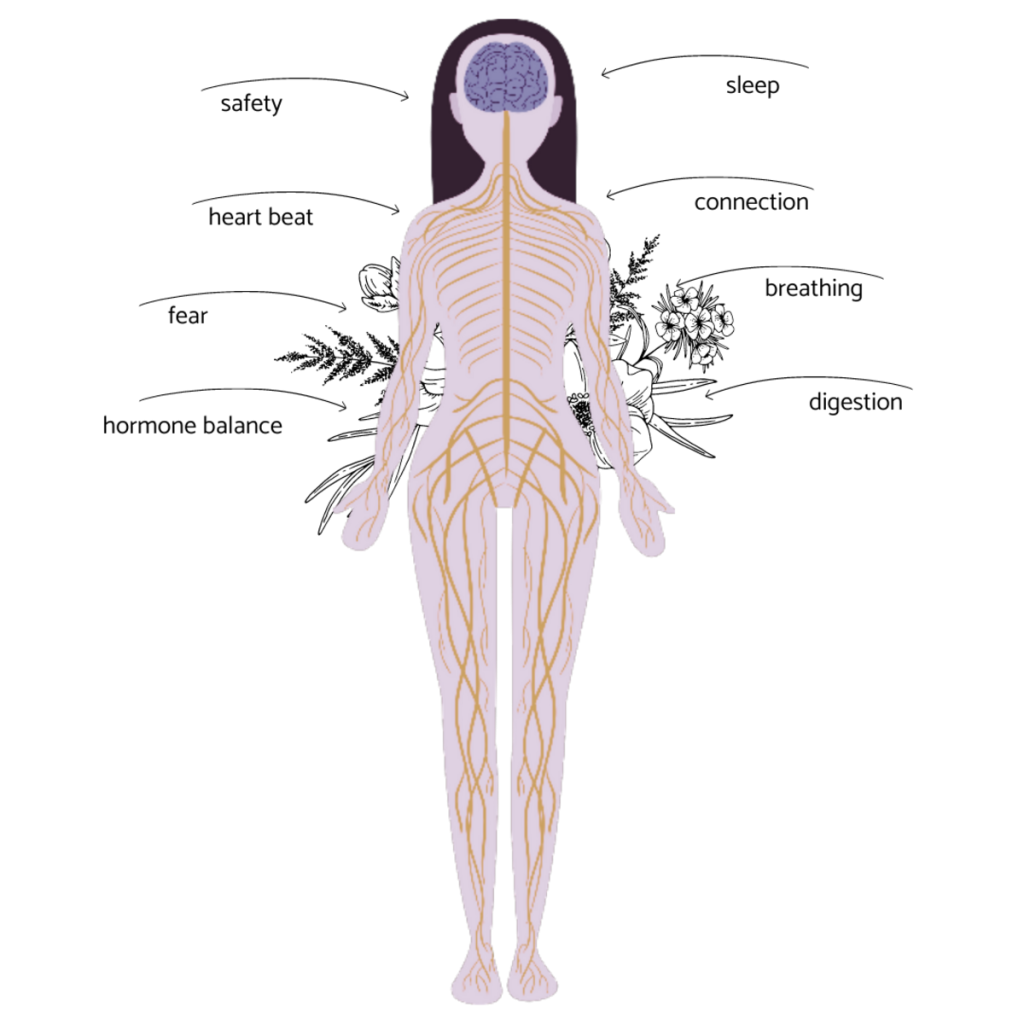
Postpartum is a neurologically intensive period. Birth itself initiates a cascade of neuroendocrine signaling, including activation of stress pathways necessary for survival and adaptation. In the weeks and months that follow, the maternal nervous system remains under sustained demand: interrupted sleep, continuous sensory input, vigilance toward an external dependent, physical recovery, and hormonal recalibration all place ongoing load on neural regulation.
This state is not pathological. It is adaptive.
But it shapes digestion in predictable ways.
The nervous system does not function independently of overall physiological context. It responds to signals of safety, threat, energy availability, and resource allocation. When the body is under sustained demand, signaling shifts accordingly. Digestive processes become more conservative, less robust, and more sensitive to disruption.
This helps explain a common postpartum experience that is often misunderstood: a sense that digestion is “off,” even in the absence of overt gastrointestinal disease. Food may feel heavy. Hunger cues may be irregular. Appetite may fluctuate. Previously tolerated foods may suddenly provoke discomfort. These experiences are not random, nor are they primarily psychological. They reflect a digestive system operating under altered neurological conditions.
The nervous system relies heavily on parasympathetic input to coordinate digestion. This includes regulation of gut motility, timing of digestive secretions, coordination of muscular contractions, and communication between different segments of the gastrointestinal tract. When parasympathetic tone is reduced (or when sympathetic signaling predominates) these processes lose efficiency and coherence.
In postpartum, reduced parasympathetic dominance does not require conscious stress or emotional distress. It arises from biological reality: labor and birth itself, sleep deprivation, metabolic demand, tissue repair, and continuous caregiving all signal the nervous system to remain alert and responsive. In this context, digestion is supported only to the degree necessary for immediate function, not optimized for maximal nutrient extraction.
This distinction matters.
A digestive system that is neurologically constrained can still process food, but it does so incompletely. Signals that normally initiate robust digestive activity may be blunted. Coordination between stomach, pancreas, liver, and intestines may be less precise. The system remains functional, but efficiency is reduced.
When digestion is discussed without reference to the nervous system, these changes are easily missed. Symptoms are framed as intolerance, imbalance, or individual sensitivity. In reality, they often reflect a nervous system that is appropriately prioritizing survival and adaptation over digestive optimization.
Understanding postpartum digestion requires acknowledging this neurological context. Before considering what foods are eaten or how nutrient-dense they may be, it is necessary to understand the conditions under which digestion is being asked to occur.
When neurological signaling shifts, digestion does not fail all at once. It becomes constrained through specific, measurable pathways. These changes are well-documented across stress physiology, autonomic regulation, and gastrointestinal research—and they are particularly relevant in the postpartum state.
In a nervous system operating under sustained demand, digestion is affected in the following ways:
- Gastric acid production is reduced.
Adequate stomach acid depends on parasympathetic signaling. When vagal tone is diminished, hydrochloric acid secretion decreases, impairing food breakdown and the early stages of mineral absorption. This alters downstream digestion before food ever reaches the intestines. - Pancreatic enzyme secretion becomes less robust.
The release of proteases, lipases, and amylases is regulated through neurohormonal signaling. Under stress-dominant conditions, enzyme output may be insufficient for the complexity or volume of food consumed, increasing digestive workload and leaving macronutrients partially processed. - Bile release and fat emulsification are disrupted.
Bile flow depends on coordinated nervous system signaling between the liver, gallbladder, and intestines. Reduced bile availability compromises fat digestion and the absorption of fat-soluble nutrients, even when dietary intake is adequate. - Intestinal motility becomes less coordinated.
Peristalsis relies on enteric nervous system signaling modulated by autonomic input. When this coordination is impaired, transit time may slow or become irregular, increasing fermentation, gas production, and discomfort while reducing efficient nutrient uptake. - Blood flow is redirected away from the gastrointestinal tract.
In sympathetic-dominant states, circulation is prioritized toward muscles, brain, and vital organs involved in vigilance and response. Reduced splanchnic blood flow limits the gut’s ability to absorb and transport nutrients effectively. - Intestinal permeability may increase transiently.
Stress signaling and inflammatory mediators can alter tight junction integrity, increasing permeability in the short term (this creating “leaky gut”). This does not inherently indicate disease, but it can heighten sensitivity and reduce tolerance to foods that were previously well tolerated. - The gut microbiome becomes more reactive and less stable.
In the third trimester of pregnancy, the gut microbiome undergoes a significant, adaptive shift that supports energy extraction and immune modulation. This altered microbial state does not immediately revert after birth and requires time—and adequate physiological support—to stabilize. Microbial populations respond rapidly to changes in gut motility, substrate availability, immune signaling, and stress hormones, all of which are altered in postpartum. As a result, the postpartum microbiome may be temporarily less diverse and less resilient, increasing reactivity and influencing digestive tolerance.
None of these changes require pathology to be present. They do not indicate gastrointestinal disease, deficiency of willpower, or poor food choices. They reflect a typical digestive system operating under neurological constraint during a period of extraordinary physiological demand.
Taken together, these mechanisms create a clear limitation: digestive capacity in postpartum is often reduced at the very moment nutritional demand is highest. Under these conditions, the distinction between nutrient intake and nutrient availability becomes unavoidable.
This is the point at which postpartum nutrition diverges from standard dietary frameworks. When digestion and absorption are constrained, nourishment cannot be assessed by food quality alone.
What follows from this constraint is not theoretical. It is practical, measurable, and consistent across clinical observation.
When nutritional demand rises as absorption narrows, and women are not given adequate education or support, depletion becomes the expected outcome.
Postpartum Digestion Is Not a Hormone Problem
Postpartum digestion is frequently explained as a hormonal issue. This explanation is not wrong. But it is incomplete and that incompleteness obscures the actual mechanism.
After birth, the maternal endocrine environment changes rapidly. Estrogen and progesterone fall sharply in direct response to placental separation. Prolactin rises to support lactation. Cortisol patterns shift in response to sleep disruption, metabolic demand, and stress. Oxytocin is released in pulses during labor, skin-to-skin contact, breastfeeding, and bonding. Each of these hormones has documented effects on gastrointestinal function.
What is often missed is why these hormonal changes behave the way they do after birth.
Hormones do not initiate postpartum physiology. They respond to it.
They respond first to the biological event of birth itself, and then continuously to the state of the nervous system in the weeks and months that follow. Hormones are messengers. They amplify, modulate, and reflect the body’s internal conditions—but they do not operate as independent control systems.
The mistake is not acknowledging hormonal influence.
The mistake is assuming that hormones are the primary drivers of digestion, rather than secondary powerful responders within a nervous-system–governed hierarchy.
Estrogen plays a modulatory role in gastrointestinal motility and mucosal integrity. Its sudden withdrawal after birth reflects the end of pregnancy physiology, not a malfunction. Lower estrogen levels are associated with changes in gut sensitivity, motility, and visceral perception. But these effects are shaped by the neurological environment in which they occur. In a system under high demand, estrogen withdrawal contributes to digestive instability rather than resolution.
Progesterone, which exerts a relaxing effect on smooth muscle during pregnancy, also drops precipitously after birth. This withdrawal does not restore digestive efficiency automatically. Instead, it removes a stabilizing influence at the same moment the nervous system is adapting to recovery, vigilance, and metabolic strain. Hormonal change here reflects transition, not optimization.
Cortisol, often framed as a stress hormone, plays a context-dependent role. Acute cortisol release supports survival and energy mobilization. Dysregulated cortisol patterns—common in postpartum due to sleep fragmentation, sustained alertness, and physiological demand—are associated with suppressed digestive secretions, altered gut permeability, and impaired nutrient assimilation. Importantly, cortisol patterns are not autonomous; they are shaped directly by nervous system signaling and environmental load.
Oxytocin is frequently positioned as the counterbalance to these stress effects. It is described as calming, parasympathetic-supportive, and protective of digestion. From this perspective, postpartum (particularly in breastfeeding mothers) is assumed to be buffered against digestive disruption.
This assumption misunderstands oxytocin’s role.
Oxytocin does not override nervous system state. It responds to it.
While oxytocin can support parasympathetic activity under conditions of safety, rest, and containment, it does not compensate for sustained sympathetic dominance. Oxytocin release, whether during breastfeeding or bonding, cannot neutralize ongoing sleep deprivation, unresolved pain, neurological vigilance, or inadequate recovery.
This misconception was addressed directly in my 2024 presentation at the MicroBirth Conference, where I demonstrated that modern postpartum conditions often fragment oxytocin’s regulatory effects. Even in physiologically supported births, oxytocin does not negate the cumulative neurological and metabolic demands placed on the postpartum body. It reflects moments of connection but it does not govern baseline digestive capacity.
Taken together, postpartum hormones influence digestion but they do so secondarily, through the nervous system that governs digestive function. Hormones respond to birth. Then they respond to nervous system state. Their effects rise and fall with autonomic balance, energy availability, and physiological load.
This clarification resolves a critical misunderstanding.
Even if postpartum digestive changes were framed as hormonal (which they cannot be in isolation), the conclusion would remain the same. Hormonal shifts after birth do not guarantee digestive efficiency. In many cases, they signal a body adapting under constraint.
When digestion is constrained by neurological load, hormonal signaling, or both, the practical implication does not change. Foods that require extensive enzymatic breakdown, prolonged motility, or high digestive effort are harder to process. Nutrient density alone does not ensure nourishment. Absorbability becomes the limiting factor.
This is why attributing postpartum digestive issues solely to hormones does not weaken a digestibility-first approach to nutrition. It strengthens it.
Because hormones do not create digestive capacity.
They respond to the conditions that limit it.
Depletion Is the Predictable Outcome of Modern Reproduction, Not a Maternal Failure
Depletion in postpartum is often framed as a consequence of what happens after birth. This framing is also incomplete.
A significant amount of women enter postpartum already depleted.
- 89% of postpartum women are Vitamin D deficient.
- 80-90% of pregnant women fail to meet DHA recommendations.
- Over 37 (and an upwards of 80% in some populations) of postpartum women experience iron deficiency anemia.
- 79% of postpartum women are deficient in selenium.
Pregnancy is not a nutritionally neutral state. It is one of the most metabolically demanding periods in the human life cycle. The developing baby requires a continuous supply of amino acids, fatty acids, minerals, and micronutrients to build organs, neural tissue, connective tissue, and immune infrastructure. These nutrients are not optional, and they are not drawn from dietary intake alone. When intake or absorption is insufficient, the maternal body compensates by drawing from its own reserves.
This is not a flaw. It is a biological priority system.
In theory, pregnancy nutrition would replenish what is used. In practice, modern conditions make this unlikely for many women. Food quality has declined. Nutrient density in the food supply is inconsistent. Education on pregnancy nutrition is minimal and often reduced to caloric intake rather than nutrient density. The long-standing recommendation of an additional 300–500 calories during pregnancy reflects energy expenditure with weight loss accounted for, not the full scope of nutritional demand required for tissue construction, blood volume expansion, and neurological development.
Access also matters. Time, cost, cultural norms, and systemic inequities all shape what women are able to eat during pregnancy. Often (not always), even when intentions are strong, nourishment is constrained by circumstance.
By the time birth occurs, many women are not starting from abundance. They are starting from adaptation.
Birth itself compounds this demand. Blood loss, tissue trauma, inflammation, and neurological stress are inherent to the process—even in uncomplicated deliveries. What follows is not rest, but continued output: healing, caregiving, and often sustained milk production. These processes draw from the same reserves that pregnancy already taxed.
When this sequence is viewed in full—pregnancy, birth, and postpartum as a continuum—the emergence of depletion becomes logical rather than alarming.
It is important to be precise here.
This level of depletion is common, but it is not biologically ideal and should not be considered normal. It is expected under modern conditions, but it is not what the female body was designed to experience.
The fact that depletion occurs does not mean it is normal in the sense of optimal or inevitable. It means the systems designed to protect and restore the mother have been eroded or forgotten. In many cases, what is missing is not effort or intention, but structural support: adequate nourishment during pregnancy, sufficient recovery after birth, and nutrition that prioritizes absorbability during periods of high demand.
Layered on top of this is the digestive constraint already established. When digestion and absorption are limited at the very moment demand peaks, the body has no choice but to compensate internally. It borrows what it must to survive the transition.
Iron is mobilized from stores. Minerals are redirected from bone and tissue. Amino acids are diverted from muscle and connective tissue. Fatty acids are repurposed from cellular membranes. These adaptations are intelligent. They allow the body to function under pressure.
But they are not without consequence.
Over time, reserve depletion reduces resilience. Repair slows. Hormonal signaling becomes less stable. Neurological buffering capacity narrows. Immune tolerance shifts. What begins as adaptation becomes vulnerability. Not because the body failed, but because it was never adequately replenished.
This is why postpartum depletion so often presents as a constellation of symptoms rather than a single deficiency. Fatigue, mood instability, cognitive fog, digestive sensitivity, immune suppression, musculoskeletal pain, and delayed recovery are not separate problems. They are expressions of a system operating without margin.
None of this requires maternal neglect.
None of it requires poor choices.
And none of it reflects individual failure.
It reflects a reproductive process that demands far more than modern structures reliably provide.
Understanding depletion in this context reframes the conversation entirely. The question is no longer why women struggle after birth, but how they could be expected not to—given the cumulative demands placed on their bodies before, during, and after pregnancy.
What matters now is not assigning blame, but recognizing that restoration requires more than intake alone. It requires timing, digestibility, and physiological support that matches the reality of the postpartum body.
That is where nutrition must change.
Digestive Insufficiency as a Biological Signal
At this point in the discussion, the central constraint in postpartum nutrition can be named clearly.
The primary limitation is not food quality.
It is not caloric intake.
It is not effort, compliance, or intention.
It is what I’ve coined digestive insufficiency: a temporary, biologically normal state in which the body’s capacity to break down, absorb, and assimilate nutrients is intentionally reduced relative to demand.
This is not dysfunction.
It is design.
After birth, the maternal body shifts into a phase of conservation and prioritization. Energy is redirected toward healing, immune recalibration, neurological adaptation, and, for many, sustained milk production. Digestion, an energetically expensive process, is modulated accordingly. The system does not shut down; it becomes selective.
This selectivity serves a purpose.
Digestive insufficiency functions as a physiological filter. It favors foods that are nutrient-dense, bioavailable, and low in digestive cost, while discouraging foods that require excessive enzymatic output, prolonged motility, or high metabolic expenditure. In this way, the postpartum body signals wisdom, not weakness.
Historically, this signal was understood.
Across cultures and time periods, postpartum nutrition converged around the same principles: foods that were cooked, softened, warmed, mineral-rich, fat-containing, and easy to assimilate. The language varied—digestive fire, warmth, rebuilding—but the biological recognition was consistent. The postpartum body does not ask for less nourishment. It asks for nourishment that costs less to access.
In the modern context, this signal is often misinterpreted.
Digestive insufficiency is framed as intolerance, imbalance, or failure. Women are encouraged to diet, take medication, or ignore symptoms in the name of “normal motherhood”. Nutrient density is rarely even spoken, and when it is, it’s emphasized without regard for digestive effort. The body’s invitation is ignored, and the consequence is not immediate illness but cumulative strain with long-term consequences.
It is important to be precise here.
Digestive insufficiency does not guarantee depletion. When the signal is met with appropriate nutritional care, particularly during pregnancy and early postpartum, reserves can be preserved and recovery can proceed without significant drawdown. Depletion occurs not because digestive insufficiency exists, but because it is unrecognized and unsupported.
This is the critical distinction.
Digestive insufficiency is biologically ideal in postpartum.
Depletion is not.
When nutrition aligns with this adaptive state (prioritizing absorbability, timing, and physiological accessibility) the system stabilizes. When it does not, the body compensates by drawing from internal reserves, not because it is failing, but because it is protecting survival.
Nourishment in postpartum cannot be evaluated by caloric intake or nutrient density alone. It must be assessed by what the body can digest, absorb, and utilize without demanding more energy than the system can afford.
This is why absorption, not intake, sets the ceiling on recovery.
And this is why postpartum nutrition when understood correctly, is not restrictive or deficient, but profoundly supportive of how the female body was designed to heal.

Why Conventional “Healthy Eating” Often Backfires After Birth
When postpartum digestion is understood as a biologically adaptive, energy-conserving state, a common paradox becomes easier to explain.
In my work, supporting women through late pregnancy and the years that follow birth, I have repeatedly observed the same pattern. Women are eating what they have been told is “healthy”—prioritizing whole foods, fiber, raw vegetables, smoothies, and salads—yet their bodies respond as if they are undernourished. Bloating increases. Energy declines. Digestion becomes uncomfortable. Recovery stalls. These outcomes are confusing precisely because they contradict conventional nutritional wisdom.
The issue is not that these foods lack nutrients.
It is that they often require more digestive work than the postpartum body is prepared to provide.
Conventional healthy-eating frameworks are built for bodies with stable digestion, ample parasympathetic tone, and low repair demand. They assume robust stomach acid production, sufficient enzyme output, coordinated motility, and abundant metabolic energy. Postpartum digestion, by design, does not operate under these assumptions.
Raw foods, salads, high-fiber meals, and cold foods all increase digestive workload. Individually, these choices may appear worthy. Collectively, they can strain digestion when absorbability is the limiting factor.
This is why postpartum digestive distress is often misattributed to intolerance or sensitivity. The food itself is not inherently problematic; the timing and digestive cost are mismatched to physiological capacity.
Importantly, this mismatch is temporary.
Foods that are difficult to digest early postpartum may be well tolerated later, once digestion stabilizes and demand decreases. The problem is not the food. It is the assumption that postpartum digestion should mirror non-postpartum digestion immediately after birth.
This raises an inevitable question I hear constantly from both mothers and providers: when is it safe to return to 'normal' eating?
From a scientific standpoint, there is no definitive answer. Modern research does not offer a clear marker for when postpartum digestion has fully recovered, nor does it define a universal timeline for reintroducing more demanding foods. What we have instead is pattern recognition drawn from both traditional postpartum care and clinical observation.
Historically, many cultures treated the first six to eight weeks after birth as a protected digestive window, gradually expanding food variety only after signs of strength, warmth, and digestive stability returned. Foods were reintroduced slowly and intentionally, with close attention to how the body responded. There was no rigid endpoint—only feedback.
In practice, this remains true today. While some women regain digestive capacity within the early postpartum weeks, many do not. Those who experienced traumatic births, minimal postpartum support, significant depletion, chronic stress, or preexisting health conditions often require longer periods of digestive support. In my experience, three to six months is far more typical for meaningful digestive resilience to return (sometimes longer) especially when recovery has been layered with continued demand rather than rest.
Postpartum nutrition does not require abandoning health principles.
It requires reordering them.
In this phase, nourishment is not determined by how wholesome a food appears, but by how efficiently the body can access what it contains. When digestibility is prioritized, recovery accelerates. When it is ignored, even the healthiest diet can backfire.
The First Job of Postpartum Nutrition: Reduce Digestive Load
Once postpartum digestion is understood as an adaptive, energy-conserving state, the first priority of nutrition becomes clear.
The initial job of postpartum nutrition is not optimization.
It is not variety.
It is not restriction or experimentation.
It is reducing digestive load.
This does not mean eating less (often the complete opposite). It means asking the digestive system to do less work in order to access what the body urgently needs. When digestion is supported in this way, absorption improves, energy is conserved, and nourishment becomes possible again.
Across cultures, time periods, and geographic regions, postpartum food traditions converged around this same biological insight. While the ingredients differed, the principles did not. Foods were selected not only for nutrient density, but for how little energy they required to digest.
These traditions emphasized foods that were already partially broken down—thermally, mechanically, or chemically—before they reached the gut. Long-cooked soups and stews. Mineral-rich broths. Slow-simmered meats. Softened vegetables. Warm, liquid, or semi-solid meals that required minimal enzymatic effort and gentle motility to assimilate.
Animal-based foods played a central role in these practices, not out of ideology, but practicality. Animal proteins provide complete amino acid profiles and highly bioavailable minerals in forms that the postpartum body can access more efficiently than many plant sources. When cooked slowly and consumed with fat and moisture, these foods reduce digestive demand while delivering concentrated nourishment.
Fats were not avoided in postpartum nutrition; they were relied upon. Fat provides a dense energy source with relatively low digestive cost and supports hormonal signaling, tissue repair, and neurological stability. When paired with protein and warmth, fat enhances satiety and absorption rather than burdening digestion.
Vegetables were not eliminated, but they were prepared differently. Raw and fibrous forms gave way to cooked, softened, and blended preparations. Heat, time, and moisture did the work that the postpartum digestive system was not meant to do on its own. This was not avoidance but rather cooperation.
These food choices were not framed as temporary deprivation. They were understood as supportive alignment with a body in transition. Once digestion strengthened and recovery progressed, variety expanded naturally. The sequence mattered.
What modern nutrition frameworks often miss is that this approach is not rooted in tradition for tradition’s sake. It reflects a precise biological logic: when digestive capacity is limited, nourishment must be made easier to access.
Reducing digestive load does not restrict nourishment.
It protects it.
When food arrives in a form the body can receive without strain, the nervous system settles, absorption improves, and reserves are preserved rather than borrowed. This is how postpartum nutrition supports recovery. Not by demanding more from the body, but by working with it.
Only after digestive load is reduced does optimization make sense.
Only after absorption improves does intake matter.
Postpartum nutrition does not begin with rules.
It begins with relief.
What This Article Is Not Claiming
This article is not advocating for dietary restriction in the way that term is commonly used. It is not promoting deprivation, control, or moralized eating. And it is not suggesting that postpartum recovery requires willpower, discipline, or perfection.
In a culture that equates abundance with access and interprets any form of limitation as harm, it has become difficult to distinguish restriction from responsiveness. Postpartum nutrition is often evaluated through this lens, where eating fewer foods or preparing foods differently, is assumed to be regressive or unnecessary.
This framing misunderstands physiology.
Responding to the body’s needs is not restriction. It is regulation.
During postpartum, digestive capacity is temporarily reduced by design. In this context, narrowing food choice, simplifying meals, or favoring certain preparations is not about control—it is about reducing strain in a way that the body can actually receive.
This is also not an argument for permanent limitation.
As digestion stabilizes and recovery progresses, variety naturally expands. Foods that are difficult to tolerate early postpartum often become well tolerated later. The sequence matters. What is supportive at one stage may be unnecessary or even insufficient at another.
Finally, this article is not normalizing postpartum symptoms as inevitable or benign. Fatigue, digestive distress, mood instability, brain fog, immune suppression, and chronic depletion are often described as “just part of motherhood” in modern culture. That framing reflects normalization of strain, not biological reality.
When symptoms emerge, they are not evidence that the postpartum body is fragile or failing. They are evidence that physiological needs are going unmet.
This work does not pathologize the postpartum body.
It challenges a system that has forgotten how to respond to it.
Reframing “Normal” in Postpartum Recovery
When postpartum digestion is understood as a biologically adaptive, energy-conserving state, the paradox disappears. What remains is a simple truth modern care has lost the language to describe.
The question is not when a woman can return to “normal” eating.
The question is why we ever decided that she should.
Across cultures, postpartum was never treated as a time to prove resilience or tolerance. It was treated as a threshold — a period in which the body signaled clearly what it could and could not afford. Warmth, softness, simplicity, and ease were not restrictions. They were recognition. They were how nourishment was made possible when digestion was intentionally selective.
Today, we call this approach outdated. Too limiting. Unnecessary.
And in doing so, we mistake responsiveness for deprivation.
What follows is not resilience — it is compensation. The body does not fail when its signals are ignored. It adapts. It borrows. It reroutes. And over time, the cost of that adaptation is renamed as “normal” postpartum fatigue, “expected” mood changes, “common” digestive issues, and “inevitable” depletion.
This is not biology failing women.
It is a culture that no longer listens to it.
Postpartum nutrition was never meant to be optimized, diversified, or rushed. It was meant to meet the body where it is — conserving energy, protecting digestion, and restoring reserves before demanding expansion.
When nourishment responds to digestion instead of overriding it, recovery is not forced. It unfolds.
That is not a dietary philosophy.
It is a biological truth we once honored — and must reclaim.
The mothers in your community are waiting. Not for permission to try harder, but for practitioners who understand what their bodies actually need. Who recognize digestive signals as wisdom, not weakness. Who can translate that wisdom into care that works.
That's the work ahead. Not someday. Now.
This article is original research synthesis by
Maranda Bower, founder of Postpartum University®.
You’re welcome to share excerpts or discuss these ideas publicly. When doing so, please credit the original work to Maranda Bower / Postpartum University® and link back to this article when possible.
To cite this article:
Bower M. Postpartum digestion is not normal digestion: why nutrition must change after birth. Postpartum University. Published 2025.
https://postpartumu.com/research/postpartum-digestion-is-not-normal-digestion-why-nutrition-must-change-after-birth/
----------------------------------------------------------
Looking for more published research? Access Maranda Bower’s external peer-reviewed work, including "Postpartum Digestion Is Not Normal Digestion: Why Nutrition Must Change After Birth," hosted by the Association for Prenatal and Perinatal Psychology and Health.
Citation:
Bower, M. (2026). Postpartum Digestion Is Not Normal Digestion: Why Nutrition Must Change After Birth. Journal of Prenatal and Perinatal Psychology and Health, 40(1), 101–111.
References
- Chauhan G, Tadi P. Physiology, Postpartum Changes. [Updated 2022 Nov 14]. In: StatPearls [Internet]. Treasure Island (FL): StatPearls Publishing; 2025 Jan-. Available from: https://www.ncbi.nlm.nih.gov/sites/books/NBK555904/
- Mor G, Cardenas I. The immune system in pregnancy: a unique complexity. Am J Reprod Immunol. 2010 Jun;63(6):425-33. doi: 10.1111/j.1600-0897.2010.00836.x. Epub 2010 Mar 29. PMID: 20367629; PMCID: PMC3025805.
- Hoekzema E, Barba-Müller E, Pozzobon C, Picado M, Lucco F, García-García D, Soliva JC, Tobeña A, Desco M, Crone EA, Ballesteros A, Carmona S, Vilarroya O. Pregnancy leads to long-lasting changes in human brain structure. Nat Neurosci. 2017 Feb;20(2):287-296. doi: 10.1038/nn.4458. Epub 2016 Dec 19. PMID: 27991897.
- Butte NF, King JC. Energy requirements during pregnancy and lactation. Public Health Nutr. 2005 Oct;8(7A):1010-27. doi: 10.1079/phn2005793. PMID: 16277817.
- McEwen BS. Stress, adaptation, and disease. Allostasis and allostatic load. Ann N Y Acad Sci. 1998 May 1;840:33-44. doi: 10.1111/j.1749-6632.1998.tb09546.x. PMID: 9629234.
- Taché Y, Martinez V, Million M, Wang L. Stress and the gastrointestinal tract III. Stress-related alterations of gut motor function: role of brain corticotropin-releasing factor receptors. Am J Physiol Gastrointest Liver Physiol. 2001 Feb;280(2):G173-7. doi: 10.1152/ajpgi.2001.280.2.G173. PMID: 11208537.
- Azami M, Badfar G, Khalighi Z, Qasemi P, Shohani M, Soleymani A, Abbasalizadeh S. The association between anemia and postpartum depression: A systematic review and meta-analysis. Caspian J Intern Med. 2019 Spring;10(2):115-124. doi: 10.22088/cjim.10.2.115. PMID: 31363389; PMCID: PMC6619471.
- Soma-Pillay P, Nelson-Piercy C, Tolppanen H, Mebazaa A. Physiological changes in pregnancy. Cardiovasc J Afr. 2016 Mar-Apr;27(2):89-94. doi: 10.5830/CVJA-2016-021. PMID: 27213856; PMCID: PMC4928162.
- Furness JB. The enteric nervous system and neurogastroenterology. Nat Rev Gastroenterol Hepatol. 2012 Mar 6;9(5):286-94. doi: 10.1038/nrgastro.2012.32. PMID: 22392290.
- Kim P, Leckman JF, Mayes LC, Feldman R, Wang X, Swain JE. The plasticity of human maternal brain: longitudinal changes in brain anatomy during the early postpartum period. Behav Neurosci. 2010 Oct;124(5):695-700. doi: 10.1037/a0020884. PMID: 20939669; PMCID: PMC4318549.
- McEwen BS, Wingfield JC. The concept of allostasis in biology and biomedicine. Horm Behav. 2003 Jan;43(1):2-15. doi: 10.1016/s0018-506x(02)00024-7. PMID: 12614627.
- Bonaz B, Bazin T, Pellissier S. The Vagus Nerve at the Interface of the Microbiota-Gut-Brain Axis. Front Neurosci. 2018 Feb 7;12:49. doi: 10.3389/fnins.2018.00049. PMID: 29467611; PMCID: PMC5808284.
- Swain JE. The human parental brain: in vivo neuroimaging. Prog Neuropsychopharmacol Biol Psychiatry. 2011 Jul 1;35(5):1242-54. doi: 10.1016/j.pnpbp.2010.10.017. Epub 2010 Oct 29. PMID: 21036196; PMCID: PMC4329016.
- Konturek SJ, Konturek JW, Pawlik T, Brzozowski T. Brain-gut axis and its role in the control of food intake. J Physiol Pharmacol. 2004 Mar;55(1 Pt 2):137-54. PMID: 15082874.
- Bischoff SC, Barbara G, Buurman W, Ockhuizen T, Schulzke JD, Serino M, Tilg H, Watson A, Wells JM. Intestinal permeability--a new target for disease prevention and therapy. BMC Gastroenterol. 2014 Nov 18;14:189. doi: 10.1186/s12876-014-0189-7. PMID: 25407511; PMCID: PMC4253991.
- Koren O, Goodrich JK, Cullender TC, Spor A, Laitinen K, Bäckhed HK, Gonzalez A, Werner JJ, Angenent LT, Knight R, Bäckhed F, Isolauri E, Salminen S, Ley RE. Host remodeling of the gut microbiome and metabolic changes during pregnancy. Cell. 2012 Aug 3;150(3):470-80. doi: 10.1016/j.cell.2012.07.008. PMID: 22863002; PMCID: PMC3505857.
- Nie X, Xie R, Tuo B. Effects of Estrogen on the Gastrointestinal Tract. Dig Dis Sci. 2018 Mar;63(3):583-596. doi: 10.1007/s10620-018-4939-1. Epub 2018 Jan 31. PMID: 29387989.
- Coquoz A, Regli D, Stute P. Impact of progesterone on the gastrointestinal tract: a comprehensive literature review. Climacteric. 2022 Aug;25(4):337-361. doi: 10.1080/13697137.2022.2033203. Epub 2022 Mar 7. PMID: 35253565.
- López-Vicchi F, De Winne C, Brie B, Sorianello E, Ladyman SR, Becu-Villalobos D. Metabolic functions of prolactin: physiological and pathological aspects. J Neuroendocrinol. 2020;32(11):e12888. doi:10.1111/jne.12888
- Mayer EA. The neurobiology of stress and gastrointestinal disease. Gut. 2000 Dec;47(6):861-9. doi: 10.1136/gut.47.6.861. PMID: 11076888; PMCID: PMC1728136.
- Liu H, Yang G, Wang H. Oxytocin/Oxytocin Receptor Signalling in the Gastrointestinal System: Mechanisms and Therapeutic Potential. Int J Mol Sci. 2024 Oct 11;25(20):10935. doi: 10.3390/ijms252010935. PMID: 39456718; PMCID: PMC11508134.
- Woolf PD. Hormonal responses to trauma. Crit Care Med. 1992 Feb;20(2):216-26. doi: 10.1097/00003246-199202000-00011. PMID: 1737456.
- Uvnas-Moberg K, Petersson M. Oxytocin, ein Vermittler von Antistress, Wohlbefinden, sozialer Interaktion, Wachstum und Heilung [Oxytocin, a mediator of anti-stress, well-being, social interaction, growth and healing]. Z Psychosom Med Psychother. 2005;51(1):57-80. German. doi: 10.13109/zptm.2005.51.1.57. PMID: 15834840.
- Ghafarzadeh M, Shakarami A, Tarhani F, Yari F. Evaluation of the prevalence of vitamin D deficiency in pregnant women and its correlation with neonatal vitamin D levels. Clin Nutr Open Sci. 2021;36:91–97. doi:10.1016/j.nutos.2021.02.007
- Nordgren TM, Lyden E, Anderson-Berry A, Hanson C. Omega-3 Fatty Acid Intake of Pregnant Women and Women of Childbearing Age in the United States: Potential for Deficiency? Nutrients. 2017 Feb 26;9(3):197. doi: 10.3390/nu9030197. PMID: 28245632; PMCID: PMC5372860.
- Filipowicz D, Szczepanek-Parulska E, Kłobus M, Szymanowski K, Chillon TS, Asaad S, Sun Q, Mikulska-Sauermann AA, Karaźniewicz-Łada M, Główka FK, Wietrzyk D, Schomburg L, Ruchała M. Selenium Status and Supplementation Effects in Pregnancy-A Study on Mother-Child Pairs from a Single-Center Cohort. Nutrients. 2022 Jul 27;14(15):3082. doi: 10.3390/nu14153082. PMID: 35956267; PMCID: PMC9370234.
- Holm C, Neef V, Pavord S. Management of postpartum anemia. Blood Transfus. 2025 Jan;23(1):47-49. doi: 10.2450/BloodTransfus.924. Epub 2025 Jan 8. PMID: 39804748; PMCID: PMC11841944.
- King JC. Physiology of pregnancy and nutrient metabolism. Am J Clin Nutr. 2000 May;71(5 Suppl):1218S-25S. doi: 10.1093/ajcn/71.5.1218s. PMID: 10799394.
- Eunice Kennedy Shriver National Institute of Child Health and Human Development. How many calories does breastfeeding use? Updated December 1, 2017. https://www.nichd.nih.gov/health/topics/breastfeeding/conditioninfo/calories
- Carmody RN, Weintraub GS, Wrangham RW. Energetic consequences of thermal and nonthermal food processing. Proc Natl Acad Sci U S A. 2011 Nov 29;108(48):19199-203. doi: 10.1073/pnas.1112128108. Epub 2011 Nov 7. PMID: 22065771; PMCID: PMC3228431.
- Fu J, Zheng Y, Gao Y, Xu W. Dietary Fiber Intake and Gut Microbiota in Human Health. Microorganisms. 2022 Dec 18;10(12):2507. doi: 10.3390/microorganisms10122507. PMID: 36557760; PMCID: PMC9787832.
- Sun WM, Houghton LA, Read NW, Grundy DG, Johnson AG. Effect of meal temperature on gastric emptying of liquids in man. Gut. 1988 Mar;29(3):302-5. doi: 10.1136/gut.29.3.302. PMID: 3356361; PMCID: PMC1433604.
- Ajomiwe N, Boland M, Phongthai S, Bagiyal M, Singh J, Kaur L. Protein Nutrition: Understanding Structure, Digestibility, and Bioavailability for Optimal Health. Foods. 2024 Jun 5;13(11):1771. doi: 10.3390/foods13111771. PMID: 38890999; PMCID: PMC11171741.
- Innis SM. Dietary omega 3 fatty acids and the developing brain. Brain Res. 2008 Oct 27;1237:35-43. doi: 10.1016/j.brainres.2008.08.078. Epub 2008 Sep 9. PMID: 18789910.