


Compensation is not a postpartum concept. It is a biological one, and the body uses it everywhere, constantly, long before anyone thinks to call it that.
The body does not fail at the moment of injury. It compensates first.
When a system is damaged or placed under sustained demand, the body's first response is rarely to fail outright. It redirects resources. It narrows its margins. It keeps the most essential functions running by quietly borrowing from less essential ones. A heart with a damaged valve does not simply stop pumping — it remodels, enlarges, recruits other muscle to keep blood moving, often for years, before anyone notices anything is wrong. A liver losing function does not announce it loudly. It keeps detoxifying, keeps producing, keeps metabolizing, drawing down its own reserve capacity until the reserve is gone and the symptoms become significant. Blood sugar often remains normal for years while insulin levels steadily rise to keep it there. Normal glucose doesn’t mean that nothing is changing. It is evidence that compensation is still working.
This is the opposite of a malfunction. Compensation is what a well-functioning body does under threat. Evolution did not design the body to announce damage the moment it occurs. It designed the body to keep functioning through damage for as long as possible to keep you alive.
So the mechanism that keeps you alive during a crisis is the same mechanism that hides the crisis from you. To see how the body negotiates this compensation at the deep cellular level, read Fetal Microchimerism: Why Your Baby’s Cells Stay in Your Body for Decades.
This article is original research synthesis by
Maranda Bower, founder of Postpartum University®.
Research originally published November, 2025.
You’re welcome to share excerpts or discuss these ideas publicly. When doing so, please credit the original work to Maranda Bower / Postpartum University® and link back to this article when possible.
To cite this article:
Bower M. Why Postpartum Symptoms Can Appear Years Later: Why the Body Compensates Before It Collapses. 2026. Why https://postpartumu.com/research/postpartum-symptoms-years-later/
Why Compensation Fools Medicine
Modern diagnostics are generally better at detecting established dysfunction than the physiological cost of ongoing compensation. A lab value crosses a threshold, an imaging study shows damage, a symptom becomes severe enough to bring someone into an office. But compensation does not happen silently. The body shows it the entire time — fatigue that doesn't lift, digestion that never quite settles, a cycle that's never been the same, a baseline of exhaustion that becomes the new normal. Compensation has symptoms. What it doesn't have is anyone listening for them, or a test built to measure them in the first place.
For some women, those symptoms arrive slowly enough to become invisible. They progress at the same pace as everything else in her life is changing, so there's no single moment to point to — just a gradual recalibration of what "normal" means, reinforced every time a provider tells her the fatigue, the digestion, the cycle changes are expected after having children. She isn't ignoring her symptoms. She's been told, repeatedly, that what she's noticing isn't abnormal. Eventually she stops noticing it as a symptom at all until it become too loud or too painful to consider normal.
For other women, compensation runs out faster and louder, often after it's been working quietly for a while or after something acute tips the balance. These are the diagnoses that look sudden. They rarely are. They're just the first moment the compensation became too loud to rename as normal.
Medicine treats the moment of collapse as the beginning of the story. It is almost always the end of one. The body was telling that story the entire time to anyone willing to hear it.
Why Postpartum Symptoms Often Appear Years Later The Weight Loss Intention Was Built In
Pregnancy and birth place a body under one of the most sustained physiological demands it will ever face — immune recalibration, nutrient depletion, hormonal upheaval, sleep disruption, all at once, all sustained for far longer than six weeks (Bower, 2026). If compensation is real, postpartum is exactly where you would expect to see it operating at full capacity. And it is.
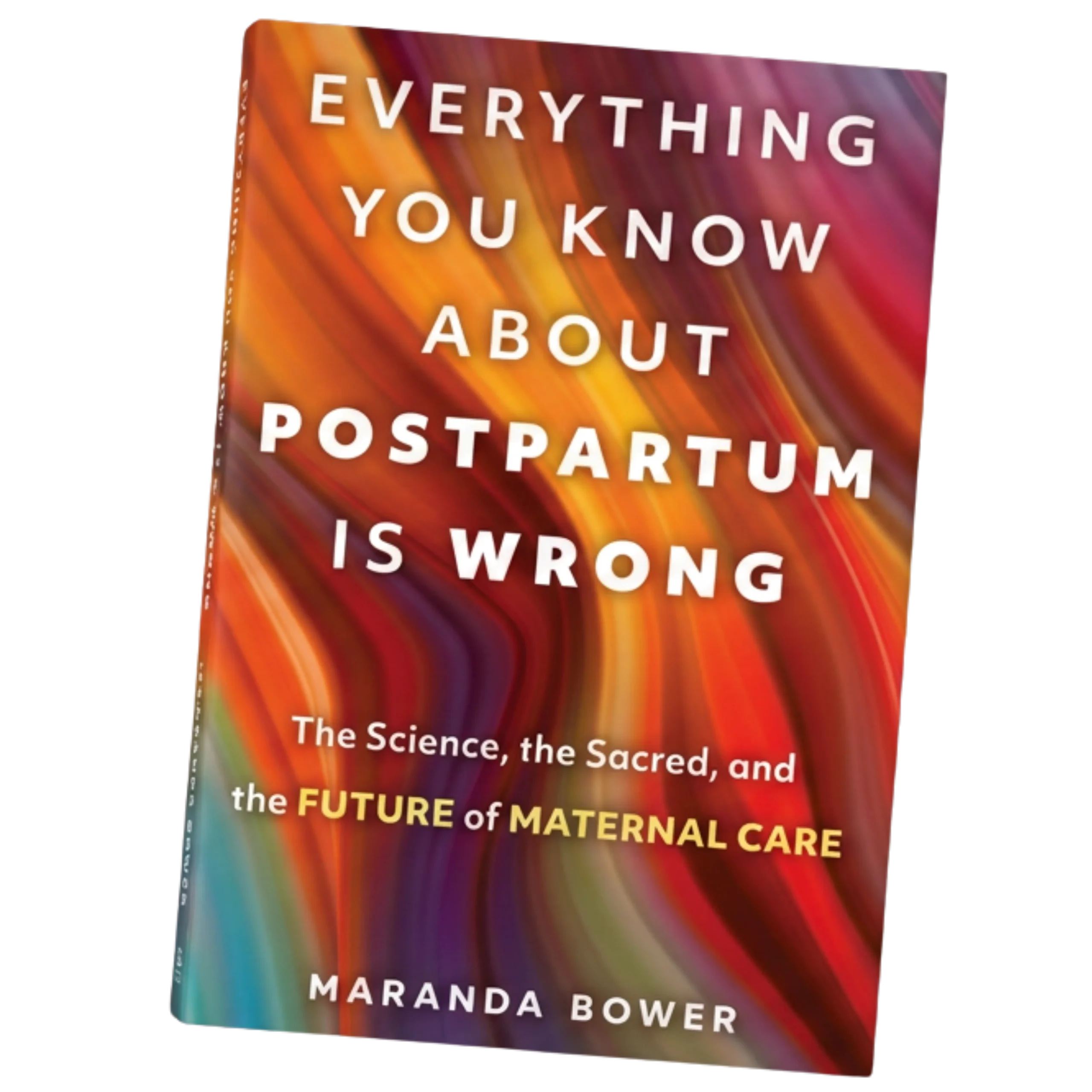
The New Book from Postpartum University®
Everything You Know About Postpartum Is Wrong
Now available for pre-order! For every provider who's felt the ache of offering more in a system built for less. And for every mother who knew something was wrong long before anyone believed her.
Pre-Order on AmazonPostpartum thyroiditis affects an estimated 5 to 22 percent of women in the first year after birth (Amino, 1999), and in many of those cases the thyroid has been compensating long before a lab value ever crossed a threshold. TSH can read as normal while T4-to-T3 conversion is already failing — the compensation working, right up until it doesn’t.
Women make up nearly 80 percent of all autoimmune diagnoses across the population, and the first postpartum year is one of the clearest windows of elevated risk for autoimmune onset on record (Lockskin, 2006). A genetic predisposition that had been compensated against for years — by a healthy immune system, adequate nutrient status, a regulated nervous system — can finally lose that compensation in the exact window when all three are under simultaneous strain.
And here is where compensation becomes almost invisible to the system meant to catch it: the average time from symptom onset to formal autoimmune diagnosis runs four years or more (Hayter, 2012). By the time the diagnosis arrives, the compensation that delayed it has been running for so long that no one, including the patient, thinks to trace it back to where it started.
The body was not silent for four years. It was working. The diagnosis is not the beginning of the condition. It is the point where compensation finally ran out.
Why Postpartum Compensation Runs Out When It Does
Compensation is not free. It draws on specific, finite resources, and postpartum draws on the same ones simultaneously from multiple directions.
The immune system, after nine months of deliberate tolerance, rebounds after birth — a normal process that a well-resourced body manages cleanly and a depleted one does not. Nutrient stores that regulate that rebound — zinc, selenium, vitamin D, iron — are drawn down by pregnancy and drawn down further by lactation, with nothing systematically replacing them. Sleep, fragmented for months, prevents the deep-sleep immune maintenance the body depends on to recalibrate. Cortisol, meant to run in a clean daily arc, flattens under sustained demand and stops functioning as the regulatory brake it is supposed to be.
None of these four systems fails on its own. Each one compensates for a while. The problem is that they are not separate systems borrowing from separate reserves. They borrow from each other. Nutrient depletion impairs the immune regulation that cortisol is also supposed to be managing. A flattened cortisol rhythm worsens the sleep that the immune system needs to recover. Each compensation makes the others more expensive to sustain.
Eventually, in some women, the combined cost exceeds what any one system can keep covering quietly. A thyroid that had been managing finally can’t continue as is. A predisposition that had been held in check finally activates. The body does not collapse without warning. It simply stops being able to compensate without anyone watching for the warning.
Why Asking "What Caused This Now?" Misses the Real Problem
In practice, "what caused this now" isn't usually asked. Western medicine tends to note the dysfunction and prescribe for it. The question of origin doesn't typically enter the room at all. After over 15 years of doing this work, I’ve seen that when the question does get asked, it's most often the mother asking it of herself, quietly, without anyone else in the conversation.
The question worth asking is: what has this body been compensating for, and for how long?
“What has this body been compensating for” opens an entirely different line of inquiry. The birth itself, the nutrition in the year after, whether sleep ever recovered, whether the cortisol rhythm ever found its shape again. For a real number of women presenting with new chronic or inflammatory symptoms years out, that is the question that actually explains what happened.
What Evidence Supports and What It Doesn't
The evidence solidly supports an elevated window of autoimmune risk in the first postpartum year, with risk remaining elevated for several conditions for four or more years out. It solidly supports a multi-year average gap between symptom onset and diagnosis across autoimmune conditions broadly. At the mechanism level, it supports that immune rebound, nutrient depletion, sleep disruption, and cortisol dysregulation each independently strain the body's regulatory capacity, and that they compound when they occur together, as they typically do postpartum.
What the evidence does not yet support, because the research to test it directly was never built, is a precise causal line from any individual woman's diagnosis back to her specific postpartum experience years later. That line is physiologically coherent and consistent with the population data. It has not been proven case by case, and for many of the conditions discussed here, it may never be, because the infrastructure to prove it does not exist.
The claim being made is that postpartum history deserves to be asked about as a contributing factor in chronic and inflammatory presentations of many kinds, much later. The claim is not that every case traces back to a specific birth.
Common Postpartum Symptoms That Can Appear Years Later
The diagnoses below are not separate stories. They are different points at which the same kind of compensation finally stopped holding.
- Thyroid disease — Hashimoto's, Graves', or postpartum thyroiditis, often with TSH reading normal for years before conversion failure becomes visible.
- Autoimmune conditions with no prior family history — rheumatoid arthritis, lupus, psoriasis, inflammatory bowel disease.
- Fibromyalgia and chronic widespread pain, with onset months or years after the birth that preceded it.
- Persistent digestive dysfunction that began postpartum and was never identified as such.
- Fatigue or chronic fatigue syndrome that doesn't track with current sleep or workload.
- Mood and anxiety disorders emerging well outside the standard postpartum diagnostic window.
- Metabolic dysfunction — new insulin resistance, blood sugar instability, weight changes that don't respond the way they used to.
The Verdict
The six-week postpartum window was never built to track a body that compensates for years. It was built to confirm a wound had closed, which is a different question entirely from whether the systems underneath that wound have actually recovered.
That narrow window did more than under-treat postpartum. It trained an entire field to mistake the absence of a diagnosis for the absence of a problem. When the body had been showing the problem the whole time, in symptoms that were quietly renamed normal, year after year, until they were loud enough to finally be heard.
The diagnosis is never the beginning of the story. It is the moment someone finally listened.
Go Deeper on Any One Piece of This
This article is the principle. Several other pieces in this research library show this same mechanism at work in one domain at a time:
• Postpartum immune rebound and autoimmune disease specifically
• Why postpartum digestion is not normal digestion
• Postpartum gallbladder dysfunction
• Why perinatal mental health is not a brain disorder
• The limits of science in postpartum care
Each of those explains one system compensating in detail. This is the piece that shows you why they're all the same story.
If This Changed How You See a Diagnosis
This is exactly the kind of connection The Postpartum Body Course is built to teach in full as one complete physiological framework. How the immune system, nutrition, the nervous system, hormones, and identity all compensate for each other after birth, and why the cost of that compensation can take years to surface.
It's for mothers who want to understand what their bodies actually went through. It's for providers who want the foundational education their training never gave them — including, often, the training that led to this article.
This article is original research synthesis by
Maranda Bower, founder of Postpartum University®.
This research was originally published November, 2025.
You’re welcome to share excerpts or discuss these ideas publicly. When doing so, please credit the original work to Maranda Bower / Postpartum University® and link back to this article when possible.
To cite this article:
Bower M. Why Postpartum Symptoms Can Appear Years Later: Why the Body Compensates Before It Collapses. 2026. https://postpartumu.com/research/postpartum-symptoms-years-later/
References
- Amino N, Tada H, Hidaka Y. Postpartum autoimmune thyroid syndrome: a model of aggravation of autoimmune disease. Thyroid. 1999 Jul;9(7):705-13. doi: 10.1089/thy.1999.9.705. PMID: 10447018.
- Bower M. Inflammation in postpartum: the root cause behind depression, fatigue, and pain. Postpartum University. Published 2026. https://postpartumu.com/research/inflammation-in-postpartum/
- Hayter SM, Cook MC. Updated assessment of the prevalence, spectrum and case definition of autoimmune disease. Autoimmun Rev. 2012;11(10):754-765. doi:10.1016/j.autrev.2012.02.001
- Lockshin MD. Sex differences in autoimmune disease. Lupus. 2006;15(11):753-6. doi: 10.1177/0961203306069353. PMID: 17153846.