

"Where are your cells from?"
It sounds like an unusual question. We do not typically think of the cells in our body as having an origin story separate from our own biology. We inherit our genetics from our parents, we build our tissues from our own DNA, and we assume — reasonably, it turns out incorrectly — that the body we inhabit is entirely our own.
For women who have been pregnant, that assumption is wrong.
I first encountered fetal microchimerism early in my research into postpartum physiology, and it stopped me in a way that few things in biology have. Not because it was strange (though it is genuinely strange!) but because it revealed something about the postpartum body that reframed almost everything I thought I understood about maternal health, long-term recovery, and the consequences of how we treat the postpartum window. To find out how these deep changes are affecting your own body or your client's body, check out the article What Labs Should You Run Postpartum? A Framework for Asking the Most Important Questions First.
This article is original research synthesis by
Maranda Bower, founder of Postpartum University®.
You’re welcome to share excerpts or discuss these ideas publicly. When doing so, please credit the original work to Maranda Bower / Postpartum University® and link back to this article when possible.
To cite this article:
Bower M. Fetal Microchimerism: Why Your Baby’s Cells Stay in Your Body for Decades. 2026. https://postpartumu.com/research/fetal-microchimerism-postpartum/
----------------------------------------------------------------------------------------------
Looking for more published research? Access Maranda Bower’s external peer-reviewed work, including "Postpartum Digestion Is Not Normal Digestion: Why Nutrition Must Change After Birth," hosted by the Association for Prenatal and Perinatal Psychology and Health.
Citation:
Bower, M. (2026). Postpartum Digestion Is Not Normal Digestion: Why Nutrition Must Change After Birth. Journal of Prenatal and Perinatal Psychology and Health, 40(1), 101–111.
What Is Fetal Microchimerism?
The science is this: during pregnancy, fetal cells cross the placenta, enter the maternal bloodstream, and integrate into maternal tissues. They do not simply pass through. They engraft. They differentiate into specialized cell types appropriate to the tissues they encounter — becoming cardiac cells in the heart, hepatocytes in the liver, neurons in the brain, thyroid cells in the thyroid. They take up residence in maternal bone marrow, where they can persist and circulate for the rest of a woman's life.
Decades after birth. In some documented cases, nearly thirty years.
This is not metaphor. It is not spiritual language dressed up in biological terms. It is a measurable, reproducible, peer-reviewed finding that has now been confirmed across multiple tissues, multiple research groups, and multiple decades of study (Bianchi et al., 1996; Nelson, 2012; O'Donoghue et al., 2004).
A woman who has been pregnant carries cells from her children inside her body, potentially for the rest of her life.
And what those cells do — whether they heal, whether they contribute to disease, whether they remain dormant — appears to depend substantially on the environment in which they exist.
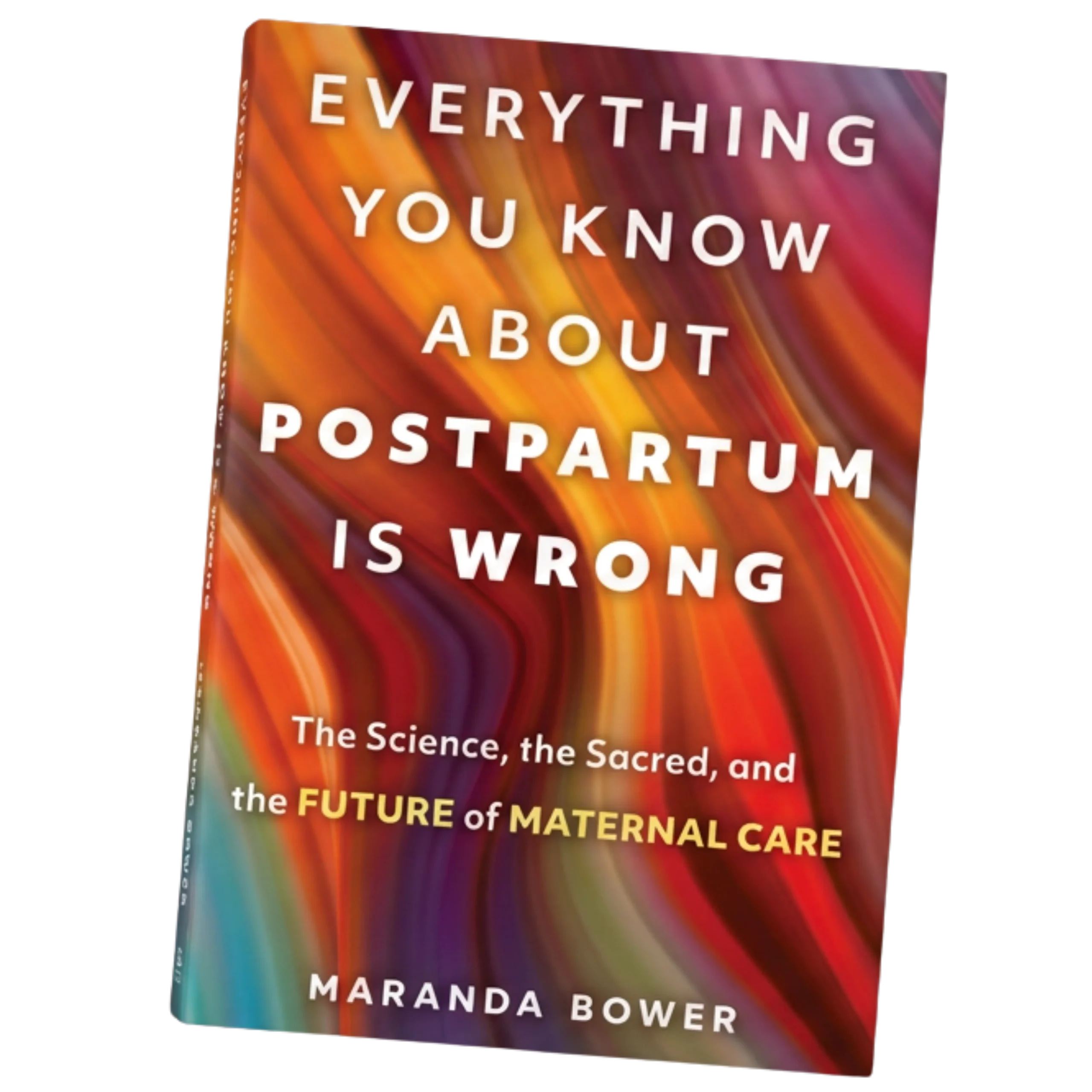
The New Book from Postpartum University®
Everything You Know About Postpartum Is Wrong
Now available for pre-order! For every provider who's felt the ache of offering more in a system built for less. And for every mother who knew something was wrong long before anyone believed her.
Pre-Order on AmazonThat is where this becomes a postpartum conversation.
And it is almost entirely absent from postpartum care.
How Fetal Microchimerism Was Discovered
The first documented evidence of fetal material transferring into the maternal body dates to 1893, when German pathologist Georg Schmorl identified placental cells in the lung tissue of women who had died of eclampsia. The observation was recorded and then, as happens with findings that do not fit existing frameworks, largely set aside.
It was not until the late 1960s and 1970s that modern detection methods allowed researchers to systematically confirm the presence of fetal cells in maternal blood — initially identified by the presence of male fetal DNA in the circulation of women who had carried male pregnancies (Walknowska et al., 1969; Schröder et al., 1974). The detection of a Y chromosome in a female body is unambiguous. There was only one place it could have come from.
The landmark study that transformed this from a curiosity into a research field came in 1996, when Diana Bianchi and her team at Tufts University published evidence that fetal cells with stem cell-like characteristics could be detected in the maternal circulation for up to 27 years after delivery (Bianchi et al., 1996). This was not residual genetic material. These were functional cells, capable of differentiation, persisting in the maternal body long after the pregnancy that produced them had ended.
Subsequent research confirmed and extended these findings. Fetal cells were identified in maternal bone marrow, where they appeared to integrate into hematopoietic populations and maintain long-term residence (O'Donoghue et al., 2004). They were found in thyroid tissue, liver, skin, lung, kidney, heart, and brain (Nelson, 2012; Khosrotehrani & Bianchi, 2005). In some cases, entirely male sections of thyroid tissue were identified in women — tissue that was histologically identical to the surrounding female cells but genetically distinct — suggesting that a fetal stem cell had migrated to the thyroid and differentiated into functional thyroid tissue (O'Donoghue et al., 2004).
The implications of this were not immediately clear. But one question became unavoidable: what are these cells doing there?
What Do Fetal Cells Do in the Mother’s Body?
Fetal microchimerism research has been built largely around three competing hypotheses, and the honest answer is that all three appear to have some merit depending on conditions that are not yet fully characterized.
The first hypothesis is that fetal microchimeric cells are pathogenic: that the presence of genetically foreign cells in maternal tissues contributes to immune dysregulation and autoimmune disease. This hypothesis was first proposed by J. Lee Nelson, who observed the striking overlap between the demographics of autoimmune disease (predominantly women of childbearing age and beyond) and the demographics of fetal microchimerism (women who have been pregnant) and hypothesized a causal relationship (Nelson, 2001). Fetal microchimeric cells have since been identified in the affected tissues of women with systemic sclerosis, Sjögren's syndrome, rheumatoid arthritis, systemic lupus erythematosus, primary biliary cirrhosis, and autoimmune thyroid disease (O'Donoghue et al., 2004; Ando et al., 2002).
The second hypothesis is that fetal microchimeric cells are protective: that they function as a biological endowment from child to mother, contributing to tissue repair, immune surveillance, and potentially long-term protection against certain diseases. Evidence for this direction has grown substantially in the past decade. Fetal microchimeric cells have been identified at sites of maternal tissue injury, including in healed cesarean section scars, where they expressed collagen and tissue remodeling markers consistent with active wound repair (O'Donoghue et al., 2014). In animal models, fetal cells migrate preferentially to sites of maternal organ damage and participate in regenerative processes (O'Donoghue et al., 2004). Emerging data has also suggested that the presence of fetal microchimeric cells may be associated with reduced cancer risk in certain contexts and extended survival in some malignancies (Boddy et al., 2015).
The third hypothesis is that fetal microchimeric cells are largely neutral: bystanders that neither harm nor help, whose presence in maternal tissues reflects a biological process that evolution has not yet resolved into a clear directional function.
None of these hypotheses has been conclusively established. What has become increasingly apparent from the research is that the direction in which fetal microchimeric cells influence maternal health is not fixed by the cells themselves. It appears to be shaped by the environment in which they exist.
This is the finding that changes everything about how this science relates to postpartum care.
Why the Postpartum Environment May Change How These Cells Behave
Fetal microchimeric cells are not passive. They are stem cell-like in their plasticity — capable of differentiating into multiple tissue types, capable of responding to local signals, capable of migrating toward sites of inflammation, injury, or chemical recruitment (Khosrotehrani & Bianchi, 2005; O'Donoghue et al., 2014). Their behavior is shaped by what the surrounding maternal tissue is communicating.
This creates a biological logic that is uncomfortable in its implications.
In a maternal environment characterized by resolved inflammation, adequate nutrition, immune regulation, and tissue stability — in other words, in a body that has been adequately supported through postpartum recovery — fetal microchimeric cells appear to function in ways consistent with tissue maintenance and repair. They migrate to sites of injury. They contribute to wound healing. They integrate into tissues in ways that do not provoke immune response.
In a maternal environment characterized by chronic unresolved inflammation, nutritional depletion, immune dysregulation, and persistent physiological stress — which is to say, in the conditions that modern unsupported postpartum reliably produces — the picture changes. The maternal immune system, already navigating a complex recalibration after birth, encounters cells carrying foreign genetic material in tissues where inflammation is active. The conditions that allow immune tolerance of microchimeric cells to be maintained are the same conditions that unresolved postpartum inflammatory states disrupt.
The immune system does not distinguish between foreign cells in a healing tissue and foreign cells in an inflamed one with the same precision. When maternal immune regulation is compromised, the microchimeric cells that may have contributed to healing under different conditions become candidates for immune targeting.
This is one proposed mechanism in the postpartum onset of autoimmune thyroid disease — a condition in which fetal microchimeric cells have been found with elevated frequency in affected thyroid tissue, suggesting the possibility that immune response to microchimeric cells in an inflamed thyroid may contribute to the initiation or perpetuation of autoimmune pathology (Ando et al., 2002; Srivatsa et al., 2001).
It bears stating clearly: the research here is still developing, and causal mechanisms have not been fully established. What is established is the association between postpartum immune dysregulation, the presence of fetal microchimeric cells in affected tissues, and the onset of certain autoimmune conditions. What the research has not yet resolved is the precise sequence of events and the conditions under which that sequence either completes or is interrupted.
What it has made increasingly clear is that the environment is not a passive backdrop. It is the variable that appears to determine the direction of this biology.
What Happens After Multiple Pregnancies?
The persistence of fetal microchimeric cells is not limited to the most recent pregnancy.
Research has documented the presence of cells from multiple pregnancies coexisting in maternal tissue simultaneously — including cells from pregnancies that did not result in a live birth (Nelson, 2012). Miscarriage, termination, and stillbirth all appear capable of producing fetal microchimerism. A woman's body may carry microchimeric populations from pregnancies she experienced decades apart, in tissues distributed across multiple organ systems.
This has implications that are only beginning to be examined.
From one direction, it raises the possibility that microchimeric populations accumulate across pregnancies, potentially increasing both the regenerative resources available to a woman's body and the complexity of immune management required to maintain tolerance of those populations. Women who have had multiple pregnancies show higher concentrations of microchimeric cells in some studies, which may be relevant both to their long-term health trajectories and to the cumulative physiological demands of repeated reproductive events.
From another direction, it raises questions about what each postpartum period means not only for the recovery from that pregnancy, but for the immune environment in which all previously acquired microchimeric populations are existing. Each postpartum window is, in this sense, not only a transition from one pregnancy but a physiological event affecting the long-term biological legacy of all pregnancies that preceded it.
This is not how we currently think about postpartum recovery. We treat each postpartum period as self-contained. As a recovery from a single event. As something that resolves — or should resolve — within a defined timeframe before becoming irrelevant to the woman's subsequent health.
The microchimerism research challenges that framing at a fundamental level.
Why This Changes How We Should Think About Postpartum Recovery
There is something that becomes visible when you hold fetal microchimerism alongside everything else we know about postpartum physiology.
We know that postpartum is an immunologically active window. We know that inflammatory signaling rises after birth as the immune modulation of pregnancy reverses. We know that nutritional depletion, digestive compromise, and nervous system dysregulation impair the resolution of that inflammatory state in modern unsupported postpartum. We know that women who do not receive adequate postpartum support carry a measurably elevated risk for autoimmune disease onset in the first year after birth.
We also know that every woman who has been pregnant carries genetically foreign cells in her tissues whose behavior is shaped by her immune environment.
When you place those two bodies of knowledge next to each other, a question emerges that postpartum care has not yet formally asked: to what extent is the long-term health trajectory of women who have been pregnant shaped by what happens — or fails to happen — in the postpartum windows that follow their pregnancies?
We cannot answer that question fully yet. The research is not there. Fetal microchimerism is a young field navigating extraordinary complexity, and the specific mechanisms through which postpartum conditions influence microchimeric cell behavior in humans have not been studied with the directness that question requires.
But the convergence of what we do know is not subtle.
The postpartum body is not simply recovering from a single event. It is navigating a profound immune transition while hosting a population of cells from a genetically distinct individual — cells whose long-term function appears to depend on the physiological conditions of the environment they inhabit. The quality of that environment, the adequacy of nutritional support, the resolution of inflammation, the regulation of immune signaling — these are not peripheral variables. They may be among the most consequential determinants of what those cells do over the course of a woman's life.
Why Fetal Microchimerism Is Missing From Postpartum Care
Microchimerism does not appear in standard postpartum training. It does not appear in the six-week visit. It is not part of the conversation most providers have with postpartum women, and it is not part of the framework most providers use to understand why postpartum recovery matters beyond the immediate newborn period.
This is a gap with consequences.
Not because providers need to become microchimerism researchers. But because understanding that the postpartum body contains a persistent, functionally active biological legacy from pregnancy — one whose behavior is environmentally sensitive and whose implications extend across decades — changes the weight we assign to postpartum support.
It changes the answer to the question mothers are so often asked, implicitly and explicitly: why does this window matter so much?
It matters because the physiology of the postpartum body does not close at six weeks. It does not close at six months. In some of the most biologically significant ways we have documented, it does not close at all.
A woman's body after pregnancy is not the same body it was before pregnancy. It carries new biology — stem-cell-like populations integrated into her tissues, capable of influencing her health, responsive to her physiological environment — that no one ever told her about, that no standard care framework accounts for, and that may be among the most compelling biological arguments for treating postpartum not as a brief medical afterthought but as a sustained physiological transition deserving of real, rigorous support.
The full picture of how to support that transition — nutritionally, immunologically, and systemically — is what the Postpartum Nutrition Certification program is built to address.
Because the biology does not wait for the system to catch up.
And neither do the women carrying it.
This article is original research synthesis by
Maranda Bower, founder of Postpartum University®.
You’re welcome to share excerpts or discuss these ideas publicly. When doing so, please credit the original work to Maranda Bower / Postpartum University® and link back to this article when possible.
To cite this article:
Bower M. Fetal Microchimerism: Why Your Baby’s Cells Stay in Your Body for Decades. 2026. https://postpartumu.com/research/fetal-microchimerism-postpartum/
----------------------------------------------------------------------------------------------
Looking for more published research? Access Maranda Bower’s external peer-reviewed work, including "Postpartum Digestion Is Not Normal Digestion: Why Nutrition Must Change After Birth," hosted by the Association for Prenatal and Perinatal Psychology and Health.
Citation:
Bower, M. (2026). Postpartum Digestion Is Not Normal Digestion: Why Nutrition Must Change After Birth. Journal of Prenatal and Perinatal Psychology and Health, 40(1), 101–111.
References
- Ando, T., Imaizumi, M., Graves, P., Unger, P., & Davies, T. F. (2002). Intrathyroidal fetal microchimerism in Graves' disease. Journal of Clinical Endocrinology & Metabolism, 87(7), 3315–3320. https://doi.org/10.1210/jc.87.7.3315
- Bianchi, D. W., Zickwolf, G. K., Weil, G. J., Sylvester, S., & DeMaria, M. A. (1996). Male fetal progenitor cells persist in maternal blood for as long as 27 years postpartum. Proceedings of the National Academy of Sciences, 93(2), 705–708. https://doi.org/10.1073/pnas.93.2.705
- Boddy, A. M., Fortunato, A., Wilson Sayres, M., & Aktipis, A. (2015). Fetal microchimerism and maternal health: A review and evolutionary analysis of cooperation and conflict beyond the womb. BioEssays, 37(10), 1106–1118. https://doi.org/10.1002/bies.201500059
- Khosrotehrani, K., & Bianchi, D. W. (2005). Multi-lineage potential of fetal cells in maternal tissue: A legacy in reverse. Journal of Cell Science, 118(8), 1559–1563. https://doi.org/10.1242/jcs.02332
- Nelson, J. L. (1998). Microchimerism and autoimmune disease. New England Journal of Medicine, 344(2), 141–142. https://doi.org/10.1056/NEJM200101113440211
- Nelson, J. L. (2012). The otherness of self: Microchimerism in health and disease. Trends in Immunology, 33(8), 421–427. https://doi.org/10.1016/j.it.2012.03.002
- O'Donoghue, K., Chan, J., de la Fuente, J., Kennea, N., Sandison, A., Anderson, J. R., Roberts, I. A., & Fisk, N. M. (2004). Microchimerism in female bone marrow and bone decades after fetal mesenchymal stem-cell trafficking. The Lancet, 364(9429), 179–182. https://doi.org/10.1016/S0140-6736(04)16631-2
- O'Donoghue, K., Choolani, M., Chan, J., de la Fuente, J., Kumar, S., Campagnoli, C., Bennett, P. R., Roberts, I. A., & Fisk, N. M. (2014). Microchimeric fetal cells play a role in maternal wound healing after pregnancy. Chimerism, 5(2), 40–52. https://doi.org/10.4161/chim.28746
- Scime, N. V., Grandi, S. M., Ray, J. G., Dennis, C. L., De Vera, M. A., Banack, H. R., Vigod, S. N., Boblitz, A., & Brown, H. K. (2024). Pregnancy complications and new-onset maternal autoimmune disease. International Journal of Epidemiology, 53(5), dyae115. https://doi.org/10.1093/ije/dyae115
- Schröder, J., Tiilikainen, A., & de la Chapelle, A. (1974). Fetal leukocytes in the maternal circulation after delivery. Transplantation, 17(4), 346–354. https://doi.org/10.1097/00007890-197404000-00003
- Srivatsa, B., Srivatsa, S., Johnson, K. L., Samura, O., Lee, S. L., & Bianchi, D. W. (2001). Microchimerism of presumed fetal origin in thyroid specimens from women: A case-control study. The Lancet, 358(9298), 2034–2038. https://doi.org/10.1016/S0140-6736(01)07099-4
- Walknowska, J., Conte, F. A., & Grumbach, M. M. (1969). Practical and theoretical implications of fetal-maternal lymphocyte transfer. The Lancet, 293(7606), 1119–1122. https://doi.org/10.1016/S0140-6736(69)91642-2