

[vc_row][vc_column][vc_raw_html]JTNDZGl2JTIwaWQlM0QlMjJidXp6c3Byb3V0LXBsYXllci0xMTQ3NTM1OSUyMiUzRSUzQyUyRmRpdiUzRSUzQ3NjcmlwdCUyMHNyYyUzRCUyMmh0dHBzJTNBJTJGJTJGd3d3LmJ1enpzcHJvdXQuY29tJTJGMTc0MDQ0MyUyRjExNDc1MzU5LXRpcHMtdG8tYXZvaWQtcG9zdHBhcnR1bS1hbnhpZXR5LWFuZC1kZXByZXNzaW9uLmpzJTNGY29udGFpbmVyX2lkJTNEYnV6enNwcm91dC1wbGF5ZXItMTE0NzUzNTklMjZwbGF5ZXIlM0RzbWFsbCUyMiUyMHR5cGUlM0QlMjJ0ZXh0JTJGamF2YXNjcmlwdCUyMiUyMGNoYXJzZXQlM0QlMjJ1dGYtOCUyMiUzRSUzQyUyRnNjcmlwdCUzRQ==[/vc_raw_html][vc_column_text css=””]
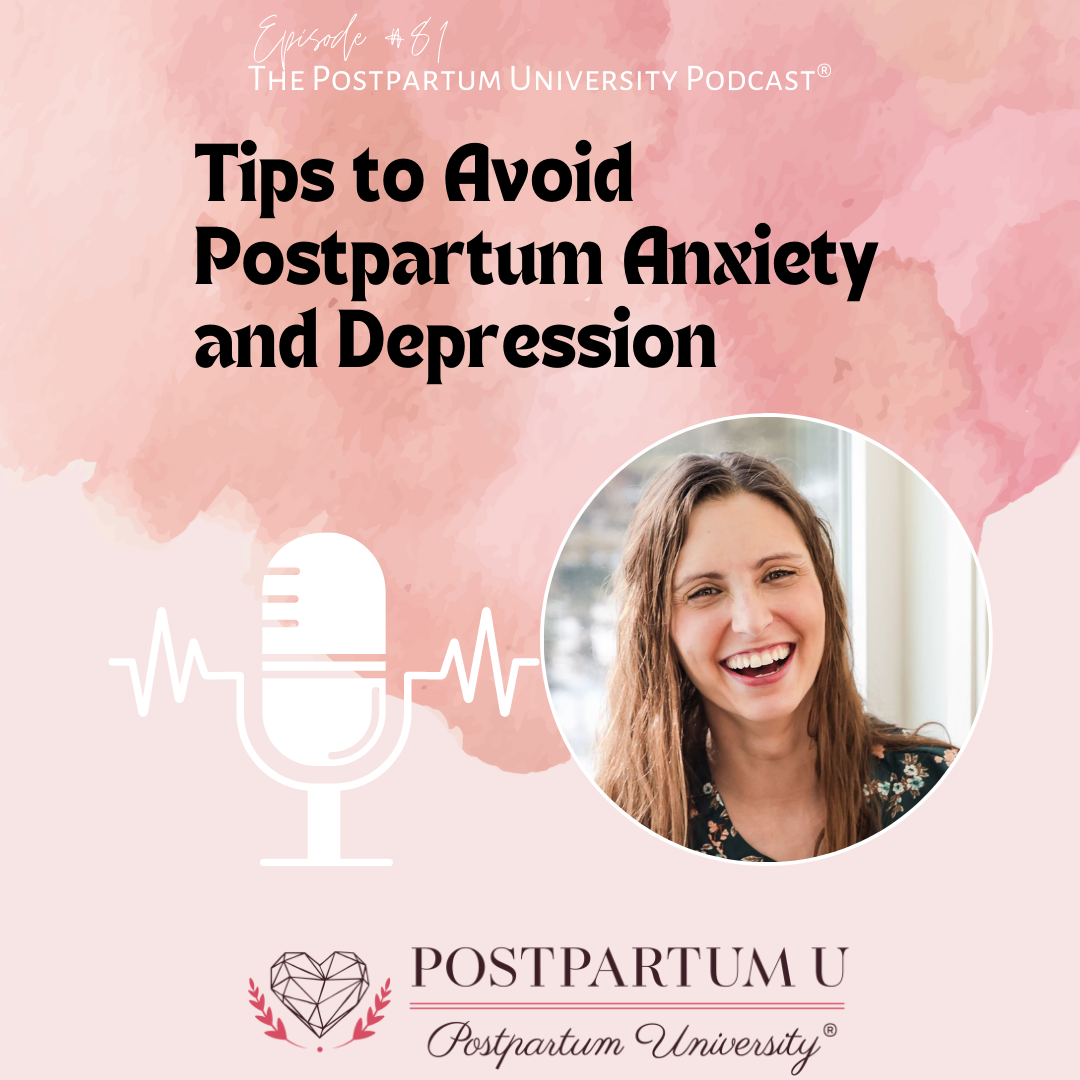
Tips to Avoid Postpartum Anxiety and Depression: Ep81
Are postpartum depression and anxiety unavoidable?
EPISODE AT A GLANCE
1.[4:00] Why Are Postpartum Mood Disorders So Common?
Postpartum mood disorders are not just a result of having a baby—there’s more to the story.
- Unmet needs and systemic gaps: Modern life lacks the community and support that once nurtured new mothers.
- Hormonal misunderstandings: Hormones don’t naturally “fall out of balance”; they’re disrupted by lack of nourishment and care.
Reframing the narrative helps moms recognize that there are steps they can take to avoid these challenges.
2. [8:30] Build Your Support System
Support is vital but often underestimated in its complexity. Here’s how to make it work:
- Define your needs: Do you need childcare, meal prep, or emotional support? Identify your biggest stressors.
- Get creative: Exchange childcare with friends or start meal prep parties to share the load.
- Make support ongoing: Avoid burnout by ensuring help doesn’t end after a few weeks.
Strong support systems reduce stress and create space for healing.
3. [16:00] Prioritize Nourishment
Proper nourishment is the foundation for physical and mental health.
- Focus on replenishing nutrients: Postpartum recovery requires nutrient-dense foods to restore depleted levels.
- Deficiency impacts: Common deficiencies are directly linked to depression and anxiety, yet they’re rarely addressed.
- Postpartum Meal planning tips: Prepare nourishing meals during pregnancy or with the help of friends and family.
Simple dietary changes can make a significant difference in how you feel postpartum.
4. [24:00] Regulate Your Nervous System & Embrace Modern Tools for Healing
A balanced nervous system is key to avoiding anxiety spirals and improving mood.
- Trauma awareness: Address past trauma and recognize its impact on your nervous system.
- Practical techniques: Deep breathing, mindfulness, and self-talk exercises can help calm an overstimulated system.
- Combat negative self-talk: Replace harsh inner dialogue with affirming, compassionate thoughts.
Regulating your nervous system supports emotional balance and resilience.
Postpartum healing isn’t just about surviving—it’s about thriving.
- Earplugs and sensory breaks: Reduce overstimulation with simple adjustments to your environment.
- Daily rituals: Incorporate moments of rest, hydration, and mindfulness into your day.
- Community support: Involve your family and children in creating a peaceful, healing space.
Small, intentional steps can transform your postpartum experience.
KEY TIME STAMPS for: Tips to Avoid Postpartum Anxiety and Depression EP 81
4:00 Why mood disorders aren’t inevitable
6:45 Hormonal misconceptions postpartum
8:30 The power of a creative and ongoing support system
11:00 Identifying and addressing your specific support needs
16:00 How nourishment impacts mental health and hormones
19:30 Nutritional deficiencies linked to postpartum mood disorders
24:00 Simple tools to regulate your nervous system
27:15 Trauma’s impact on the postpartum experience
30:45 Negative self-talk and its effect on healing
34:00 Modern postpartum healing practices
37:20 Meeting your basic self-care needs postpartum
Grab the full podcast transcript HERE.
LEAVE A REVIEW HERE:
Your feedback not only helps us improve but also allows us to reach more listeners who could benefit from this valuable information. Please take a moment to leave us a review on your favorite podcast platform. Thank you for your support!
NEXT STEPS
👍Rate, REVIEW & share the podcast
📱Connect on Instagram!
🍲Get Your Postpartum Nutrition Plan- Retiring Dec. 31, 2024!
📚Get a Copy of the BOOK: Reclaiming Postpartum Wellness
🎒FREE Provider’s Postpartum Nutrition Toolkit
🔔Sign up for the Postpartum Nutrition Certification Waitlist
🧠Perinatal Mental Health Certificate Training & Additional Courses for Providers & Postpartum Professionals
Thanks for being part of the Postpartum University Community!
[/vc_column_text][vc_row_inner][vc_column_inner width=”1/2″][vc_single_image image=”10863″ img_size=”large”][/vc_column_inner][vc_column_inner width=”1/2″][vc_single_image image=”10864″ img_size=”large”][/vc_column_inner][/vc_row_inner][/vc_column][/vc_row][vc_row][vc_column][vc_column_text css=””]
Transcript for: Tips to Avoid Postpartum Anxiety and Depression
Welcome to the Postpartum University podcast where we support you and your provider in understanding the science, the art, and the sacredness of healing after birth. I’m Maranda Bower, your host, your postpartum nutrition specialist, and homesteading mom with four wild kids. It’s time to get you the holistic, whole-body healing that works.
Hello my friends, welcome to another episode. And I want to dive into the topic today about avoiding postpartum mood disorders, particularly depression and anxiety. And I recently did an entire series on TikTok and it blew up in a very good way. So many people were very interested in this conversation because one, the weather’s changing, we’re going into the fall season, things are getting darker and colder, especially here in Alaska. And that greatly impacts the way that we feel, but also there’s like this overall idea that postpartum mood disorders are just normal. And we’ve done a great deal of normalizing those things within our society. And so I think it’s a really great topic to bring out that, hey, wait a second, you can actually help yourself avoid postpartum depression and anxiety and lower your chances of getting that.
And I know that this is probably going to meet a lot of controversy because I… I hear professionals in the field swear that this is absolutely not the case, that no matter who you are, no matter where you are in the world, that you are very likely, statistically speaking, to develop depression, anxiety, or any other mood disorder. And that is absolutely true. But we also need to take a second to step back and realize, hey, wait a second, we are actually in control of our body and our life. And we don’t have to succumb to these things. And so I want to have this conversation to really just empower women and families to recognize that there is something that you can do. Just because you have a baby doesn’t mean that you have to fall victim to it. And I know this because of my own experiences with depression, anxiety and postpartum bipolar, as well as a multitude of other issues that I’ve seen for myself and for my clients over the last decade. There are things that you can do, especially in pregnancy and beyond to really support yourself in healing your past traumas and the things that have come up for you, as well as supporting your nervous system and all of the things. So let’s talk about this.
Let’s talk about why women, first off, why women are experiencing high rates of postpartum depression and anxiety. And newsflash, it’s not because you just had a baby. That is not a solid reason why women are experiencing this. That is an excuse. We know that women are here to have babies. This has been going on since the dawn of time. And for just as long, many women have probably been experiencing mood disorders as well. We know this from historical documents, how postpartum, depression, and anxiety are and even psychosis have been well documented from thousands of years ago. And so we know that this has happened. We know that this exists, but not at the level that it currently does. And we just have to really step into that and admit the truth in that. Something that is happening in our world is not quite right. We are not supporting women in families like we once were. And so we really have to get to the root cause.
Why is this occurring? Your hormones are not naturally out of balance just because you had a baby. We are not supporting the natural fluctuation and so therefore they become out of balance and cause you a lot of disharmony and frustration and even mood disorders and anxiety disorders. So let’s talk about this a little bit more. One thing that I always recommend, and I’m just going to go step by step here, in order to support yourself and avoiding depression and anxiety and lowering your chances of having a diagnosis like this, is one finding your support system. I know I’m kind of sounding cliche here because we talk about this often. We hear it so much, especially from moms who’ve been in the depths of motherhood and the one reoccurring thing that we see so often is find your support system.
And yes, we talk about it often, but it sounds so much easier than what it really is in today’s world. It takes a lot of effort to find people who are going to support you in the way in which you need most. Not all support is created equal. And many of us don’t even know what we want or what we need in terms of support. We just know that we need it and we need some help. And we have to get really clear about what this means. And so one of my favorite things to do, and I talk about this in my upcoming book, Reclaiming Postpartum Wellness, I actually have a list of people that you can call upon and roles in which you might want them to play in your life. And it of course varies greatly depending on who you are.
Or maybe you want somebody to be coming to your house to clean and do dishes and help you with laundry. Or maybe you need somebody else to step into the role of childcare for your other children. Again, it’s very dependent on your particular situation, the things that stress you out the most. Those are the things that you want to find your support systems on, and often this takes creativity. We are not all obviously in a position to afford additional childcare or to afford someone to come in and clean up our house for us on the regular, but what we can do is get really creative with how we get people to support us, and here’s a couple of ideas that I recommend.
And when you have a baby, whether it’s in the first early weeks or months, or even several years after having a baby, call upon some of your friends and see about doing a childcare switch. Maybe your partner in the early postpartum weeks could host a movie night with your friends’ kids and you can watch them, or your husband or partner can watch them for a couple of hours and give your friend a break. And then that is returned to you in the same week. And so you’ll get several hours of time to yourself. Now, this generally is a concept that works far better for when you’re not in the early weeks postpartum, but if you start it now, the friend who you’re doing these exchanges with or even a family member who you’re doing these exchanges with will be more apt to support you and take your children for you for some hours and a long time and maybe some sleepovers if that’s feasible and really make that happen for yourself.
I’ve also seen this with doing housework and we have to look at this traditionally what happened hundreds of years ago. We actually didn’t have one house to clean up in. We actually worked together. We had community spaces and women would come together and clean those spaces together. That was our social time. Literally, we would clean houses together. We would go harvest food together. We would cook food together. And so, I just see this being done fairly frequently, where, and this is like a new thing now where people are actually like, hey, I’m going to go to your house today, and we’re going to go clean up your junk drawer, and we’re going to do this and like really just help you release that. And then later on in the week, or maybe next week, we’re going to do the same at my place. And it’s so refreshing to do this. And we see this often, not necessarily with cleaning, which I think is emerging more, but doing so with meals, especially in postpartum, going to each other’s homes and cooking big meals. I’m seeing meal planning parties take place, especially for our pregnant mamas. Instead of having a baby shower, everybody shows up with ingredients for a recipe and they make a giant batch of food and everybody’s just having a really good time cooking and creating in the kitchen.
I think this is just so much fun and it helps a mother really prepare and find those support systems that she needs. And this is so key. I mean, imagine walking into a postpartum and you’ll already have your meals plan, your house is spotless, you’ll have friends who are going to come over and help you with maintenance here and there. They’re going to watch the dogs for you and take them out for a walk. They’re going to take out your kids to the park and do things once in a while. When you have those support systems set up, everything becomes better, but it shouldn’t end. And I think that’s the key component that sometimes we get lost in. A couple of weeks after having support systems, and then all of a sudden you’re expected to do all of the things. That’s not very fair either. And so oftentimes we get kind of like lost in all of it and the expectations of, well, you’re a mom, you’re supposed to be able to do it all now. It’s been a couple of weeks. What’s, what’s wrong? What’s the problem? I actually remember my mom saying this to me two weeks after having my first. She was like, well, it’s been two weeks. What do you mean you can’t get up and do things like you did before? It’s time. And she meant well, she was trying to be helpful, but it was so hurtful. And I didn’t understand what was happening in my body. Like why couldn’t I get back to the things that I was supposed to be doing? You know what, I’m still bleeding. I’m still struggling with latching and I’m still sleep-deprived. And we don’t take enough of that into consideration. I don’t care if you’re two months postpartum or four years postpartum, find the things that are super stressful for you in your life and find a support system for it.
So I kind of given you some ideas, but sometimes it takes a lot of creativity. Whether you hire someone or you get super creative on how to figure out how to make that work for yourself, whatever it is, make it happen. Because it’s so refreshing and rejuvenating to be able to step back from that stress and be like, ah, my meals are planned. Oh, I finally get a moment to myself. Whatever the case may be, make it happen for yourself. So step one of avoiding postpartum mental health.
Challenges is getting the support systems you need, whether that’s right now, whether that’s, you know, as you’re maybe you’re pregnant and you’re prepping for that postpartum, whatever the case might be, find it, okay? Are you loving this podcast? I’m going to be real with you. Words of affirmation are my love language. And if you have any questions, feel free to ask them in the comments below. Leave a review, I seriously want to express my appreciation for you. So here’s what you want to do. Leave a review here on Apple Podcast or on our Facebook page. Snap a photo and then send it to the email provided in the show notes. And as a huge thank you, we’re going to send you access to a library of exclusive trainings, paid content, and never before seen interviews that you don’t want to miss. Thanks so, so, so much my friend from the bottom of my heart.
Nourishment. I cannot stress this enough. No matter where you are in your postpartum experience, nourishment is so, so vital. It’s vital for the way you feel on a daily day. It’s vital for your hormones to function. It even impacts your level of sleep and your ability to fall asleep and stay asleep and get restful sleep. It impacts so many different parts of who we are and it greatly impacts our baby. So when our baby is breastfed and we are malnourished and eating way, shape, or form that does impact the breast milk. Of course, breast milk is always, you know, the best, right? And I really strongly feel that when we take care of ourselves and our nourishment, we will simultaneously meet the needs of our baby as well. So, focusing not on foods that are great for breastfeeding, but focus on foods that are great for nourishment and rejuvenation and regeneration of mom. And that is where we want to focus our attention. So I talk about this extensively and a multitude of episodes here on the podcast. Episode five and episode 60 come into mind. So you can definitely go take a look at those. But our body simply cannot function nor can it balance hormones when we are nutrient deprived. And we have grown a human being takes a lot of work to do that and then to birth that baby into the world. And many of us are deprived of food in the labor and birth experience on top of how having our bodies needing a lot of rest and nourishment in order to heal after carrying a baby and birthing a baby into the world. And then we nourish that baby with our own bodies for most of us. And so it’s really critical that we step up our nutrient game. We require so much more. And this is why so many cultures around the world focus heavily on postpartum nutrition and supporting their bodies with that healing. We know that a multitude of maternal mental health challenges are directly related to common deficiencies. And so many deficiencies are directly linked to the feelings of depression and anxiety. It’s so much so that it’s mind boggling to me that we don’t test the nutrient levels of new moms before diagnosing them with depression and anxiety. So anyway, I’m gonna get on a tangent there. I can feel it coming, but really, really critical is that you focus on your nutrients. It is so powerful, so critical, and we have the tools to help you do that. You can look at the postpartum nutrition plan on our website, postpartum you, the letter you .com /nutrition, and you can learn more. I give you all of the recipes, how to make it, everything right at your fingertips, so you don’t have to think about it. You don’t have to do anything more, but eat some meat. And that are so, so good for you. Okay.
So here’s the third part of avoiding postpartum depression and anxiety. And this is a really big one. And it’s nervous system regulation. Okay, I know you’re probably thinking what in the world does that mean Maranda? And I am absolutely going to tell you, but our nervous system greatly impacts the way that we are feeling, obviously. It runs our hormones, it runs our moods. It affects us on so many different levels. And when our nervous system is out of balance, the rest of our body is out of balance as well. It’s just, it’s such a vital part of who we are. So much so that I… have an entire 12 week training on this coming soon. So I just, I like it’s massive. So I couldn’t go into the full depth here, but there’s a couple of components that you need to know about that runs your nervous system. One is trauma. If we’ve had any sort of trauma within our life. Oftentimes stemming from early childhood, through teenage years into adulthood and even coming up right into the birth, if we’ve had pregnancy, birth, or even postpartum trauma, those things rewire our nervous system to function at a higher level, meaning, meaning that our body is going to be wired to sense danger that much easier.
And so, in postpartum, your brain changes to be able to sense danger very easily. And this is a biological normal. It’s necessary for you and your baby’s life and the continuation of life as we know it.
And so, for a mother to be able to sense the danger that is occurring is really important. And when we add trauma to the story, when our nervous system is acting in a heightened state of awareness on top of these normal postpartum shifts and changes, what we have oftentimes is a recipe for disaster. In order to keep your nervous system at this high level, state, it requires a lot of extra energy, which is not something that we have a lot of in this postpartum period. It also requires a lot of nutrients. It requires a lot of hormones and it shifts your hormones to function in a different way.
This is often why our thoughts tend to get out of control. I know that my personal experience and what I see from my clients often is that when you get close to stairs or when you’re about to jump into your car and to go to the grocery store, the anxiety that that sometimes causes or even getting close to a balcony, whatever the case may be, your body immediately senses that danger, and so much so that it sends these scary, yucky, disgusting thoughts into your head. And then we panic over those, “Oh my gosh, why did I think those thoughts? How in the world did that just come into my head? I feel like, I feel gross. I feel like a terrible mother. Is that actually going to happen?” And the spiral, right? Now your nervous system is like, “Uh-oh, now I’m sensing danger even more.” And then the spiral continues on. And now you become afraid of it. And it’s almost like another trauma layer that’s added to it.
This is simply your body being able to sense the danger of the situation at hand. And one of my favorite techniques, if you’re listening in, you’re like, “Oh my gosh, this is so mean,” is to simply recognize in the moment and thank your body, say, “Oh my gosh, I’m so grateful that you are letting me know, body, that there is some serious danger right here. You’re right. There is danger getting in my car, right? Let’s acknowledge that. There is danger going down the stairs.” But your body also needs to know that you’ve got it and everything is under control.
So remind your body, remind yourself that you know what? Thank you so much, but I’ve got it. I’ve got this under control. This is perfectly fine. My baby and my body is safe. And remember that and repeat to yourself over and over. I am safe. I am safe right now and take deep breaths and that will calm the nervous system and it won’t spiral so much out of control. So see if that helps you. And it’s a really good indicator that your nervous system is operating at a really high level.
And so, some things that will also help and some things that I also see with this. So there’s trauma, but there’s also negative self-talk. And I see this over and over and over. And again, how we talk to ourselves as mothers so terribly, it’s like an abusive relationship of our self. How many times do we tell ourselves that was so stupid? Well, if you were just skinnier, this wouldn’t be a problem. Or how come I never can get this right. I’m such a failure. If you hear yourself saying these things, it’s going to trigger your nervous system to operate in this heightened state of awareness. And it’s going to do some yucky things to your body and to your brain.
And so, if you feel yourself saying these things again, this is something that we would hear from an abusive relationship. And oftentimes we’re the ones saying it to ourselves. Like we’re in our own abusive relationship and it takes a lot of time and energy to make these shifts happen for yourself, but it’s well worth it. So pay attention to these thoughts. See where they’ve come from. Do they stem from a trauma that’s happened to you in your life in the past? And replace those negative thoughts with positive thoughts. This is really important. It’s not the whole story, but it’s a huge component to the way we communicate with ourselves and again how our body functions in that communication.
So take that into consideration. And the other component too of a heightened nervous system is often a state of lack. When we lack self-care, when we lack nourishment, when we lack sleep, when we lack grace, those all contribute to a heightened nervous system response. And it’s sometimes easier to think of it when your baby is upset and crying, right? What are the things that we can do? First, make sure their basic needs are met. Do they need to go potty? Do they need some food? Are they thirsty? Like we can think of our kids, not just our infants, but what do they need in the moment and then ask yourself what do you need in the moment, you know? Do you need to go to the bathroom? How often do we hold that because we think that we can’t go to the bathroom or take a break for ourselves? Or you know, we’ve warmed up the coffee about five different times and we haven’t taken a sip and I bet you if you’ve done that, you probably haven’t taken a sip of water and you’re really dehydrated as well. So, listen in to the cues of your body.
Oftentimes, being in an environment that’s not overstimulating to yourself, right? If you’re a mom who is overstimulated by noise, get yourself some ear plugs. Uh-huh. Kids are ready, loud, and there’s absolutely no reason why you can’t have earplugs to support you and lowering that noise level to something that feels more tolerable to you. Turn out your lights for five minutes. Focus on deep breathing during that time. Invite your children in to participate with you. It can really support your nervous system.
Okay. So I have a couple of more things that I can easily get into. I will tell you that so much more is coming out in my latest book. I don’t have a release date just yet. Just know that it is on its way and I’m giving you some serious practical tips, like actual actionable things that you can do in your life, just like I shared with you in today’s episode. So if you liked it, thank you so much. I hope you feel inspired enough to leave a positive review and get in touch with us. Let us know how this has helped you and what topics you love us to go in further with because this is a really big deal.
And again, you do have so much control over your body and your body, and motherhood. And oftentimes, we just need those modern tools to support us in healing our body and our mind and our spirit. And when you have those in place and you start making that a part of your daily life, things will change significantly. Love this episode? Let us know by leaving an amazing review. Your support is everything. Want more? Head over to postpartumu.com. That’s postpartum, the letter u.com, and explore how we support moms like you in holistic whole body healing that’s specific for the unique needs of mamas in the years postpartum. See you there.[/vc_column_text][/vc_column][/vc_row]