

“Where’s the science?”
It sounds like a reasonable question. A responsible one. The kind of question we’re trained to ask when we care about rigor, safety, and doing things the “right” way. Sometimes it is asked in good faith. Often, though, especially in postpartum care, it functions as something else entirely. Not a doorway into deeper questions, but a full stop. A way to end the conversation precisely at the moment it should widen.
I have been asked that question more times than I can count. By providers. By students. By skeptics. By people who genuinely want to help and don’t know what to trust. And every time, I feel the same tension rise in my body: a deep reverence for science, and a growing rage at how it has been used to silence women.
Because I know what lives on the other side of that question.
I have lived in the space where postpartum science runs out. I have worked there. And for more than 15 years, I have sat with women there. Women whose bodies were unraveling while the system insisted there was nothing left to investigate.
When I became a mother, what happened to me did not resemble the neat explanations I was offered. I was not simply sad. I was not adjusting poorly. I was not overwhelmed in a way that reassurance or mindset shifts could touch. My heart raced constantly. My hands shook. My hair fell out in clumps. I could not sleep even when my baby slept. My mind felt unstable in a way that frightened me.
What I was given was a label.
Postpartum depression.
Postpartum anxiety.
Hormones.
No one asked why my physiology was collapsing. No one looked for depletion, trauma, endocrine dysfunction, inflammatory load, neurological stress, or the cumulative cost of pregnancy, birth, and sleeplessness layered onto a female body. No one slowed down long enough to consider that what looked psychiatric might actually be systemic.
That moment matters, because it reveals something foundational about postpartum care: when science does not have an immediate, well-funded, protocolized answer, curiosity stops.
And postpartum is full of places where curiosity stops.
**And postpartum is full of places where curiosity stops. Nowhere is this silence more devastating than in the unexplained intersection of maternal depletion and immune dysfunction—a critical blind spot explored in Postpartum and Autoimmune Disease: The Missing Link in Women’s Health.
This article is original research synthesis by
Maranda Bower, founder of Postpartum University®.
You’re welcome to share excerpts or discuss these ideas publicly. When doing so, please credit the original work to Maranda Bower / Postpartum University® and link back to this article when possible.To cite this article:
Bower M. The limits of science in postpartum care. Postpartum University. Published 2026. https://postpartumu.com/research/the-limits-of-science-in-postpartum-care/--------------------------------------------------------------------------------------------
Looking for more published research? Access Maranda Bower’s external peer-reviewed work, including "Postpartum Digestion Is Not Normal Digestion: Why Nutrition Must Change After Birth," hosted by the Association for Prenatal and Perinatal Psychology and Health.The New Book from Postpartum University®
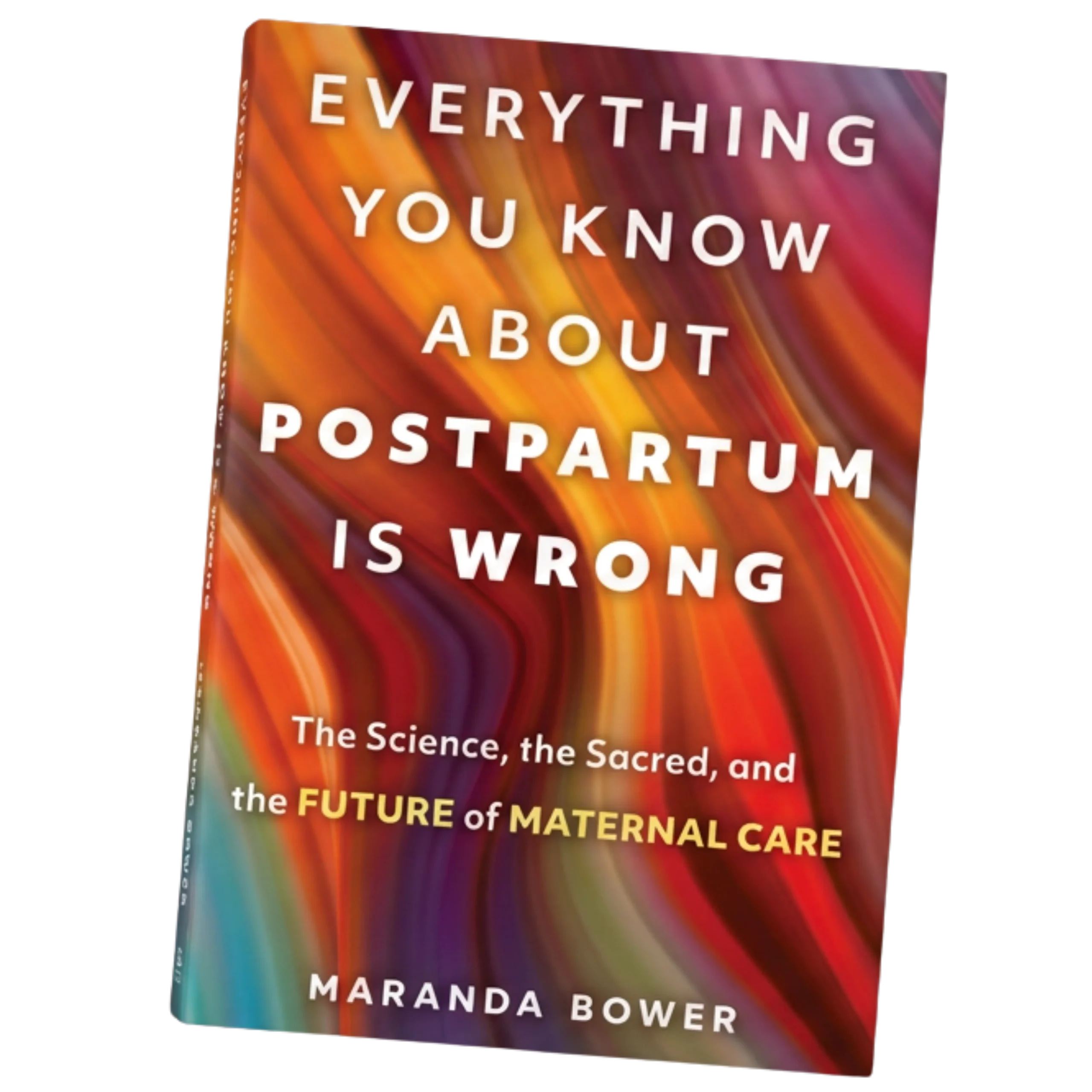
Everything You Know About Postpartum Is Wrong
Now available for pre-order! For every provider who's felt the ache of offering more in a system built for less. And for every mother who knew something was wrong long before anyone believed her.
Pre-Order on AmazonCitation:
Bower, M. (2026). Postpartum Digestion Is Not Normal Digestion: Why Nutrition Must Change After Birth. Journal of Prenatal and Perinatal Psychology and Health, 40(1), 101–111.
The Modern Postpartum Contradiction
We live in an era of astonishing medical capacity. We can transplant organs. We can treat diseases that were once fatal. We can image, measure, and map the human body with remarkable precision.
And yet, after one of the most physiologically demanding events many women (or any human for that matter) will ever experience, care often collapses into a single brief encounter and a handful of screening questions. If something falls outside those narrow parameters, it is frequently labeled, managed, or dismissed rather than investigated. This contradiction is not accidental. It is structural.
Postpartum recovery is not a clean, isolated event. It is multi-system. It unfolds over months and years. It involves profound shifts in endocrine function, immune regulation, neurological wiring, nutritional reserves, sleep architecture, and identity. It is deeply shaped by context: food access, support, stress, trauma, culture, and expectations (and so much more).
Modern medical research, by contrast, is built to isolate variables, shorten timelines, and produce outcomes that fit existing funding and care models. When postpartum does not fit those models, the response has not been to redesign the science. It has been to reduce postpartum until it does.
Six weeks becomes the endpoint.
Screening replaces investigation.
Symptom management replaces restoration.
And when women do not recover within that artificially narrow frame, the failure is quietly assigned to them rather than to the model.
When Acknowledgment Replaces Action
In recent years, institutions have begun to publicly admit what mothers and providers have been saying for decades: postpartum care, as it currently exists, is insufficient.
The most commonly cited example is American College of Obstetricians and Gynecologists’s statement that postpartum care should be viewed as an ongoing process rather than a single six-week visit.
On paper, this sounds like progress. In reality, it has functioned largely as acknowledgment without transformation (and dare I say, a means to simply quiet those of us getting a little “too loud”).
A statement does not restructure care delivery.
A statement does not change reimbursement.
A statement does not mandate training, accountability, or follow-up.
It names a problem that is already well known… and then leaves the system intact.
This distinction matters, because performative acknowledgment can silence concern without producing change. It signals that the issue has been “handled,” even as mothers continue to fall through the same gaps.
Let me be clear about this, because it matters for everything that follows: I love science.
I am not anti-science. I am not here because I rejected rigor. I am here because science stopped too early.
Science is powerful. It saves lives. It gives us language, mechanisms, and guardrails. But postpartum exists at the edges of what modern science has been designed (and funded) to handle. And when we pretend otherwise, we do real harm.
Because what actually happens in the absence of postpartum-specific research is not neutrality. Mothers are not left untouched. They are funneled into the narrowest, most studied pathways available: diagnostic labels, medications, reassurance without inquiry. Meanwhile, lower-risk, physiologically plausible supports such as nutritional restoration, extended rest, traditional postpartum care practices, are dismissed because they lack the kind of studies postpartum is structurally prevented from producing.
This is not scientific humility.
It is evidence hierarchy failure.
The Data We All Want
I am writing this because I am done watching science be used as a gatekeeper instead of a guide.
I have watched thousands of women repeat my story. Women whose “postpartum depression” resolved when iron depletion was addressed. Women whose anxiety tracked with thyroid dysfunction that also healed when responded to entirely. Women whose insomnia reflected cortisol dysregulation and neurological overload. Women whose rage was not pathology, but a nervous system pushed past its limits.
The data is there—in physiology, in patterns, in outcomes, in history. What is missing is institutional willingness to count it.
This article is not an opinion piece. It is not a rejection of evidence-based care. It is a long-form examination of why postpartum science is so limited, how that limitation is weaponized, and what rigor actually looks like inside an evidence-starved field.
Because the absence of postpartum-specific research is not proof that mothers are fine. It is proof that the system failed to study what mattered.
And to understand how that happened and what must change, we have to begin where all medical research begins, long before a single study is designed:
With money.
Limitation #1: Science Follows Money And Postpartum Has Never Had A Budget
Modern medical science does not grow in proportion to human need. It grows in proportion to funding.
Before a single hypothesis is tested, before ethics boards convene, before methodologies are debated, a more basic question has already been answered: who is paying for this, and why? That question shapes not only what gets studied, but what is considered worthy of study at all.
Postpartum health fails at this earliest gate.
Not because it lacks importance, severity, or consequence but because it lacks a clear financial home.
Women’s Health Is Chronically Underfunded (& Postpartum Barely Registers)
Analyses of U.S. biomedical research funding have repeatedly shown that conditions affecting women receive less research funding relative to disease burden than conditions affecting men or mixed populations. This pattern has been documented in reviews of funding allocations from the National Institutes of Health and other major funding bodies.
A widely cited analysis published in the Journal of Women’s Health (2021) demonstrated that diseases affecting women receive significantly less research funding. This discrepancy is particularly pronounced in reproductive and maternal health.
To put this imbalance in context:
- Diabetes, which affects roughly 11% of the U.S. population, receives over $1 billion annually in NIH research funding.
- Erectile dysfunction, a non–life-threatening condition affecting quality of life, has received hundreds of millions of dollars in NIH-supported research and related federal investment, alongside rapid pharmaceutical development and sustained clinical prioritization.
- Endometriosis, which affects approximately 1 in 10 women and carries enormous costs in pain, infertility, lost productivity, and medical utilization, historically received under $20 million annually, with only recent, modest increases.
Postpartum health does not even rise to this level of visibility.
It is not tracked as a standalone research category with dedicated funding targets. It does not have a consolidated institute, a defined portfolio, or a sustained pipeline of grants designed to study postpartum physiology, recovery, and long-term outcomes as a unified process. Instead, postpartum is scattered across adjacent domains: general mental health, obstetrics, pediatrics, reproductive endocrinology, without a central mandate to study the postpartum body as a system.
What is not named is not funded.
What is not funded does not accumulate science.
This is how entire domains of human experience quietly disappear from the research record.
Fragmentation Is Not Neutrality, It’s Erasure
Because postpartum is not treated as its own scientific domain, research that does exist is fragmented by design. One study may examine screening tools for postpartum depression. Another may look at lactation outcomes. Another may briefly assess maternal mood at six weeks postpartum.
What is rarely studied is the whole.
There is little sustained investigation into:
- multi-year endocrine recovery after pregnancy
- cumulative nutrient depletion across pregnancies
- immune and inflammatory recalibration postpartum
- neurological and autonomic nervous system changes
- or long-term maternal outcomes after births deemed “uncomplicated”
This is not because these questions are unimportant. It is because they are expensive, complex, long-term, and poorly aligned with funding structures built for acute, isolatable problems.
Postpartum recovery is not a disease. It is a process. And processes do not fare well in a research economy optimized for products.
To see how deeply this mismatch runs, we can look at the timelines most postpartum research actually uses. The majority of studies examining postpartum outcomes stop at six weeks, three months, or at most six months after birth. Follow-up beyond that window is uncommon, despite the fact that a woman’s endocrine, immune, neurological, and musculoskeletal systems are still actively adapting well beyond the first postpartum year.
In effect, research timelines mirror clinical abandonment.
Six weeks has become a scientific endpoint not because recovery is complete, but because it aligns with insurance coverage, obstetric discharge, and short-term study feasibility. Six months is treated as “long-term” in postpartum research, even though pregnancy itself lasts nine months and induces physiological changes that are well documented to persist for years. The studies simply stop as if a woman’s body stops changing once the infant is no longer classified as a newborn.
This shortness creates a distorted evidence base. When researchers conclude that postpartum symptoms “resolve,” they are often describing what happens within a narrowly defined window, not what happens to women over time. Chronic fatigue, autoimmune activation, endocrine dysfunction, pelvic injury, and mental health disorders that emerge or intensify after the first postpartum year fall outside the scope of most studies and not because they are rare, but because they are inconvenient to track.
In other words, the research ends where the recovery has barely begun.
This is not a neutral methodological choice. It systematically renders long-term maternal outcomes invisible, reinforcing the false narrative that postpartum is brief, self-limiting, and largely complete within weeks or months. A process that unfolds over years is being studied as if it were an acute event, and the resulting “evidence” reflects that distortion.
Privatization Shapes What Science Becomes Possible
Much of modern research depends on privatized funding pathways—pharmaceutical companies, device manufacturers, and industry-aligned partnerships that understandably prioritize interventions with commercial viability.
Postpartum care offers little in that regard.
The most consistently effective supports for postpartum recovery are extended rest, traditional herbs, nutritional repletion, warmth, social protection, continuity of care, time… which all cannot be patented. There is no proprietary molecule for community support. No device for herbs or warmth that cannot be done at home. No scalable product for cultural containment of the postpartum period. (But do note that infant and maternal sleep is a multi-billion dollar industry…)
As a result, postpartum science is structurally disincentivized within a system where research investment is expected to produce intellectual property and therefore financial return.
This is why we see robust funding for medications targeting postpartum depression within the brain only, while research into the physiological drivers of postpartum mood symptoms like iron deficiency, thyroid dysfunction, inflammation, cortisol dysregulation, nutrient depletion, all remains sparse, fragmented, or relegated to adjacent fields.
Science follows money.
And postpartum has no financial champion.
The Economic Argument Is Overwhelming (And Still Ignored)
The absence of funding is not due to lack of cost.
Untreated perinatal mood and anxiety disorders alone are estimated to cost the United States approximately $31,800 for a mother–child pairs from pregnancy through five years postpartum. That figure reflects lost productivity, increased healthcare utilization, adverse child outcomes, and long-term public sector costs.
That estimate addresses mental health only.
It does not capture the economic burden of untreated postpartum autoimmune conditions, chronic fatigue, endocrine disorders, musculoskeletal injury, long-term disability, or the downstream health effects on families and communities when maternal health collapses.
From a public health perspective, from a governmental cost-saving perspective, from a business and workforce sustainability perspective, investing in postpartum science should be an obvious priority.
But cost burden alone does not generate research funding.
Because while postpartum care may save money long-term, there is no clear entity positioned to profit in the short term. Public health savings are scattered. The benefits are distributed across families, employers, healthcare systems, and communities—not captured by a single funder.
So despite overwhelming evidence that suffering mothers is expensive, postpartum science remains underfunded because no one gets paid to fix it. And quiet frankly, putting it on the shoulders of mothers themselves has been all too easy to do.
When Lack Of Funding Becomes Lack Of “Evidence”
This funding reality creates a dangerous feedback loop.
Because postpartum-specific research is limited, providers are told they must rely strictly on evidence-based guidelines that were never designed for postpartum physiology. When those guidelines fail, the failure is attributed not to gaps in scientific knowledge, but to individual women and framed as non-compliant, overly anxious, hormonally unstable, or psychologically fragile.
And when clinicians, educators, or researchers attempt to bridge those gaps by drawing from adjacent sciences (endocrinology, nutrition science, immunology, neuroscience, systems biology) they are met with a familiar refrain:
Where’s the science?
The implication is clear: unless a study exists with postpartum explicitly in the title, the information is presumed invalid.
This is not how science works.
In fields where direct evidence is sparse, early-stage, or structurally underfunded, scientific understanding is built by synthesis across related domains. This is not a deviation from rigor; it is the foundation of it. Knowledge does not appear fully formed once a funding stream opens. It accumulates first through mechanism, pattern recognition, and convergence of evidence long before condition-specific trials exist.
This is how entire scientific disciplines have developed. Neonatology emerged before neonatal-specific randomized trials were widespread. Psychoneuroimmunology was built by linking findings across immunology, neurology, and psychiatry decades before it was formally named. Much of what is considered standard care in pregnancy, pediatrics, and rare disease management still relies on extrapolation from adjacent physiology because direct trials are impractical, unethical, or prohibitively expensive.
Postpartum care is no different.
The expectation that postpartum knowledge must be validated exclusively through randomized controlled trials misunderstands both the nature of postpartum recovery and the purpose of evidence hierarchies. Those hierarchies were designed primarily for discrete, patentable interventions (particularly pharmaceuticals) and not for complex, multi-variable physiological processes unfolding over months or years. When they are applied uncritically to postpartum recovery, they function less as safeguards and more as gatekeepers.
What follows is predictable: providers are discouraged from thinking systemically, women are blamed when protocols fail, lived experience is dismissed as anecdote, and postpartum care remains perpetually “under-evidenced.” Not because understanding is impossible, but because knowledge built through synthesis is deemed unacceptable unless it arrives pre-packaged as a randomized trial.
Postpartum recovery does not suffer from a lack of biological plausibility or clinical signal. It suffers from a system that mistakes lack of funding for lack of truth.
And that is not rigor.
It is abandonment.
Why Money Comes First
Every other limitation of postpartum science flows from this one.
Ethical constraints matter—but ethics boards convene only after funding exists.
Male bias matters—but funding priorities shape whose bodies are studied.
Time-lag matters—but only after research is done at all.
Postpartum science is limited not because mothers are too complex.
It is limited because complexity is expensive, unprofitable, and inconvenient.
And until we name that plainly, no amount of methodological debate will solve the problem.
The next limitation is not about intention.
It is about who science was built to see and who it learned to treat as secondary.
Limitation #2: Male Bias (In Bodies Studied + Decisions Made)
Male bias in medical science is often misunderstood as an accusation of intent. It is not. It is an observation of reality.
I love science. I rely on it. I have built my life’s work inside it. And because of that, I am unwilling to pretend that it has been neutral.
For most of modern scientific history, the male body has been treated as the default human body: stable, representative, worthy of study. Female biology, by contrast, has been treated as variable, cyclical, and therefore inconvenient. Pregnancy and postpartum exist at the far edge of that inconvenience, not because they are unknowable, but because they disrupt the assumptions on which biomedical research was built.
This did not happen because men are cruel or indifferent. It happened because systems are shaped by who is centered within them. Scientific questions emerge from familiarity. Norms are established around bodies that are easiest to study, easiest to standardize, easiest to generalize. When male physiology becomes the baseline, female physiology becomes the deviation. And when deviation becomes the frame, reproductive-stage biology is not studied deeply and it is controlled for, compressed, or avoided altogether.
Postpartum women live inside the consequences of that choice.
The postpartum body is not a slightly altered version of health. It is a body that has undergone massive cardiovascular expansion, endocrine reprogramming, immune modulation, tissue remodeling, neurological adaptation, and metabolic strain, often layered with sleep deprivation, lactation demands, psychological transition, and social isolation. There is nothing subtle about this state. And yet the scientific norms used to evaluate it were never designed to account for it.
I want to be very clear: this is not a condemnation of men.
There are men who have advanced women’s health in profound ways. Men who have fought for maternal safety, reproductive autonomy, and better science. This is not about individual morality. It is about what happens when decision-making power, research priorities, and scientific defaults are shaped by bodies that have never undergone the physiological transition being defined.
Male bias in science does not require bad actors.
It requires inertia.
It requires a default that goes unquestioned for long enough that it becomes invisible.
And postpartum has lived in that invisibility for generations.
How Male Physiology Became the Scientific Default
In 1977, the U.S. Food and Drug Administration issued formal guidance recommending the exclusion of “women of childbearing potential” from Phase I and early Phase II drug trials. The stated rationale was protection and concern about fetal exposure and reproductive risk. In practice, the effect was far broader. Women were systematically removed from the very stage of research where fundamental questions about dosing, safety, pharmacokinetics, and physiological response are first answered.
This policy did not merely limit participation. It shaped the evidence base itself. When women are absent at the point where baseline human responses are defined, male physiology becomes the unspoken standard. Everything that follows—recommended dosages, “normal” lab ranges, adverse effect profiles—is built on that foundation and later generalized outward.
Postpartum women were never part of this equation.
The result was a medical literature that treated female reproductive biology as a complicating factor rather than a central subject of inquiry. Pregnancy, lactation, and postpartum recovery were framed as periods too complex, too risky, or too variable to study rigorously. Instead of redesigning research models to accommodate that complexity, the system largely opted out.
This exclusion persisted for more than a decade.
It was not until 1993 that the U.S. Congress passed the NIH Revitalization Act, requiring the inclusion of women and minorities in NIH-funded clinical research.
On paper, this marked a turning point. In reality, it was a partial correction to a much deeper problem.
“Inclusion” did not mean that studies were powered to analyze sex-specific outcomes. It did not require meaningful disaggregation of data by sex, reproductive stage, or postpartum status. It did not mandate long-term follow-up for women whose physiology was changing rapidly over time. And it did not retroactively correct decades of male-centered assumptions already embedded in clinical practice.
Postpartum physiology, in particular, remained largely invisible.
By the time women were formally allowed back into research, the architecture of medical knowledge was already in place. Norms had been established. Definitions had been written. Clinical guidelines had been shaped around bodies that were not women. And that were certainly not pregnant, not lactating, and not recovering from birth. The inclusion of women did not automatically dismantle those norms but simply layered female bodies onto systems that were never designed to study them properly.
Nowhere is this clearer than in nutrition science.
And omission, repeated long enough, begins to look like truth.
When Nutrition Was Standardized Without Women in Mind
The Dietary Reference Intakes and Recommended Dietary Allowances that still govern clinical nutrition today were largely derived from studies conducted on “healthy” adult men. Those findings were then reviewed and consolidated by expert panels that were themselves overwhelmingly male. Rather than being re-derived for female physiology, the male data were mathematically adjusted downward, based primarily on body size, to approximate women’s needs.
Women were not studied as physiologically distinct systems. They were treated as smaller versions of the default human.
This approach assumed that metabolic demand, nutrient utilization, hormonal influence, tissue turnover, and recovery processes scale linearly with body weight. It assumed that reproductive physiology like pregnancy and breastfeeding could be addressed with minor add-ons rather than foundational redesign. And it assumed that a woman recovering from pregnancy could be nutritionally evaluated using the same baseline framework as a stable, non-reproductive adult male.
There is something deeply wrong with this.
When postpartum women struggle under these guidelines when fatigue persists, mood destabilizes, healing lags, the assumption is not that the standards are incomplete. The assumption is that the woman is noncompliant, anxious, exaggerating, or failing to cope.
One of the cleanest examples is how protein requirements have historically been derived and standardized. Protein RDAs for adults have been based on nitrogen balance studies, a method used to estimate the minimum intake needed to avoid net loss of body protein over time. And even as the derivation methods evolved, the standard adult protein allowance remained the same for men and women: 0.8 g/kg/day. The “human” requirement was treated as sufficiently uniform that sex-specific physiology did not change the target.
Now, read that again through a postpartum lens: nitrogen balance is not restoration. It is the threshold for not falling behind. It is “maintenance,” not “rebuilding.”
Postpartum is rebuilding.
Postpartum is connective tissue repair. Uterine involution. Restoration of blood volume and iron stores. Recovery of collagen architecture and pelvic integrity. Neuroendocrine transition. Metabolic shifts, especially with lactation. These are not subtle adjustments. They are biological projects. And yet the dominant nutritional standards postpartum women are handed are anchored in minimums defined for stable, non-reproductive physiology.
Even when pregnancy and lactation are acknowledged in nutrient guidance, postpartum recovery is often treated like a brief bridge back to baseline. An assumption that quietly collapses the longer arc of healing into a handful of weeks.
This is where “women are not simply smaller men” becomes more than a slogan.
The deeper point: postpartum nutrition is not “unresearched” because it is unimportant. It is under-researched because the systems that defined nutritional “evidence” were not built around women in reproductive transition and because postpartum recovery, as a process, does not produce the kind of clean, monetizable endpoints the research economy rewards.
Nutrition standards weren’t created to fail postpartum women.
They were created without postpartum women in mind.
Until postpartum physiology is studied as its own category (not as a temporary deviation from baseline) nutrition guidance will continue to be “evidence-based” in the way that matters least: technically defensible on paper, and profoundly insufficient in real bodies.
And this pattern does not end with food.
When Postpartum Suffering Became a Diagnosis
For much of modern medical history, women’s psychological suffering existed in a dangerous paradox: widely experienced, quietly observed, and rarely safe to name. Emotional distress, especially when connected to reproduction, sexuality, or motherhood, was often considered under diagnoses like hysteria, a label that framed women’s suffering as inherent instability. To be deemed “mentally ill” carried real consequences: loss of autonomy, forced treatment, institutionalization, and social erasure.
That risk shaped what could be spoken… and what could be studied.
Postpartum mental suffering was not absent from human experience; it was absent from formal classification. It lived in personal accounts, private grief, and informal care networks long before it entered diagnostic language. And when psychiatry did begin to catalog mental illness more systematically, it did so within frameworks that prioritized observable symptoms over embodied causes, and categorization over context.
This matters when we talk about the DSM.
The Diagnostic and Statistical Manual of Mental Disorders is a powerful and necessary tool. It creates shared language, enables research consistency, and allows clinicians to recognize patterns of suffering that would otherwise remain diffuse. It is invaluable for describing what is happening.
But the DSM was never designed to explain why.
It does not—and cannot—account for the layered physiological, endocrine, immunological, nutritional, and neurological transitions that shape mental health in postpartum women. It classifies syndromes. It does not trace root causes. And when a diagnostic framework is applied to a population whose biology is in rapid transition, those limits matter profoundly.
Postpartum depression did not enter the Diagnostic and Statistical Manual of Mental Disorders until 1994, with the publication of the DSM-IV.
That is not ancient history. That is within a single professional lifetime.
Even then, postpartum depression was not recognized as its own condition. It appeared only as a specifier, appended to major depressive disorder, defined by onset within four weeks after birth.
Four weeks.
This definition persists in updated form today. The DSM-5 uses the term “peripartum onset,” extending the window slightly to include pregnancy but still framing postpartum mental illness as an acute, short-lived event rather than a prolonged physiological and neurological transition.
According to the DSM, symptoms that emerge months later when sleep deprivation, nutrient depletion, endocrine disruption, immune shifts, and cumulative stress peak, technically fall outside the core diagnostic frame.
This matters.
Definitions determine who is counted.
Who is studied.
Who is treated.
And who is told—explicitly or implicitly—that what they are experiencing is not what the system is looking for.
The DSM-IV task force responsible for defining postpartum depression was composed overwhelmingly of men, operating within a psychiatric model that separated mind from body and pathology from process. The postpartum period was not conceptualized as a sustained biological transition. It was treated as a brief trigger window for a mood disorder presumed to resemble depression in non-reproductive adults.
But postpartum distress is not simply depression that happens to occur after birth.
It is shaped by neuroendocrine withdrawal, inflammatory shifts, nutrient depletion, circadian disruption, autonomic dysregulation, and profound psychosocial reorganization. These are not peripheral factors. They are central mechanisms. Yet they sit largely outside the psychiatric diagnostic frame. Not because they are unimportant, but because they do not fit cleanly into a model designed around stable adult physiology.
As a result, postpartum mental health research followed the contours of the diagnosis rather than the lived reality.
Studies clustered around early postpartum weeks. Screening tools were validated within narrow time-frames. Treatment protocols emphasized symptom suppression rather than physiological restoration. And women whose suffering emerged later (or whose symptoms did not look like textbook depression) were told they were anxious, dramatic, overwhelmed, or simply struggling to adjust.
The delay in recognition was not due to lack of suffering.
It was due to lack of framework.
Just as nutrition science treated women as scaled-down men, psychiatry treated postpartum distress as a short-lived deviation from baseline mental health rather than as a complex, embodied response to one of the most profound physiological transitions in human life.
And once again, the cost of that mismatch was borne by women.
Limitation #3: Ethics and the Impossible Standard
There is another reason postpartum science remains fragmented and incomplete and one that is often framed as protection, but in practice becomes another structural barrier.
Ethics.
Research involving pregnant and postpartum women is governed by some of the most stringent ethical constraints in medicine, and for good reason. These are not abstract bodies. They are women in physiological transition, often caring for newborns, sometimes breastfeeding, sometimes healing from trauma, always carrying more than one life in the equation. The mandate to “do no harm” matters deeply here.
But ethical caution has quietly become an impossible standard.
The gold standard of modern medical evidence—the randomized, double-blind, placebo-controlled trial—cannot ethically be applied to much of postpartum physiology. You cannot randomly assign mothers to deprivation. You cannot withhold nutrition, rest, or care to create clean comparison groups. You cannot expose infants to unknown risk to satisfy methodological purity. And so the very population most in need of rigorous study is structurally excluded from the kinds of research designs our evidence hierarchies reward most highly.
This is not a failure of ethics.
It is a failure of expectation.
Postpartum science is routinely judged against evidentiary standards it was never allowed to meet. When randomized trials are absent (as they often must be) the resulting knowledge is labeled weak, insufficient, or anecdotal. Observational studies, mechanistic inference, clinical experience, and converging evidence across disciplines are treated as inferior, rather than as the best available tools in an ethically constrained field.
This creates a quiet double bind.
Postpartum research cannot ethically be conducted in the ways required to satisfy dominant definitions of “high-quality evidence.” And because it does not satisfy those definitions, it is dismissed as inadequate. This is not neutral and it shapes clinical guidelines. It shapes funding decisions. It shapes what providers are allowed to say with confidence—and what they are warned against mentioning at all. It teaches clinicians to default to protocols designed for non-reproductive adults, even when those protocols repeatedly fail postpartum women.
And when those failures occur, the responsibility is quietly shifted.
The problem is not framed as a gap in knowledge. It is framed as an individual woman’s inability to recover “normally.” Her symptoms are treated as excessive. Her needs as unrealistic. Her persistence as pathology.
This is where the conversation must change.
Ethical research does not mean narrow research. It does not mean that only randomized trials count as knowledge. It means we must take seriously the full range of evidence available in complex, embodied, transitional states, especially when those states cannot be ethically reduced to laboratory conditions.
In postpartum care, ethical rigor requires integration.
It requires drawing from adjacent sciences—endocrinology, immunology, nutrition science, neuroscience—to understand mechanisms that cannot be isolated in postpartum-specific trials. It requires valuing long-term observational data, cross-cultural practices, and clinical pattern recognition. And it requires listening to women’s experiences not as anecdotes to be tolerated, but as data to be interrogated with care and respect.
Refusing to do so is not ethical restraint.
It is resignation.
Because while we wait for the kind of evidence postpartum research is not allowed to produce, women continue to suffer in ways we already know how to recognize, and often how to help. The ethical failure is not that we cannot run perfect studies.
The ethical failure is pretending that means we know nothing at all.
What We Do When the System Falls Short
If you have made it this far, one thing should now be clear: the limitations of postpartum science are not accidental, and they are not benign.
They are structural.
Postpartum exists at the intersection of forces that modern science struggles to hold at once—female biology, ethical constraint, long timelines, diffuse outcomes, and limited financial incentive. When you place those realities inside a system optimized for discrete diseases, short studies, monetizable endpoints, and methodological purity, postpartum does not disappear because it is unimportant. It disappears because it is inconvenient.
And yet women still recover. Or fail to. Or hover somewhere in between. Not randomly, not mysteriously, but in patterns that repeat with startling consistency when you are willing to look beyond silos.
This is the part that matters most to me.
I love science. I have built my work inside it. I read it, teach it, cite it, question it. I do not reject evidence. I demand that we use it honestly. And honest use requires acknowledging when the system itself cannot deliver the kind of certainty it insists upon.
Because when we treat postpartum as a problem that must wait for perfect data, we create a vacuum. And vacuums are never neutral. They are filled by dismissal, by minimization, by psychologizing what is physiological, by telling women that what they are experiencing is either normal enough to tolerate or pathological enough to medicate.
Neither is good enough.
Here is the truth many are uncomfortable saying out loud: we already know a great deal about postpartum physiology. We know enough to recognize depletion. We know enough to understand neuroendocrine withdrawal. We know enough to see the links between nutrition, inflammation, sleep disruption, immune shifts, and mood. We know enough to identify when a body is asking for restoration rather than suppression.
What we do not have is a system that allows that knowledge to cohere neatly under one label called “evidence-based postpartum care.”
We ask for studies that cannot ethically be run.
We dismiss insights because they do not come from the “right” population.
We fragment care because integration is harder to bill, harder to study, harder to defend.
And then we wonder why women fall through the cracks.
This is where I draw a line.
To say this clearly: none of this is anti-medicine, anti-psychiatry, or anti-science.
It is anti-complacency.
It is anti-pretense.
It is a refusal to let methodological limitations masquerade as clinical wisdom.
If you are a provider, you are not reckless for noticing what your training did not cover. You are not irresponsible for questioning guidelines that repeatedly fail the women in front of you. And you are not unscientific for integrating multiple streams of evidence when one stream has never been sufficient on its own.
If you are a mother, your body is not broken because it did not follow a six-week timeline. Your suffering is not imaginary because it does not fit neatly into a diagnostic window. And your recovery is not a moral failing because the system never studied what your body actually needed.
Postpartum care will not improve by waiting quietly for the system to catch up.
It will improve because clinicians, researchers, educators, and mothers are willing to say—calmly, clearly, and without apology—this framework is incomplete, and we can still do better.
That is not abandoning science.
That is advancing it.
And until the day postpartum is studied with the depth, funding, and respect it deserves, our responsibility is not to shrink our practice to fit the limitations of the literature.
Our responsibility is to meet women where the science stops… and keep going.
This article is original research synthesis by
Maranda Bower, founder of Postpartum University®.
You’re welcome to share excerpts or discuss these ideas publicly. When doing so, please credit the original work to Maranda Bower / Postpartum University® and link back to this article when possible.
First published: October, 2022
To cite this article:
Bower M. The limits of science in postpartum care. Postpartum University. Published 2026. https://postpartumu.com/research/the-limits-of-science-in-postpartum-care/
----------------------------------------------------------------------------------
Looking for more published research? Access Maranda Bower’s external peer-reviewed work, including "Postpartum Digestion Is Not Normal Digestion: Why Nutrition Must Change After Birth," hosted by the Association for Prenatal and Perinatal Psychology and Health.
Citation:
Bower, M. (2026). Postpartum Digestion Is Not Normal Digestion: Why Nutrition Must Change After Birth. Journal of Prenatal and Perinatal Psychology and Health, 40(1), 101–111.
References
- American College of Obstetricians and Gynecologists. Optimizing postpartum care. Committee Opinion No. 736. Obstet Gynecol. 2018;131(5):e140–e150. doi:10.1097/AOG.0000000000002633
- National Institutes of Health. NIH funding categories. National Institutes of Health website. https://grants.nih.gov/funding/funding-categories. Accessed January, 2026.
- Mirin AA. Gender Disparity in the Funding of Diseases by the U.S. National Institutes of Health. J Womens Health (Larchmt). 2021 Jul;30(7):956-963. doi: 10.1089/jwh.2020.8682. Epub 2020 Nov 27. PMID: 33232627; PMCID: PMC8290307.
- Rodgers GP. Accelerating breakthroughs: how the Special Diabetes Program is creating hope for those living with type 1 diabetes. National Institute of Diabetes and Digestive and Kidney Diseases website. https://www.niddk.nih.gov/about-niddk/budget-legislative-information/how-special-diabetes-program-creating-hope-living-with-type-1-diabetes Published July 11, 2023. Accessed January, 2026.
- National Cancer Institute. Research funding. National Cancer Institute website. https://www.cancer.gov/about-nci/budget/fact-book/data/research-funding. January, 2026.
- Kirk, U.B., Bank-Mikkelsen, A.S., Rytter, D. et al. Understanding endometriosis underfunding and its detrimental impact on awareness and research. npj Womens Health 2, 45 (2024). https://doi.org/10.1038/s44294-024-00048-6
- Market Research Intellect. Baby sleep product market. Market Research Intellect website. https://www.marketresearchintellect.com/product/baby-sleep-product-market/. January, 2026.
- Luca DL, Margiotta C, Staatz C, Garlow E, Christensen A, Zivin K. Financial Toll of Untreated Perinatal Mood and Anxiety Disorders Among 2017 Births in the United States. Am J Public Health. 2020 Jun;110(6):888-896. doi: 10.2105/AJPH.2020.305619. Epub 2020 Apr 16. PMID: 32298167; PMCID: PMC7204436.
- Woensdregt M, Fusaroli R, Rich P, Modrák M, Kolokolova A, Wright C, Warlaumont AS. Lessons for Theory from Scientific Domains Where Evidence is Sparse or Indirect. Comput Brain Behav. 2024;7(4):588-607. doi: 10.1007/s42113-024-00214-8. Epub 2024 Dec 3. PMID: 39722900; PMCID: PMC11666647.
- National Institutes of Health Office of Research on Women’s Health. History of women’s inclusion in clinical research. NIH Office of Research on Women’s Health website. https://orwh.od.nih.gov/toolkit/recruitment/history. Accessed January, 2026.
- Institute of Medicine (US) Committee on Ethical and Legal Issues Relating to the Inclusion of Women in Clinical Studies; Mastroianni AC, Faden R, Federman D, editors. Women and Health Research: Ethical and Legal Issues of Including Women in Clinical Studies: Volume I. Washington (DC): National Academies Press (US); 1994. B, NIH Revitalization Act of 1993 Public Law 103-43. Available from: https://www.ncbi.nlm.nih.gov/books/NBK236531/
- Food and Agriculture Organization of the United Nations. Human energy requirements: report of a joint FAO/WHO/UNU expert consultation. FAO Food and Nutrition Technical Report Series No. 1. FAO website. . Published 2001. Accessed January, 2026.
- Institute of Medicine. Protein and amino acids. In: Dietary Reference Intakes for Energy, Carbohydrate, Fiber, Fat, Fatty Acids, Cholesterol, Protein, and Amino Acids. National Academies Press; 2005. Accessed January, 2026. https://www.nationalacademies.org/read/9620/chapter/4#38
- Tasca C, Rapetti M, Carta MG, Fadda B. Women and hysteria in the history of mental health. Clin Pract Epidemiol Ment Health. 2012;8:110-9. doi: 10.2174/1745017901208010110. Epub 2012 Oct 19. PMID: 23115576; PMCID: PMC3480686.
- American Psychiatric Association. Diagnostic and Statistical Manual of Mental Disorders. 5th ed. American Psychiatric Association; 2013.