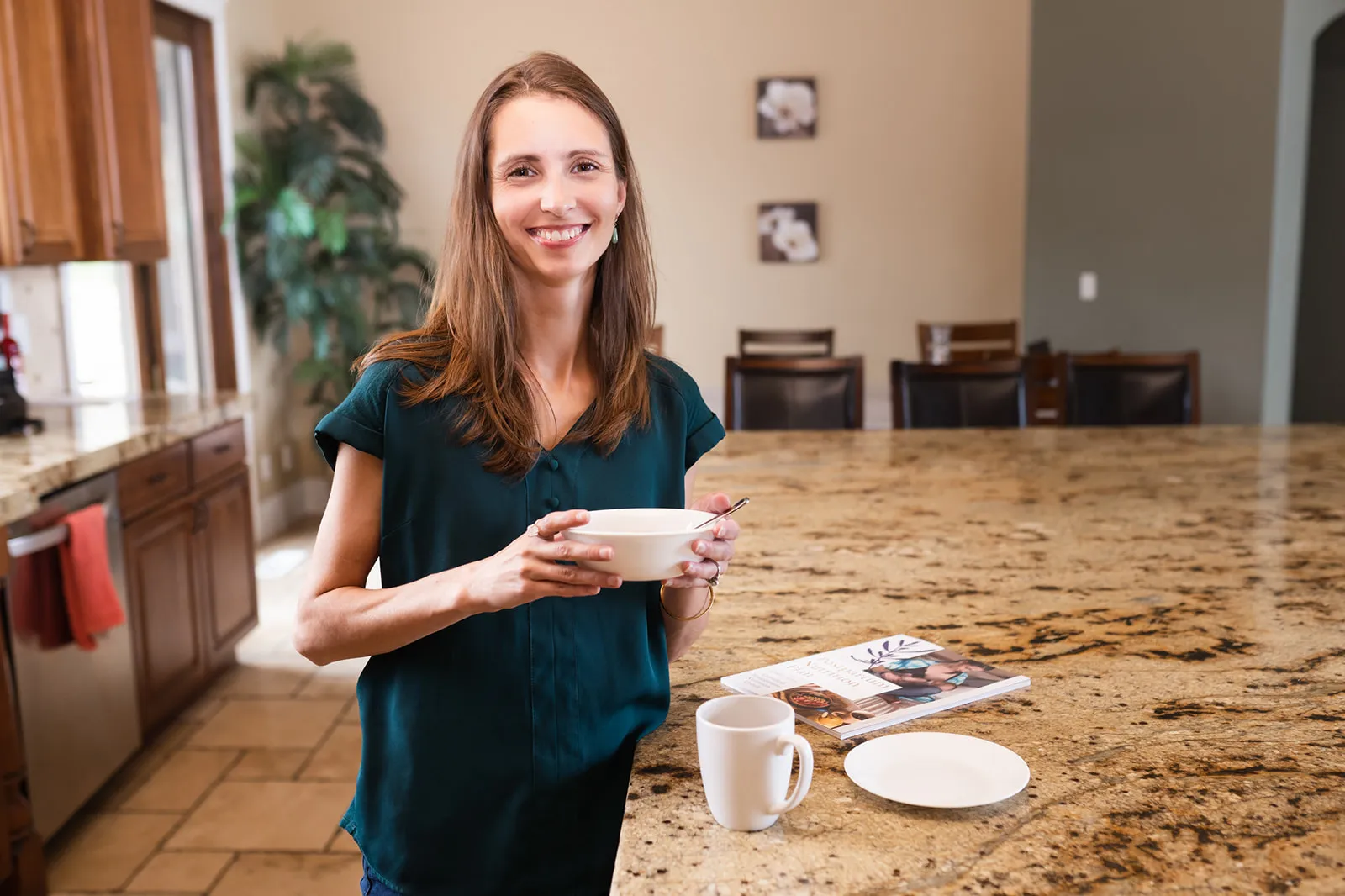
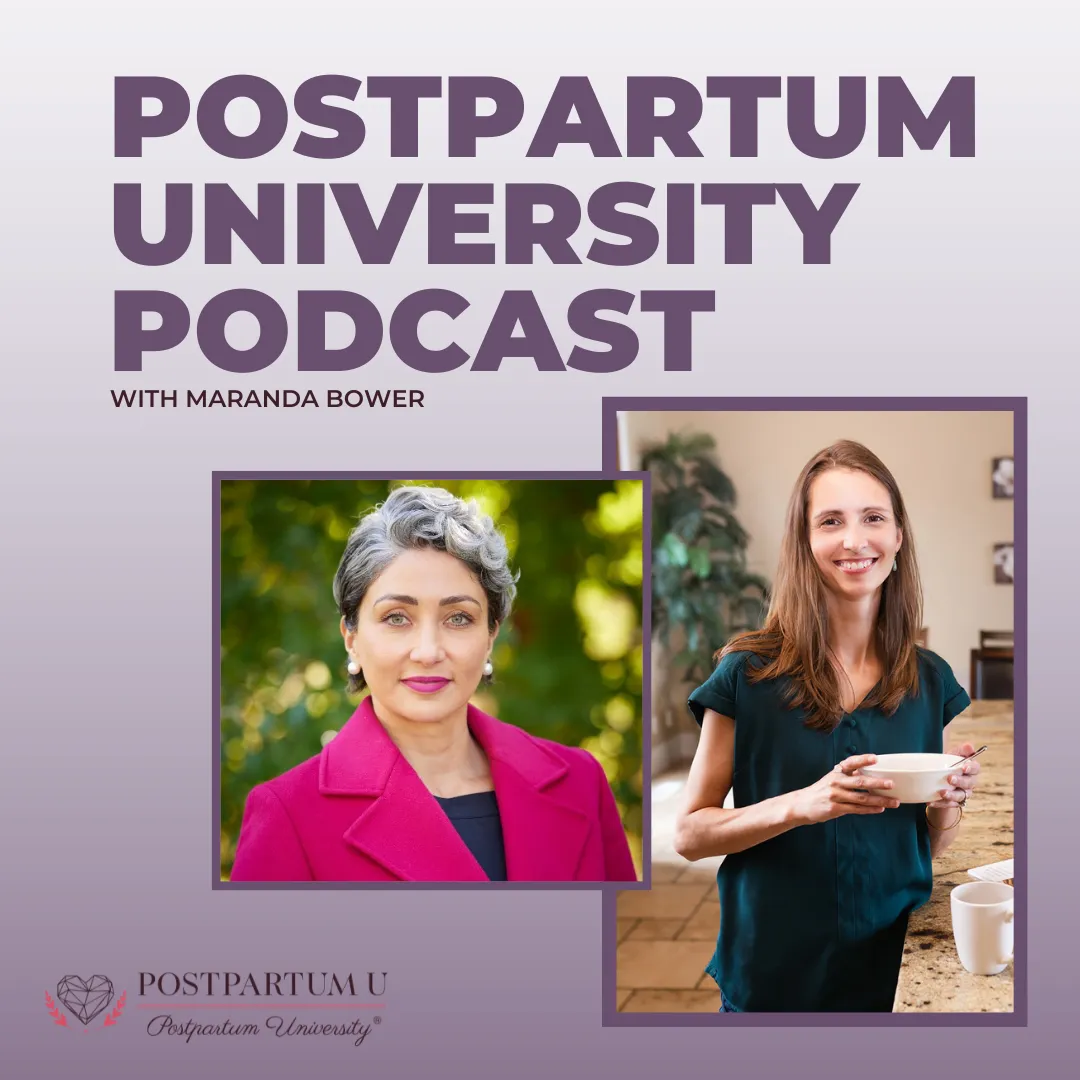
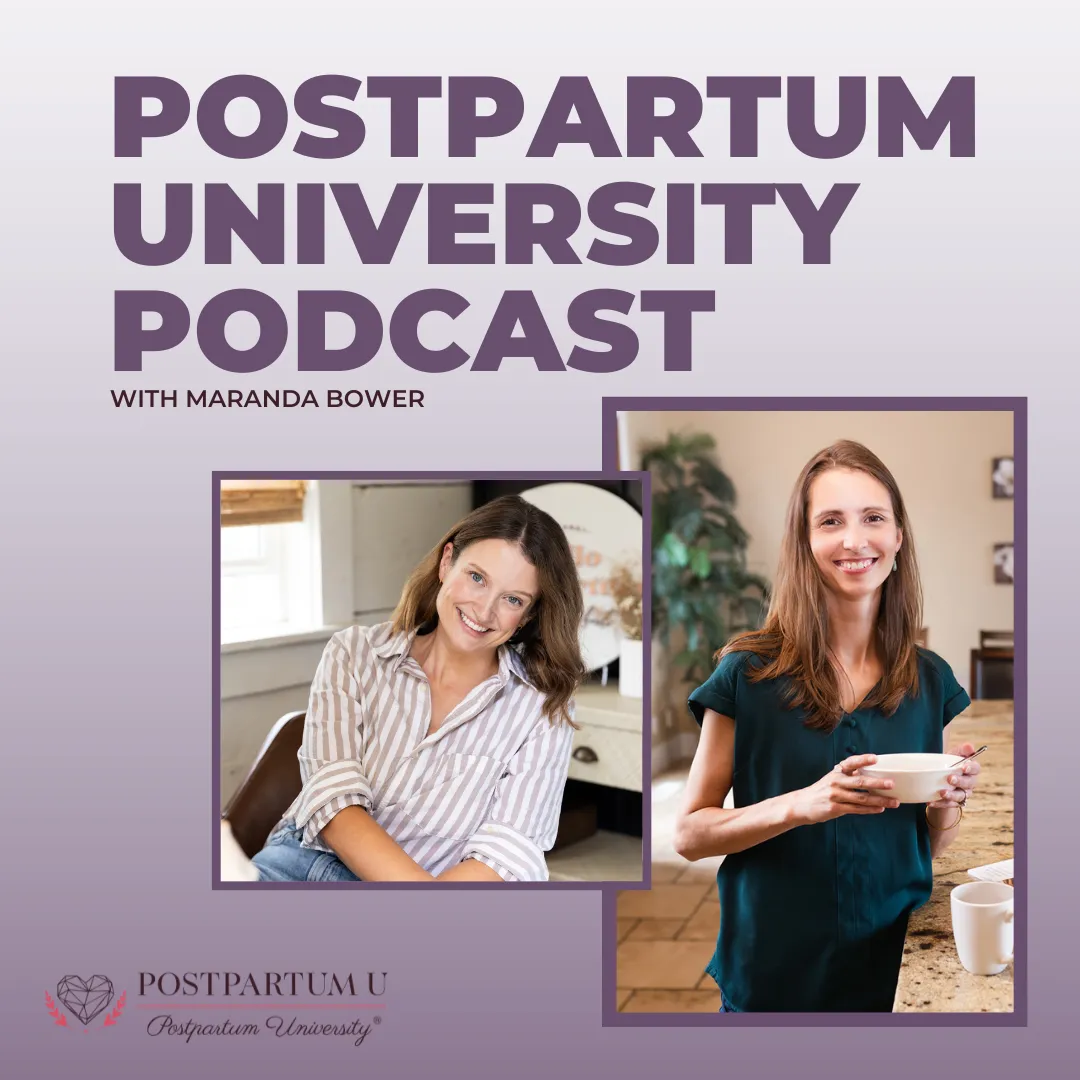
Welcome to the Postpartum University podcast where we support you and your provider in understanding the science, the art, and the sacredness of healing after birth. I’m Maranda Bower, your host, your postpartum nutrition specialist, and homesteading mom with four wild kids. It’s time to get you the holistic, whole-body healing that works.
Maranda: Hello everyone, welcome to the Postpartum University podcast and I have an incredible guest. Actually, her and I have worked together over the last several years. We’ve been in each other’s space. We’ve done a multitude of collaborations and I am just over the moon excited to have you here on the podcast. Welcome, Christine Eck. She is the founder and director of the Center for Sacred Window Studies. She’s an aerobatic practitioner, educator, group facilitator, and birth and postpartum doula. And she is a busy mom of four boys. Welcome to the show.
Christine: Thank you so much, Maranda. It’s always a pleasure to be connected with you and to share conversation. I will tell you, I’m a little embarrassed that we’re like way up in the number of podcast episodes, and you’re just now showing up like you should have been on the podcast a long, long time ago. Can you share with everyone what it is that you are doing in your work, and how you’ve come to be in this space?
Christine: Thank you for asking. I think like many people, I came to this work through a personal experience of having a baby and feeling really ready for birth and then having him and feeling completely not ready to take care of myself or even knowing that I should take care of myself afterwards. And I guess my son was about a year old when I discovered a program for Ayurvedic medicine nearby where I live in Massachusetts. And I decided to take that leap. And that brought me to wondering about how postpartum care could be a little different based on what Ayurvedic medicine is had to say and the traditions that are woven in and what I found as I birthed my second baby and was able to practice some of it, it was totally life-changing and I didn’t understand why those simple measures were not things that everybody knew because it wasn’t like this super big secret that like took a lot of resources or access to be able to implement. It was like just so simple and beautiful. And it was the first time that I felt like I can share something. I can do something in the world and give something based on what I’ve experienced. And that kind of led me down this path.
Maranda: Yeah. I love that so, so much and I resonate with you deeply and the you know it’s my my first child my son and things were nowhere near what I had ever expected and I thought I had prepared for everything and there I was in the throes of a deep depression and anxiety and when I was researching and when I was looking through everything it a big part of me was like it can’t be this simple. And I was recently sharing on a training that we were doing that we have this, this ability to weigh over complicate our health and well-being because that’s exactly what the medical world has done to us. And so we’ve we’ve not only over complicated, but we’ve lost control, where we felt felt like we’ve lost control. And so that’s the beauty of getting back into this inner knowing and this simplicity, which we’ll talk a little bit more here as well. So I’m just, I’m so grateful that you bring that to our attention. It brings a lot of autonomy when we realize that there are things that we can do. And it’s not just about needing the medical protection to tell us what to do or what’s wrong with us. And I felt right away that I had advocacy for myself now, that if something came up, I had clues and I had knowledge that was going to help me to figure out how to fix it alongside whatever support professionals I called in to help and And that is a game changer. And that’s what I want everybody to have. For sure. I don’t know if you felt this in your experience, but for me, and recognizing that, oh, my gosh, I do have control that I am my best advocate. It was both a relief. And then it was like a gut punch. Because now it was my responsibility and I didn’t know what to do. It was really, really overwhelming and this was almost 15 years ago and now I feel like our world is inundated with all of the different things in postpartum and so even more overwhelming of like where do you find this information? Where do you go to get something? information on how to care for your body and how to advocate for yourself and how to have these conversations with your providers so that they listen and that they support you and take care of you and the ways in which you meet?
Christine: Well, that’s what’s so beautiful that you’re doing this and that I think there are so many of us who are recognizing that really special vulnerability. And I feel like it is special. There’s almost like a minimal space that we walk when we’re brand new parents.
Christine: And it was a little over 15 years ago for me too that I became a mom. And I wish I knew then that some of that vulnerability was really a very important quality to my being able to listen to myself, bond with him, him, and kind of navigate that transition in a pretty magical way. So I think that there’s that vulnerability that you’re talking about when we’re not, when we don’t feel like we have resources and we don’t know where to reach out to, we don’t know where to get the information we need, then it manifests as fear or anxiety or depression. But how beautiful to be able to access through, you know, all the people who are talking about this, there are a lot of people now that are starting to have these conversations and starting to be like, no, this is important. People need to have access to this information. People need to know that postpartum isn’t this unspoken, you know, just hard time that she got to muscle your way through, I think that that vulnerability is on purpose in a way. And so part of, I think what we’re doing is allowing people to feel vulnerable and still feel safe.
Maranda: If you’re a birth and postpartum professional who wants to give the families you serve some solid holistic evidence-based information regarding nutrition, repletion, and nourishing your body after baby, this is for you. I have 18 beautiful pages in a handout form that is completely free. Free full guide to nutrition, completion, common misconceptions, supplement support, favorite recipes, 30 healthy and quick snacks, and so many more. You can download your free collection with handouts at postpartum.u. that’s the letter you.com/handouts. And you’re doing this incredible work as well within your company and your organization. And I feel like we are both very much aligned and working together to shift this perspective about postpartum. And I’d love to hear your thoughts about what is the perspective that needs to be shifted?
Christine: I think there’s a lot of ways to describe the shift that we’re feeling that needs to happen. I think on a sort of structural social level, we’re all pretty excited that there’s not a support network that’s provided for most of us in the world of how to have good care in those first weeks. But I think there’s also a shift that needs to happen in how families feel comfortable resourcing themselves. Because unfortunately we have to resource ourselves. We have to kind of take charge of that. I just spoke with a mom this morning and I asked her, you know, what would you do different in preparing? And she said, I wish that I would have asked for more. I wish that I would have, she felt like she got a lot of support from friends, but she, there’s this, hesitancy that we have and spending money on ourselves postpartum. There’s a hesitancy that we have of asking for help. There’s a hesitancy there for maybe even feeling like we, like asking for help postpartum is actually a very strong and healthy move to make. You know, I think that we can feel like maybe we’re exhibiting that we can’t handle it if we need others to come in. So there’s a shift that I’d like to see. And people recognizing that this is a time like no other, that you deserve to get all the help and support that’s out there for you. And that by going through that, we’re setting an example for lots and lots of other people around us. us. Because right now, so many people think of postpartum, they hear that word, they think of depression, they kind of think of it as just this hard time. And I would really love to shift that because even though it’s a really big deal to have a baby and to transition, it’s a really big deal and it’s not always easy. There’s going to be moments that are smooth and there’s going to be moments. It’s a learning curve. It’s so many things and it’s so many different feelings and emotions and experiences, but I want for it to be, I want for it to have a possibility to be positive and for people to go into it feelings that they can be resilient when some of those hard things happen and yeah. And yeah, that’s kind of what’s coming up right now. But I think there’s a lot of facets to a shift.
Maranda: There’s so much is, right? And I love what you’re saying about this desire to ask for more help. I feel like that’s a huge component. I hear that all the time from the clients and the women that I work with. I wish I would have asked for more help. And I think this goes so deep into one of the core wounds of who we are as women and mothers, right? Because there’s this idea of us not being good enough that we are just a burden. And so how could we possibly ask for more, you know, to and then possibly share with the world that, yes, we we are indeed not good enough or yes that we are indeed a burden. And so I see that often and I feel like when we address postpartum care, we’re addressing these core wounds, these deep generational patterns that have been impacting us for so many years. right. And so when we are asking for help when we actually say you know what no I deserve more that I just had a baby right like and and feel empowered and in that moment to do that. You are releasing generational trauma and I think that’s one of the reasons why it’s challenging and difficult because we’re letting go of the weight of not only what we’re feeling but the weight of our mothers and our grandmothers and our great-grandmothers right and and we’re doing this not just for ourselves right when I when I think about it especially as I was going through my postpartum periods it was for my I have a son and my daughters right I have three daughters it was for my my children it was for my daughter and so that she could feel this and ask for help and know what it meant to have such a beautiful, positive birth experience. That doesn’t mean things don’t happen, right? As we all know, things always happen. The unexpected is what is parenthood in general, but to be able to reach out and know that you are worth the care and attention of your children. and the love. I think that’s so, that is what is going to change the postpartum paradigm.
Christine: It’s so true. And it’s so beautiful to really recognize how much deeper it goes than just getting over some pride to really put some attention on yourself, you know. It goes so much deeper. And I could not agree with you more that ability to unlock layers of stuff that comes to us from our ancestry, our history, our collective as women, as people bearing children, it’s really incredible. And how much more meaning it gives us when we actually see it. and acknowledge that while we’re being cared for. I think that’s such a huge component to shifting this. Just a simple act of acknowledging that it exists. That’s kind of like step one in AA. Acknowledge that there is a problem and then from that space. space together we can make that shift. And I also love how it can look a million different ways for different people you know like whatever makes each of us feel supported we can create the support system around us that does it for us you know it doesn’t have to be this prescribed like checklist, you know that we do it can look a million different ways. And therefore I think that that helps to become more accessible. For sure, for sure. And the idea of keeping things simple and recognizing that if it feels hard it’s probably not right it’s probably not an alignment. And I know that you and I, I mean, we’ve co-together for the last several years, we’ve worked together. A lot of people who have heard us talk before, I feel like we’ve talked a lot about food and nourishment. But there’s another component of food and nourishment of keeping things simple and digestible. And this is a huge Ayurvedic principle as well. But digestible doesn’t just refer to the food component. I don’t think we’ve ever dived into this other component of what it means to keep things more simple and digestible for ourselves in the years postpartum.
Christine: When we were creating our curriculum for the Conscious Postpartum Caregiver Program in 2018, I was sort of trying to access the core of what good care was. And my colleague Julia would say that, things just kind of download for you. And so simplicity became one of these universal mother principles that are sort of the core aspect of how we do everything. And simplicity is one of the most important things cannot be overstated how effective it is to integrating anything from your birth story, from a single moment of interaction that we have to navigate of food, of communication, figuring out how to create simplicity. simplicity and all of those things, creating simplicity and how we care for somebody else. It’s actually a little hard to do because I think we live in a society that values complexity, but it’s so refreshing and it’s so genuine when we can break things down into one moment at a time. one tool at a time one breath at a time one feeling at a time and I’m never tired of exploring What simplicity can look like and even just talking about it right now, you know, I think we’re all like lead pretty busy lives I know you you have four children too, and it’s hard to Feel like there’s not a million things on our plate at any given time. But by continuing, it’s like not just for postpartum, it’s just like good life care. But I think it can be explored in so many different ways.
Christine: But what we realize, what we understand through an Ayurvedic perspective is that, you know, digestion is on an experiential level too. It’s not just what we eat. eat it’s it’s being able to process the things that happen to us and I just think it’s so beautiful to be able to really give that space and time and And watch how simplicity really creates balance and ease There’s there’s a slowing down That I feel when you when you’re just saying that the simple and the digestible and the experience of it It’s just just sitting back and yes life is can be crazy busy But to be able to take a step back in those moment-to-moment spaces That’s what’s life changing right and so Making sure you know one thing that I do like before I’m picking up my kids from school I sit with myself for one to five minutes, depending on how much time I have, depending on how late I show up, right, just to be with myself, to take a breath, to connect and to what it is that I need. And then to honor that, if I, you know, if I need some water, then I’m going to drink water. If I, oh, I forgot that I needed to pee an hour. hour ago, right? And then I go in and can use the bathroom and then go pick up my kids, like just taking those breaths, those moments of time in between can really change the whole trajectory of your life truly. Yeah. It’s a big deal. Yeah. How simple is this slowing down and taking some breaths. And it’s in those spaces that we can listen and hear what it is that we need. And I think also sort of beginning to discern what are the things that we’re feeling like we have to do that we don’t actually have to do. And that can be a really hard one postpartum. I think people can start to feel restless with resting. It’s hard, but there are a lot are there. Yeah. Yeah, for sure, for sure. And we can continue this conversation in so many different facets. I mean, how we are connecting in with ourselves and the beliefs that we hold about who we are as people, about what it means to be a mother. I mean, these are the things that we are living and we are, when we take the moment to sit back and breathe, to uncover and to investigate and to decide is not something that I want in my life. I feel like it’s an invitation when we actually slow down where it’s an invitation to heal. heal those generational traumas. And that is the big work that we’re never able to get to because it feels so scary and therefore we continue to be so busy.
Maranda: Yeah, I’m also really interested in how we can sort of do that work without feeling like we have to drag ourselves through rewinding ourselves. Like how can we do that work? by just nourishing ourselves and giving ourselves time and space to just be held? So true. And I have been in the holistic environment for so long and I feel like a big component of this healing from trauma, healing these generational wounds or these ancestral wounds, it feels really dark and heavy and scary and like, oh I’m just going to end up making myself sick in the process. And I have to remember all these things. But then I think that in itself is way way over complicating. Right? The very fact that we just sit and acknowledge its existence is sometimes all that is necessary to release it have to be anything more. I will I love that. Yeah. Yeah. Yeah. There’s so many different components. I just, I love our conversations together, Christine. And I know that we can talk absolutely forever. But unfortunately, we don’t have the time. So one, you’ve got to come back to the podcast. We’re going to do it again. Yes, we’re totally doing it again. And two, where can people find you to learn more about what you do in your work?
Christine: Thank you, Maranda. So sacredwindowstudies.com or Instagram @sacredwindowstudies. And, you know, Maranda and I are going to be sharing this conversation on our podcast too. So, Maranda, please tell listeners that may find you through the Sacred Window podcast where they can find you.
Maranda: Yes, absolutely so. So you can go to my website at postpartumU. That’s the letter U.com. And we have lots of courses for both moms and for professionals along with lots of free resources. Thank you for that. I completely spaced. Yeah, yeah, I love it. It feels really special to explore these conversations with you. And I look forward to more.
Christine: Likewise, always, always. always a pleasure.
Maranda: Love this episode. Let us know by leaving an amazing review. Your support is everything. Want more? Head over to postpartumu.com. That’s postpartum, the letter u.com, and explore how we support moms like you and holistic whole body healing that’s specific for the unique needs. of mamas and the years postpartum. See you there.