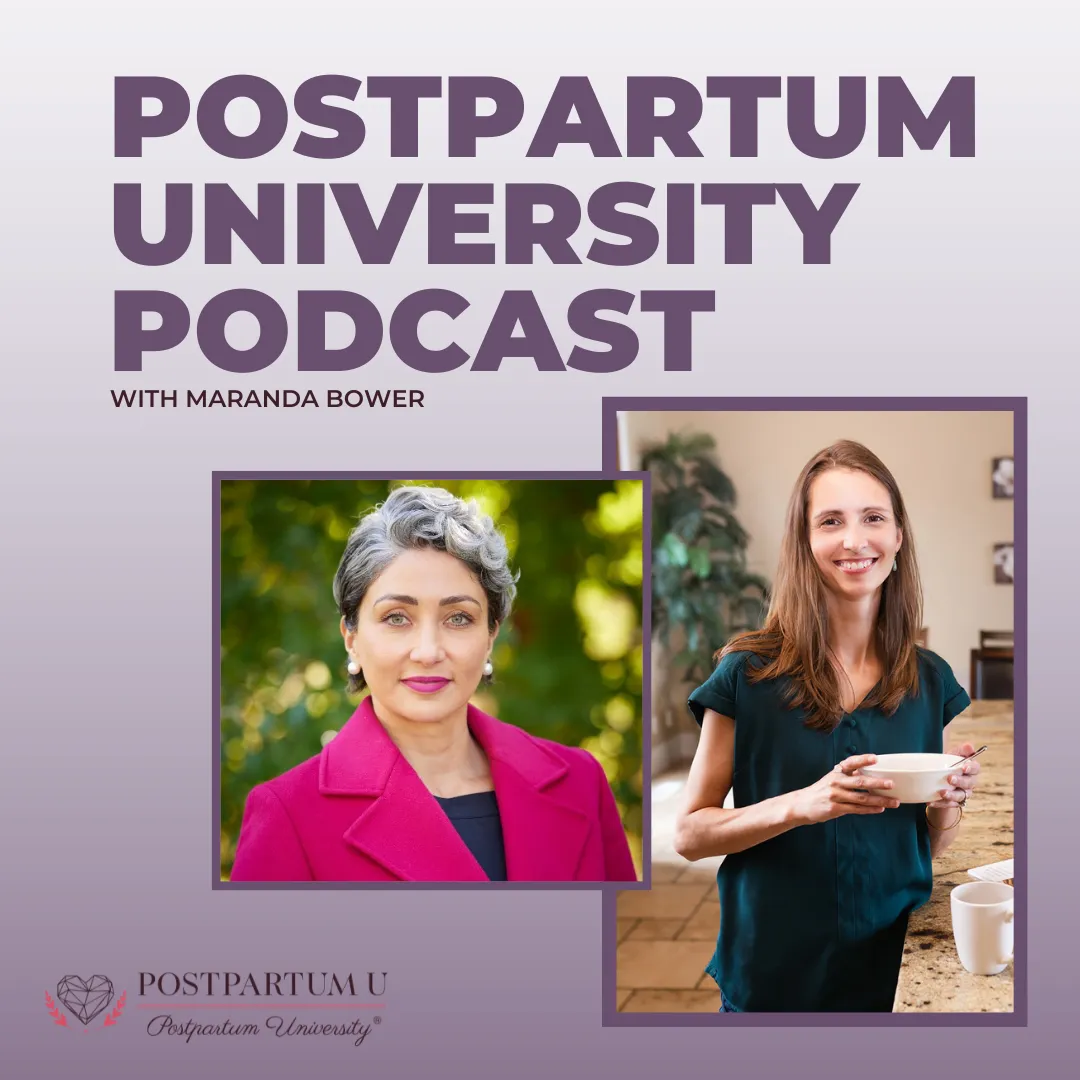
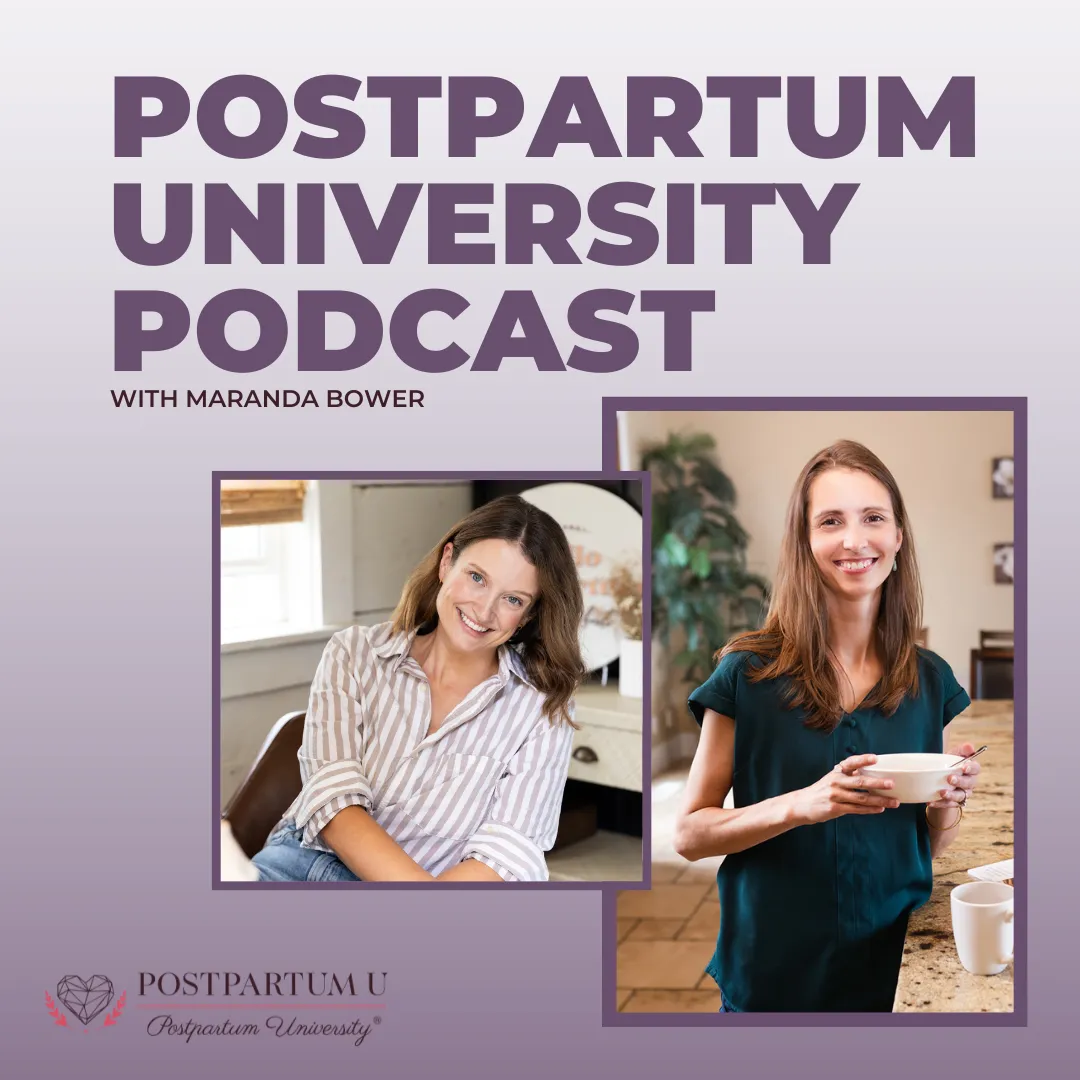
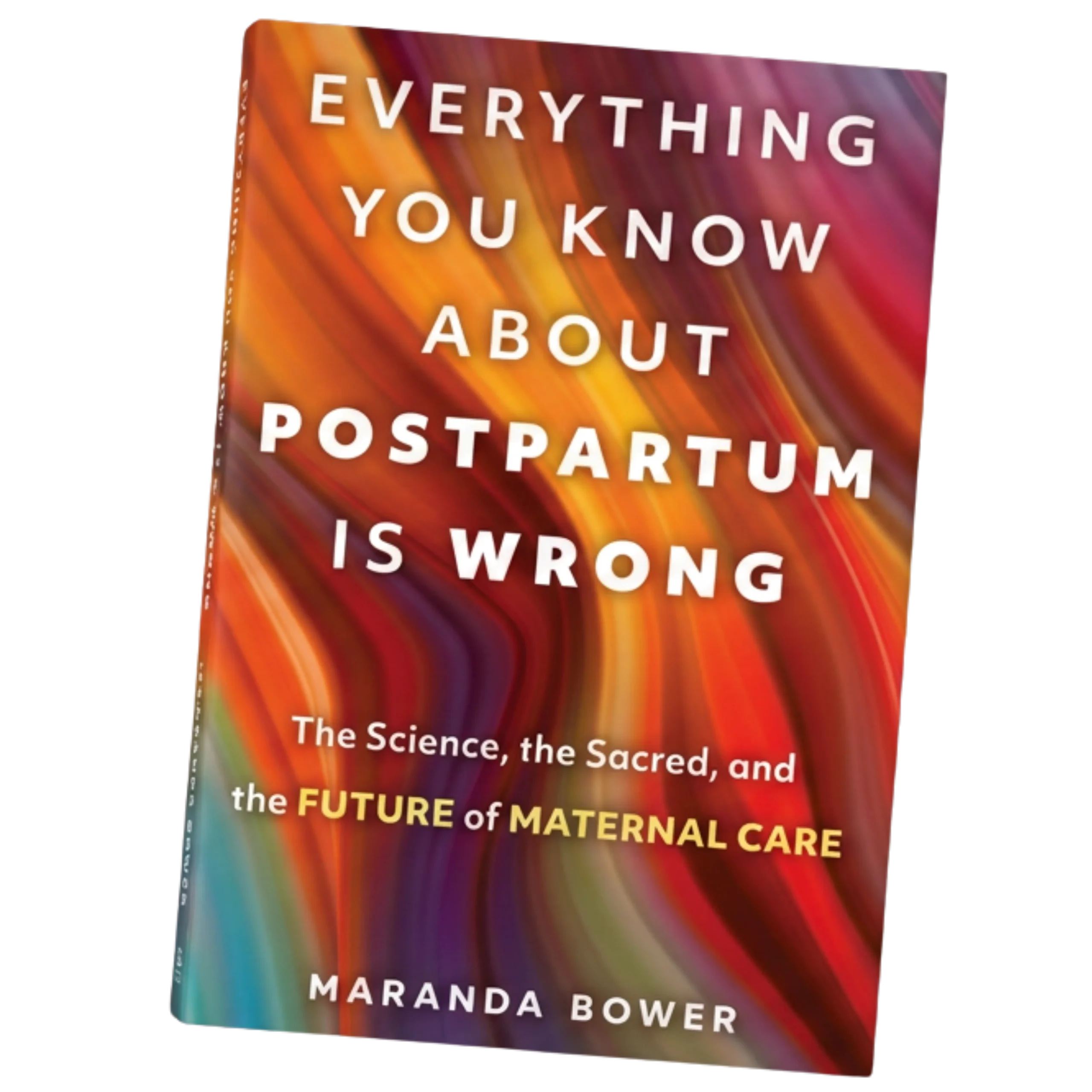
Welcome to the Postpartum University podcast, where we support you and your provider in understanding the science, the art, and the sacredness of healing after birth. I’m Maranda Bower, your host, your Postpartum Nutrition Specialist, and homesteading mom with four wild kids. It’s time to get you the holistic, whole-body healing that works. Hello, welcome everyone to the Postpartum University podcast. I have here Dr. Anne Welsch. She is a clinical psychologist and a certified executive coach. And before you opened your private practice, you actually worked at Harvard and Cambridge for their eating disorder center, yes?
Anne: At their, so at their counseling center on the eating disorders team, but yeah.
Maranda: Which is incredible. And that’s exactly the conversation that we are going to have today because this is a hot topic. And I don’t know of very many people who are talking about eating disorders, particularly in the pregnancy and postpartum space.
Anne: Yeah, I mean, I think it’s one of those spaces where it’s almost become so normalized, I think too. not like your postpartum body in particular that it just doesn’t get addressed at all. And you’re right, there’s not very many clinicians working in that space. There’s probably a few more now than there were when I started in it, but there’s still not enough really. How did you come to find this area and what’s your story? How did you get here?
Maranda: Yeah, well, it’s funny, I kind of started on two, at the time, seemingly unrelated and parallel tracks, they started doing eating disorders work in my clinical life from kind of day one of grad school, something I felt super called to do. And so even my earliest clinical placements were kind of along the lines of eating disorders work, I worked at Children’s Hospital and their eating disorder center. I worked at a couple different universities doing eating disorders work in college students. I did my postdoc at a residential facility for eating disorders. So that was limited though. It had nothing to do with mothers or postpartum or anything. But kind of simultaneously a lot of my research was looking at postpartum women and it was because this is a group they’re super understudied and I really find transition points fascinating right how we navigate through a big change in our life and kind of what’s a bigger change than having a kid and becoming a parent and these kind of things stayed separate in my life for a while and then they started to organically overlap a little bit and then you know when I had my own children I think everything kind of hit home to me more and it became a bigger overlap I started seeing a lot more postpartum women in my own practice and pursued the The Perry Partimental Health certification through postpartum support international and so now that’s actually probably more of my practice And I still do see some eating disorders as well.
Maranda: I absolutely love your story I think it’s incredible that you are here working in this space and I will tell you in the years that I have done this work, it’s very often that someone will come to me and say, well, I have an eating disorder or I have recovered from an eating disorder and now I’m scared or now I’m struggling because I’m in this space and I’ve worked really hard not to be. So I’m really interested in, you know, learning a little bit more. There’s a ton of biological changes to the body. And culturally, we are often shamed for these. And you have even mentioned in the very beginning, like we are in a place where we tend to normalize these feelings of unease or dislike about our body. Can we talk about this a little bit more?
Anne: For sure. Yeah, you know, it’s, it’s fun. I, so often with patients that are struggling with this postpartum, you know, one of the first things we’ll talk about is that your body goes through a crazy number of changes and it’s not just the weight, right? I think we get so, um, ways are focused on, on the weight change. But yeah, sure, you gain weight, but you also, you know, grow a whole new organ, right? Like, hey, your placenta is a whole separate organ that your body grows. grows and then sheds and has to heal from that. Your hormones go kind of crazy over that period of time and throughout the postpartum period as well. Your bones shift into relations with each other, right? Your joints move and your brain goes through changes that do not revert. You become more sensitive to outside stimuli, your perception of what’s important. shifts. It does that for an evolutionary reason, right? So that you can attune to baby. You cannot go back to your postpartum self, even if you wanted to. And so to just kind of start from this place of all of these changes while super overwhelming are a good, healthy, normal thing. Now, there is this cultural message that runs so counter to that though, right, of the bounce back or snapping back, right? You can’t walk through a grocery store without seeing a tabloid about so and so has lost the baby weight or hasn’t and how dare she. And so I think there’s this focus that somehow we’re supposed to have babies and then not look like we did and go back to our former cells and it’s not possible. It isn’t. And it’s very frightening what we do to ourselves in this process. Because I think on an internal level, we know that this way of living is not helping.
Maranda: It’s not where we’re barely surviving. And oftentimes, we have placed so much of the focus in the wrong areas where we’re all struggling. And it’s not just one person struggling, it’s not just us, we’re all struggling. And we’re all doing it so very silently. And we’re all wishing for the exact same thing. Let’s just honor where our bodies have come from and what it has done and all of the amazing things that we do as mothers and parents. So I’m interested to learn a little bit more about eating disorders. What… What qualifies as an eating disorder? Because I have a lot of people who come to me and they maybe don’t have a diagnosis or maybe they have some other struggles, but they don’t feel like it’s an eating disorder and it kind of is.
Anne: Yeah, and I think you get that a lot. And I think there’s, you know, within the eating disorder kind of treatment community, there’s this adage of whether people look like they have an eating disorder in quotation and this awareness I think of again eating disorder clinicians that there is no one way to look with an eating disorder right so you don’t have to be emaciated to have an eating disorder and you know I could get into the details of each clinical diagnosis but I think from a patient point of view or talking you know directly maybe to those women that say is this one or is it not right if you are preoccupied preoccupied with what you’re going to eat, with what you can or cannot eat, if you have really rigid rules around that, or if there’s a lot of shame around your eating, those are all pretty good signs that maybe something’s going on. And I think one way to frame it is, you know, whether or not you have a diagnosed eating disorder, you may have disordered eating behaviors, and those are things we can really address in therapy, in nutrition work, and you don’t have to live that like that.
Maranda: Are you loving this podcast? I’m gonna be real with you. Words of affirmation are my love language. And if you leave a review, I seriously wanna express my appreciation for you. So here’s what you wanna do. Leave a review here on Apple Podcast or on our Facebook page. snap a photo, and then send it to the email provided in the show notes. And as a huge thank you, we’re going to send you access to a library of exclusive trainings, paid content, and never before seen interviews that you don’t want to miss. Thanks so, so, so much my friend from the bottom of my heart. It almost reminds me of our entire culture, honestly. Like the diet culture, the way we approach food, the way we nourish ourselves. I mean, this is huge and it goes way beyond just food. Wouldn’t you agree that the way we nourish ourselves directly reflects the way we take care of ourselves in our life?
Anne: Completely, completely. And I think that’s, you know, we could go on a whole ‘nother tangent about, you know, the misogyny that’s available in the world today and the expectations on mothers to kind of carry these really, really heavy loads. But I think there is the sense of you’re not supposed to need any help, you’re not supposed to need any support, make yourself small, you know, don’t look like you had a baby. And all of these things are that same voice of don’t have needs, don’t take care of yourself, don’t address anything that you value, just kind of focus on how you look and keep yourself tiny. It’s amazing to me that this is something that we have to deal with in this day and age and I’m telling you if you’re hearing this and you’re listening into this and you’re relating like oh my gosh that is what I hear on a daily basis even when we don’t think we do right it’s just it’s something we see in ads right we whether we like it or not it’s shoved in our faces is constant And it’s so easy to fall for those beliefs if we’re not consciously thinking something different. And so if you’re listening into this and you’re thinking, oh my gosh, this is so me, I want you to know, it’s part of everybody, right? If you’re a woman, this is greatly impacting who you are, unless you’re consciously making choices throughout your day otherwise. I mean, it’s a really big deal.
Anne: Yeah, totally. I mean, even they did those, you know, thing in the 80s and 90s, they did those studies where girls would look at magazines and rate their body image before and after and it would tank. They did a similar one with pregnant women and the same thing happened, right?
Maranda: That like we can’t, it’s almost like we can’t escape it because it’s just pervasive in it’s the water we’re swimming in. It’s kind of unavoidable. And there was an interesting study that also, you know, looked at women’s, I did when I was in grad school, and we looked at women’s satisfaction with their bodies during pregnancy. And it was some for someone who is higher during pregnancy, but the reason that they cited that it was higher was because they escaped that pressure for them. It was this kind of temporary allowed transgression where they could, you know, some women would talk about I could get fat and it didn’t matter. It was like, I now have permission to eat. I don’t have to worry about it. And so it felt good, you know, for nine months. I am looking at some of the statistics and you’ve talked about several of those. Can you talk a little bit more about eating disorders and how they are so greatly influenced by postpartum mental health or pregnancy mental health as well?
Anne: Yeah, yeah. You know, so I think it’s important to know, so if you or your client has had even a history of an eating disorder, so maybe, you know, again, if you’ve mentioned some, some people that you work with who say, I’m really worried about falling back into this after pregnancy, you see, you have a third… 30% chance of developing postpartum depression. So that’s a lot higher than baseline, right? Even if you don’t slip back into the eating disorder, there’s already kind of some wiring there where you may be more likely to struggle with a mood disorder postpartum. And if you go into pregnancy with a eating disorder, you’re 50% of those women get postpartum depression. so even higher. So it definitely is a risk factor for kind of mental health challenges postpartum.
Maranda: So what do we do about this? If our attention is on food constantly or we’re struggling with an eating disorder or a disordered eating of any sort of way or body satisfaction, right? If we’re just dissatisfied with our body, what in the world do we do about that? that? And how do we get better? How do we love our bodies again?
Anne: Yeah, I mean, I think, you know, the therapist me says get therapy, right? Of course, that’s my number one recommendation. You know, simply because it’s helpful to have a place to be talking about this stuff and to kind of guide you on a healing journey, right? You know, I was just talking about don’t have needs and maybe one of the needs is, I need some support. I need to be able to put this somewhere or to open up and discuss this stuff in a space safe space But you know aside from that even kind of on your own I think a is just to start working on the acceptance piece that like my body has changed You know like what I’m saying that that there are these changes that you can’t undo and wouldn’t want to undo And so you have a different body post postpartum than you do before pregnancy. And that’s how it should be. And so can there be at least some starting with some tolerance, even if we can’t get to body satisfaction, can there be some tolerance of those changes? And then I would say, you know, along those lines, start thinking about like, why, what are my what are my body stories that I have going into this? What did I expect? What was I taught? was gonna happen to my body postpartum and maybe that’s told explicitly. Maybe my my mom always talked about how she was so thin and then had me and now she can never lose the weight or maybe that’s a cultural story on on media or maybe that is a you know a family story whatever it is to start to kind of tune into what are the messages I got before I even got pregnant about bodies, about body image, about how they were supposed to be. And then a lot of times I have, you know, women check in with, “Well, what do I want my kid’s story to be? And can I start telling myself that story?” Because I don’t know a single, the mom that says, “Yeah, I want my kid, boy or girl, to grow up hating their body.” Right? Nobody wants that for our children. And then sometimes we model that. And so can we start kind of practicing, right? Even if your baby is an infant and doesn’t actually hear anything you say, you know, can we start telling them nice things about their bodies and the beauty of them and the function of them? And then maybe, maybe, maybe start kind of re-parenting ourselves on that journey as well. That’s phenomenal. And the last sentence that you had there is mind-blowing, like reparenting yourself, because so much of the parenting is happening from our society. Maybe we had parenting stories. I mean, I can share with you plenty of my own, right? We all have our stories. But it’s not just parenting in that sense. It’s the way we were raised. It’s the way our schooling was. And they’re– friendships and all of that. And so sometimes it’s a matter of reeducating yourself, relearning how to love yourself, parenting yourself and being that person that you maybe always needed or at least in the moment need very much. I mean, I think that most of us, again, for a whole host of reasons, not because our parents were bad parents, inherently. but didn’t get the greatest messages about body image.
Maranda: There just wasn’t a lot of good messaging when most of us were younger and so there is gonna have to if you don’t if you hate your body if you feel ashamed of it you probably got some messages that weren’t right and so again whether it’s through journaling or through you know reflections or through therapy if you can kind of go back and try to figure out what those were and then pick them apart a little bit are those do I actually believe those and do I want to transmit those and and I you know I often tell patients when we’re trying to change some of these narratives it’s like going down a sledding hill and you’ve been on the same path 400 times so there’s like that really well-worn pathway your sled just keeps falling back into it and you’re gonna have to pick up your sled and move it over and it’s going to feel awkward and you’re going to maybe fall back into the same path a couple of times. But if you keep challenging those kind of well-worn grooves, if you keep trying to move it over, you can kind of form new neural pathways and those will be new beliefs. So if you don’t believe it at first, keep trying it anyway because it will start to stick. And at first it feels really hard and it feels frustrating and sometimes even impossible, but that’s part of the journey.
Maranda: Exactly.
Maranda: I love it so much. Thank you for all of your wisdom and what you’ve shared here. And if you’re listening and you can easily contact Dr. Anne, she’s online and in Cambridge, which I used to live in Cambridge. I would love for you to share, where can people connect with Dr. Anne? in with you and find your information.
Anne: Yeah, they can go to my website, which is www.drannewelsh.com or they can email me at DrAnnewelsh@gmail and that’s D -R -A -N -N -E -W -E -L -S -H.
Maranda: And of course we have all of those links located in the show notes. Dr. An, thank you so much for being here. Love your wisdom. wisdom and I can’t wait to chat with you more. Thanks for having me with fun.
Maranda: Love this episode. Let us know by leaving an amazing review. Your support is everything. Want more? Head over to postpartumu .com. That’s postpartum, the letter u .com, and explore how we support moms like you in holistic, full-body healing. that’s specific for the unique needs of mamas in the years postpartum. See you there.