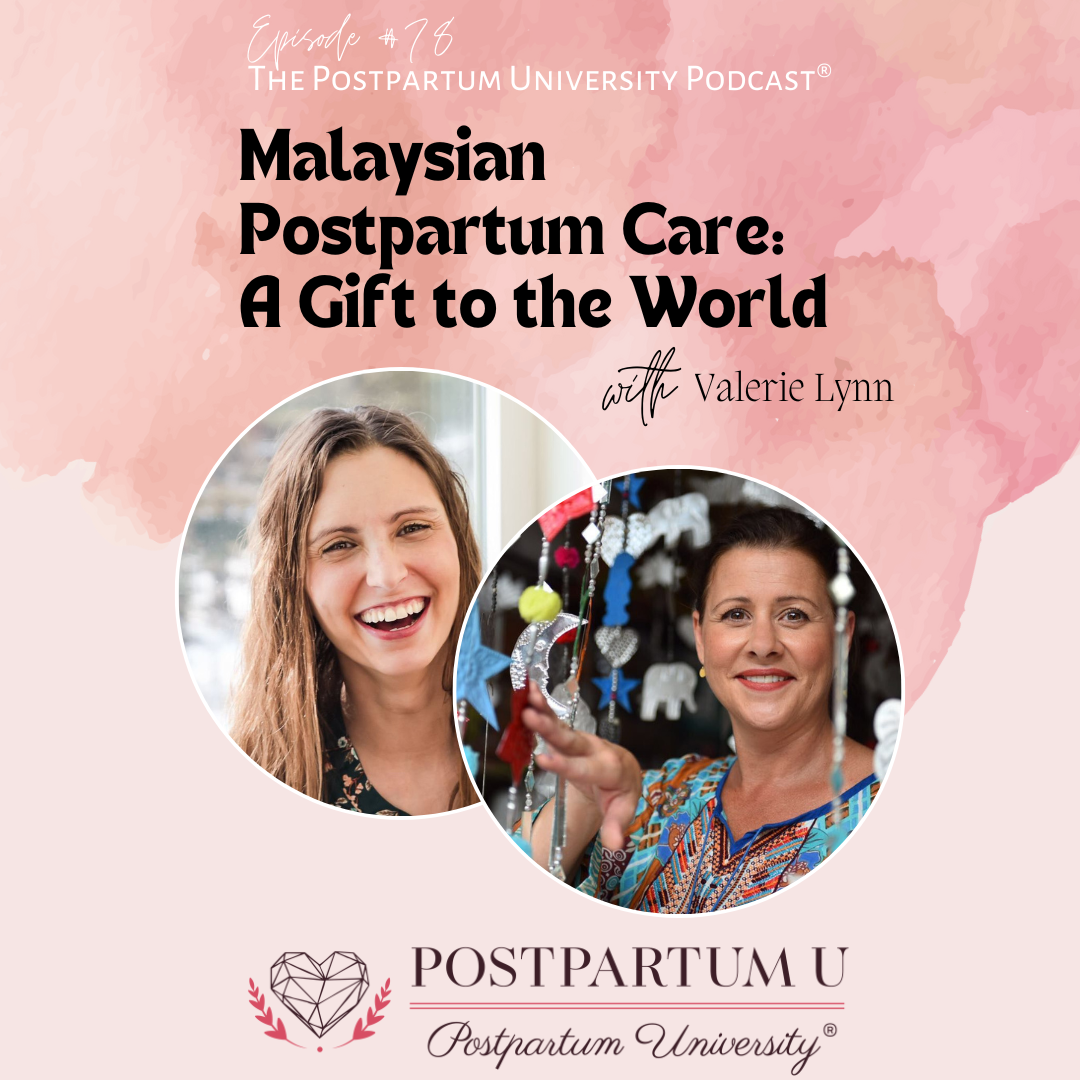
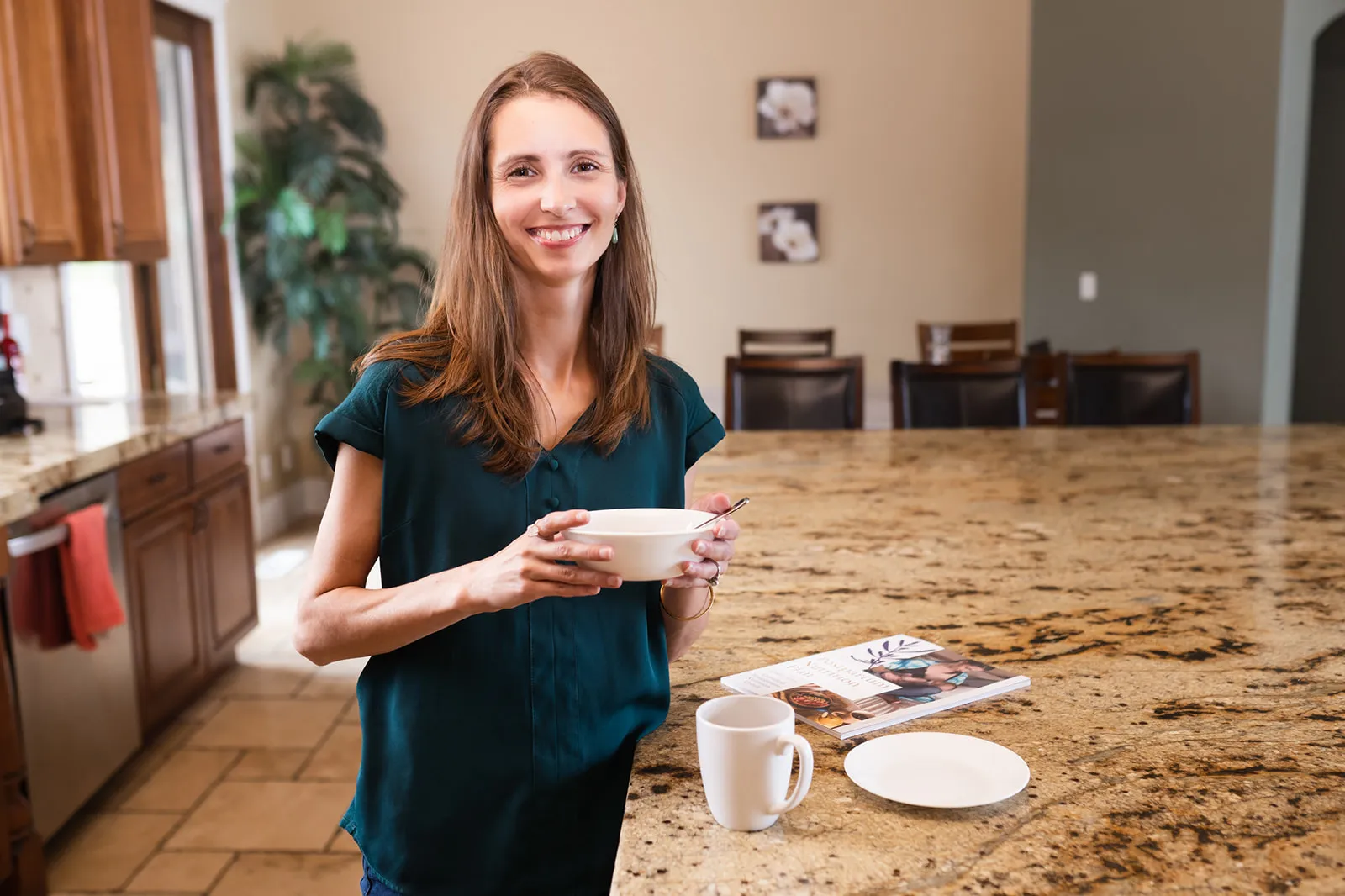
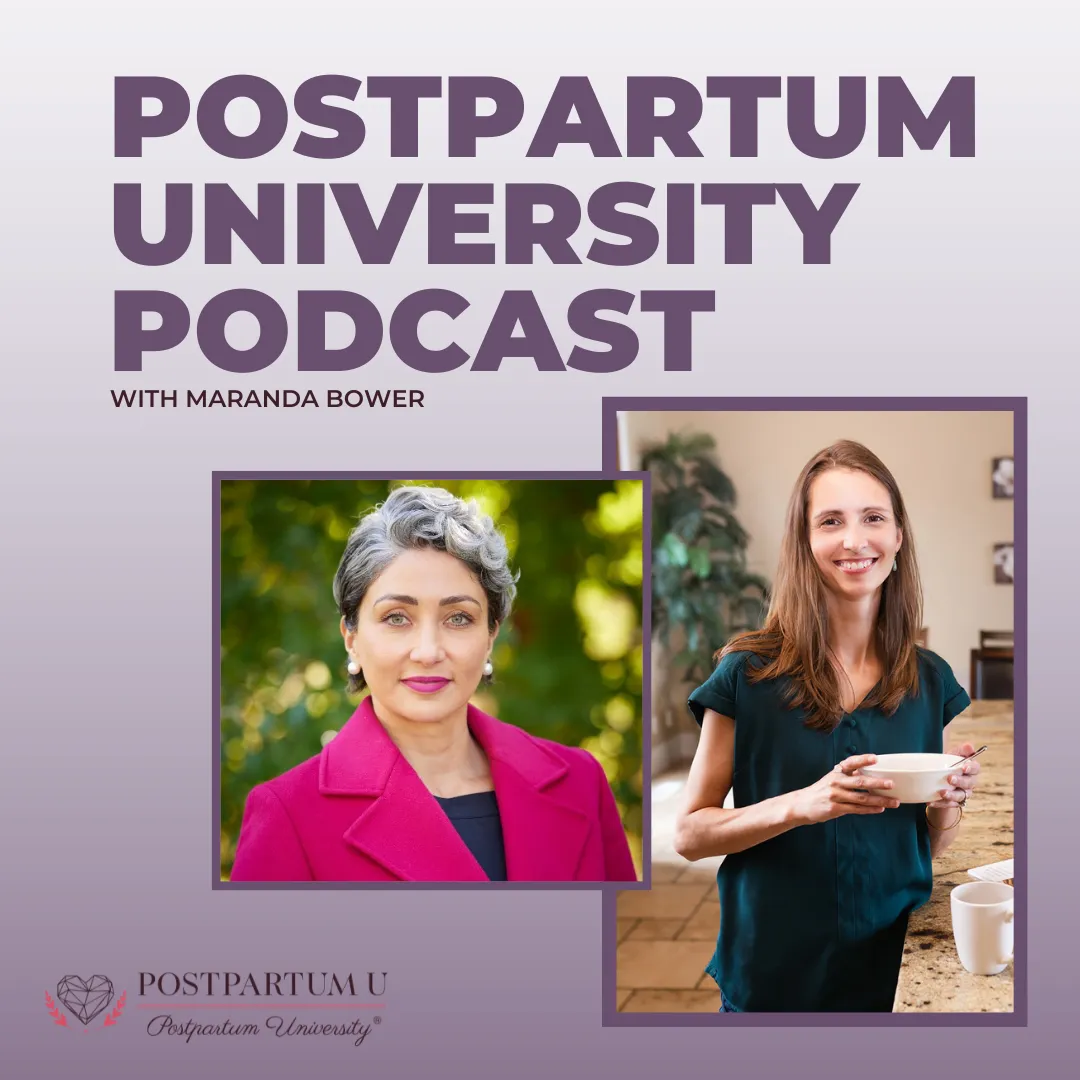
Welcome to the Postpartum University podcast where we support you and your provider in understanding the science, the art, and the sacredness of healing after birth. I’m Maranda Bower, your host, your Postpartum Nutrition Specialist, and homesteading mom with four wild kids. It’s time to get you the holistic, whole-body healing that works. Hello, everyone, welcome to the Postpartum University podcast. I’m Maranda Bower, and I have an incredible guest, someone that I have been trying to get on my podcast for several, several, gosh, months almost. Her name is Valerie Lynn, and she is one of my favorite authors. She authored the Mommy Plan, which I’m staring at right now on my bookshelf. I should have brought it over for us during this interview, but you are a postnatal care specialist, post-pregnancy wellness company owner. You specialize in Malaysian postpartum care, and I can probably go on and on about your wealth of knowledge, but I’ll stop there, and I will say welcome, and can you please share yourself with us? Story and all of your amazing knowledge? What is your story? What is your connection with all of this?
Valerie: Well, thank you, Maranda, for having me. I really appreciate the opportunity to speak to your listeners and the post-partum university. I’ve seen more and more and it’s getting more mentioned and I’m so glad that you’re here to spread the word ’cause this is a grassroots movement still in the United States.
Maranda: Thank you. We need people like you for your listeners.
Valerie: But my name is Valerie Lynn. And I was originally I’m originally from New Jersey. And I’ve been in Malaysia the last 20 years. And how my postpartum journey and experience began in 2006, when I was in Malaysia, and I felt pregnant. Pregnant and my ex-husband and I moved to New Jersey because he didn’t experience living in the United States and I wound up, you know, I always say Jordan, my son was made in Malaysia, born in America. So I always say his Malaysian spirit, you know, Malaysian essence. And so we went back October, I’ll give you the, I’ll give you the title of a yearly timeframe just because it’s relevant to the story. And so we went back to America October 2006. I wound up having Jordan May 2007. We in New Jersey and we returned and I went back to New Jersey just because we had planned that. I wish I gave birth in Malaysia. We planned that before I got pregnant. And so I went back in August 2007 and I got a high-profile job as executive director of the American Chamber of Commerce a month later and I realized that looking back I had begun experiencing postpartum anxiety and OCD. I didn’t understand what it was and I self-diagnosed myself in May 2007, May 2008 reading Mother’s Day articles out of America. The penny dropped that I was experiencing this, this, and this. And it wasn’t depression. And that was, so what I was, you know, you thought it was, but it was the anxiety from, and I had a clean mental health history and I’ve lived in like five different countries. So I didn’t think, you know, I could do anything, you know, put my mind to it. But what I had been experiencing was only around my son, I thought I was going to, you know, hurt him somehow, and that, well, or he, was going to get hurt, not me hurting him. Somehow I could trip and fall down the stairs. I could, you know, leave the bath for a second. Anything, any scenario around my son, I was okay not having these thoughts when I wasn’t around him. I was still having high anxiety and stress. And when you do have those fears, you do certain things, right? You check the car seat 10 times, you know, you close doors sometimes, you, whatever it is. So that’s where the OCD comes in to get through the anxiety. And I never experienced this. So the penny dropped, Mother’s Day 2008. And when I’m reading online, and I was like, wow, is this in this? And that was like 50% off of realizing what was going on. Then that same moment, I’m like, I know my prairie nail education started in Malaysia. And I know that very specific recovery guidelines surrounding your lifestyle, your body, perineum care, breast care, breast massages, womb lifts, herbal concoctions and foods and rituals and wrappings and these beautiful little women would come into my friend’s home and massage and give them these treatments in their home and it was so simple, it’s so effective. So my local Malaysian friends would go away for a month and I wouldn’t see them, I’m like, “What’s happening?” And like, “We’ll see you in a month.” And I’m like, “Okay.” And then my expat friends, I could go and see what they were doing and they were looking wonderful and feeling wonderful and better and refreshed.
And so then at that same moment, what I found out, I had, you know, what PMAT, what PMAT I had, I was experiencing, ’cause I didn’t know I was experiencing it at all. I just thought it was being irritable and tired that first year. But then it was so, it was getting so irrational. It was affecting my life. And that’s when, you know, you cross the line between being irritable or something. And, you know, when it’s more than that. So I was like, okay, then I found out Malaysia had the lowest rates of postpartum mood disorders in the world of three percent. And I had lived in Japan for five years previously. And I’m like, well, they’re a good diet. They’re this, I know Malaysia is not a healthy diet, but it’s delicious. So I was like, what is it? And so I knew it had to be attributed to their practices, their postnatal recovery practices. So that same day, this all happened in like three hours. You found out what I found out. had, did the recovery, found out in Malaysia, and then I booked a postnatal recovery package. And they usually don’t do that. They usually only for the first six weeks, you can get a bit, you know, more if you push them. But a year later, they’re thinking, okay, what’s this foreigner doing? So I did it, and I went and I had the same treatments, along with finding out from my friends, herbal concoctions that I had. and herbal, I don’t have to say concoctions ’cause they’re remedies and they’re products and they’re blends. So they’re very specific. They’re not random at all. And I re-balanced in about three months. I was very serious and very focused and it was just such an eye-opener. And from my experience in the chamber, I was able to, I worked there for… my contract was a year and after that year, I applied to do a self-funded study through the Ministry of Health, and I was granted approval. So I, my contact was in the Ministry of Health, the traditional complimentary medicine department, the director for the whole government. So I was able to go into hospitals, into the field. I was, I went to different organizations such as the Malaysian Health Department. Research Department. I went into manufacturers to find what the products were. And so in my home, I had like a hundred potted plants that I grew. I was very obsessed and deep. So it’s amazing that I grew indigenous herbs and the local herbs for feminine health and traditional health that both men and women can use. but mostly the ones that were for traditional feminine health and what were used in the products. And from that, I, from that study that you’re long study, I wrote the mommy plan. And yeah, that’s how that’s my story of getting into it.
Maranda: This is absolutely incredible because you are coming from a multitude of different perspectives that you’re adding into this space. And you have a lot of these different backgrounds that are kind of of coming in and creating a fusion blend of the work that you are doing now, which is so incredibly important in our world. And the reason why you’re here on this podcast show is because of the wealth of information that you truly have. And I shared with you before we even started recording, like we could talk forever on so many different things. You are so under- in this arena. You should be known by everyone. So we’ll talk a little bit more about where people can find you because I really, truly want people to connect in with you and the work that you’re doing. But I’m fascinated. I want to learn a little bit more about this Malaysian postpartum care. And I know so much revolves around food and nutrition and herbs. And I am that person. And I have a multitude of people. I can send you a picture of so many plants. It’s absolutely ridiculous. The herbs that we need to truly heal our body, the information and the nutrients that it contains to help our bodies process and feel better and really heal and recover. Tell us a little bit more about these Malaysian postpartum caretaker techniques. What’s so different about them, where they have such an incredibly low rate of postpartum depression? I mean, that statistic, you said 3% or 4%.
Valerie: Three.
Maranda: 3%, that’s, it’s unheard of. We’ve got to know more.
Valerie: Yes. Well, firstly, it’s part and parcel of the culture. It’s so important and it shows that in every way. It’s a woman’s right to pass it to recover, not only from pregnancy and childbirth, but also miscarriage and stillborn birth, okay? And different types of female surgical procedures, such as like DNCs and things like that.
So there is a priority placed on, you know, feminine health, reproductive health and sexual health in a very modern way that probably been more modern than we have here. I’ve had some of the best discussions with, you know, little Malay women, you know, about sex and sexual health. It’s been really refreshing. But why, so first and foremost, it’s so important. And it’s one of the best, like, kept secrets of the culture. And it’s even, but they walk the talk. For example, the Malaysian government was wonderful. A lots of billions of dollars allocates billions of dollars into their maternal health care policy, providing each woman that gives birth in a public hospital with six free two-hour abdominal treatments, massages and wrappings. All within the first six weeks, starting targeting day five or starting by day seven and finishing by day 44. So that’s where every woman or person that gives birth is pretty phenomenal.
Maranda: So you’re telling me that the government and the culture as a whole, which includes the government, places so much value on a mother that they are willing to put forth their money and not just the talk. Including three months as well, three months of you know fourth trimester national policy leave. So women of Malaysia know that they are valued.
Valerie: Yes, in this regard absolutely. I mean there’s I have not come across a better like comprehensive system. The Scandinavians give a year and that’s wonderful and they have a healthy diet and a healthy lifestyle. But again, for me, in the U.S. with these corporates who give these long leaves, it’s a random recovery. It’s like here, take 20 weeks and women are not coming back recovered and they’re leaving their jobs and corporates are also reducing that amount of time off. But they’re in lieu of cash. But women need that to recover. That’s another conversation. But yes, so they do the money where their mouth is.
Valerie: And so it’s so important. So what they do is, again, what I mentioned before, it’s not a random recovery. It’s a planned recovery from day one, gently. And there’s a sequence of how they do things. Things and it’s broken down week by week But what makes before you into the details you need to understand philosophies and some of the beliefs and a bit of postnatal anatomy That and what and for me I reverse engineered their practices. I took the core tenants around the country Because different regions have different little cultural nuances, but I took the core ones and I put medical science, anatomy, postnatal anatomy, and then food science, postnatal food science behind their meals, all based on personal anatomy. So you have to like go one by one, you know, and it’s like, you have to build upon your knowledge. So if you just go to the meals and you just eat them, that’s fine, but you might not sustain that because you don’t know how it’s affecting your body or what to expect.
Maranda: Mm-hmm, yes.
Valerie: Yes. So I, and so there’s a lot of, it was so much fun. I can’t tell you, oh my God, it was so much fun. I have other studies that I want to do. But also it was interesting because many people could not tell me things. Like the director couldn’t tell me, for example, why 44 days or certain things, ’cause it was so cultural, you didn’t think about it. And no one was really interested in it on this level. Being a Westerner, we’re like, why, why, why? And like, well, no, no, it’s, you know, but, you know, it works. And that’s so, so I actually, there’s so much symbolism and spirituality in it as well. You know, so it’s really beautiful. But one of the reasons also why Malaysia is the lowest because they have their, the main ethnic groups are Chinese, Indian and Malay. So you have Malaysian Chinese and Malaysian Indian. And then you have the Malay. Malay is about 65%. And the Chinese, about 23. Indian is about seven. So you have two of the best known practices, the Ayurvedic and the traditional Chinese medicine, that are known globally because of the internet and English and all of that, coupled with the third, which is the Malay that is the most holistic, but they’re a convergence together. And it’s the Malaysian post-natal practices that. Come together, ’cause there’s three really, really strong cultures with respect to how they approach postnatal recovery. For me, in my opinion, is the deepest postnatal heritage I’ve come across ’cause it’s a convergence of those three.
Maranda: I love that there is a blend, right? And I think we’ve gotten so wrapped into cultural traditions and making sure that they stay true to their specific origin, but also understanding how important it is that we are wrapped in each other’s cultural traditions, that it’s okay to take from, you know, the best of others and bring them together and wrap them together to create a whole beautiful picture of what postnatal care truly is. Looks like for the better of, of everyone involved, right? Because it’s not just about the mothers in these scenarios, right? I mean, this, this extends the Malaysian postpartum care extends well beyond the mother into the families and to the babies. Can you speak a little bit more about how that is, is all brought together?
Valerie: Okay, with two speaking, it’s changing ’cause it’s as we modernize, but traditionally speaking, they had a be done or traditional postpartum practitioner coming to their homes. And way back when it used to be a midwife that did everything from A to Z, but then as the global population increased, there’s just too many people. So they used to have someone come and live with them from. From, you know, day one to take care of the mom and the baby and to cook. And they would focus on that, or it was, you know, a grandma or a great auntie that would come into the house. And so you knew that the mom was being so well taken care of and the baby and their specific lifestyle guidelines and postnatal precautions and understanding really having a true deep understanding. Of what a woman goes through, what a mother goes through. And after thousands of centuries, they’ve honed that to know. You do this, you don’t do that. You do this, you don’t do that. You eat this, you don’t eat that. Because they’re looking for what they’re doing, they’re looking for a balanced, slow, consistent recovery daily on a daily basis. They’re actively managing the revision of the effects of pregnancy. Okay, ’cause when you’re in a pregnant state, you’re retaining and you’re getting bigger and bigger and bigger, when you get birth, you’re shedding. It’s complete opposite, so you’re reversing. So they make that process more efficient and effective, resulting in a strong healthy balance and faster recovery. You know, here we have, in the West, it’s always like, oh, you know, we want this snapback culture and this, no, when I say fast, your pregnancy, you’re sorry, your postnatal recovery shouldn’t last, you know, six, eight, nine, 10 months, you know, having really significant effects. Effects. It is heard of to go like a hundred days if you’re not feeling better, if you’re not feeling up to it, like in Malaysia and other traditional cultures, they allow for that. Not everyone has the same recovery, but it’s certainly not to the effect where it’s a weekend pro long recovery here ’cause we don’t know what to do. And ’cause we have a start-stop healing project. That’s happening. And I’ll get into that too. So the Malaysian is just this beautiful congruence of these three, these three cultures, and they do things like they start from day one. There’s a, I love the first day a mother gives birth. I think that is such the most beautiful day like the universe, the heavens open, and it’s just such a day you’re birthing the soul that’s been in your body. You know, into the world. So it used to be really honorific to recreate and to create postnatal meals, to cook postnatals for a mother. It’s an honor to make it and it’s an honor to give it. And so just making that whole day. And so the first thing a mother eats and drinks is important. And I’m trying to bring that awareness back and that beautification back instead of okay, let’s order in.
Maranda: If you’re a birth and postpartum professional who wants to give the families you serve some solid holistic evidence-based information regarding nutrition, repletion, and nourishing your body after baby, this is for you. So I have 18 beautiful pages. In a handout form that is completely free. Free full guide to nutrition completion, common misconceptions, supplement support, favorite recipes, 30 healthy and quick snacks, and so many more. You can download your free collection with handouts at postpartumU. That’s the letter U .com /handouts.
Valerie: Even see with that, so because if we’re like a little less than, you know, when we’re pregnant, we’re in a hot state. The basal body temperature raises about 1 to 1.5 degrees Fahrenheit above the basal body temperature, 98.6, because we serve as an incubator for the baby. Okay, so we’re developing a baby. So we shift into a cold state when we birth the baby, be in a the body heat of the baby, the blood, the placenta experience of birth. So we shift actually to a cold state. This is called the humoral theory of medicine as applied to the pregnancy and post-pregnancy period. So it’s all based on science. So now we’re shifting to this cold state. So that’s why it’s one of the reasons for the warming foods. Because again, our base of body temperature decreases 9.6, roughly 1.5 to 1.5 degrees, normally around 1.5 degrees. And so this is about consistently raising that. Now, there’s things that happen within the body that, so normally, where digestive circulation metabolism are the primary functions. When we give birth, they become secondary and the postpartum functions take precedence.
Valerie: Personal production, rebalancing your hormones and shedding the retained elements of the water, fat and flatulence. So birth is pregnancy’s natural birth, childbirth is natural and so is recovery is natural. We have to let that natural process happen, but also birth is an internal trauma to the body. So that’s why these become secondary and these become primary temporarily. So things that you eat, you’re eating with a stalled digestive circulation and metabolism and stalls. So that’s why things on the healthy list like salads and brine rice and things aren’t good at this time because the roughage that you’re pushing through. You’re pushing through a stalled digestive system. That’s why there’s warming foods. That’s why there’s simple foods. That’s why there’s foods that are not too spicy.
Maranda: And I’m over here shaking my head. If you’re listening to the podcast, you can’t see me. Shaking my head, yes, because this is the things that I’m teaching you over and over. You hear this repeatedly on the podcast if you’ve been listening in for a while. If you’re one of my certification students, you know all of these different things that Valerie is speaking right now. We talk about it in depth, the body is shifting so much during the postpartum period, and we have to honor those shifts, but we also need to understand the anatomy behind it and the physiology behind the shift so that we can therefore support it better. So thank you for saying this, that I’m not the only one in the world who’s speaking on these topics, I appreciate that so much. So, yes, I had to interrupt to tell you, yes, I’m so excited that you’re saying these things. The more people that just understand it, and I think that’s the way to approach recovery, and it’s interesting because you said before 70% of your listeners are birth professionals, which is wonderful. But we as birth professionals understand this, but moms still don’t. We have to explain it. We have to understand it ourselves in our own way to explain it to moms, because they’re not aware of it. So this is still very much a grassroots movement, you know, that’s happening. Yeah. And I also see ourselves as professionals, and I’m speaking with my own personal story behind this, is that there’s a lot of unlearning that we have to do, especially in the more western world, because we are taught that salad and smoothies and shakes are some of the best things that we can do for our bodies when in fact, and you hear me say this often if you’re listening in, those are some of the worst foods that we can consume in the postpartum period. And that lingers not just for the first few weeks, but generally for us who take a little bit longer to heal because we don’t have these practices or this process. Community of support or this government who understands or maybe even a job who understands and supports us, we have to be in this healing space that much longer for our bodies and to really understand it is critical and as professionals we might understand it, we might not however because we have been we have been indoctrinated to believe these other standards and so many people are speaking out especially I’m hearing dieticians and nutritionists and medical providers saying you know what this doesn’t sound right this these studies on cow’s milk and these these other studies that telling us that we need these certain foods and we used to have the food pyramid and now it’s the food plate and is that really accurate and like looking at all of these pieces and asking questions there has to be a bit of unlearning here. So if you’re in that boat, note that we all have been through it. You’re definitely not the only one who’s experiencing that. It’s just when we truly understand the physiological and psychological shifts that happen within a mother, then we can truly help heal her body at the very root, at the very core. And that’s what we’re speaking on today. And it sounds like Malaysia has mastered that. You also had a term that you used earlier about eco postnatal care. And I think that would be an incredible topic to end with. And we touched on it briefly when we touched on this is not just about the mother, although she is the prime focus here. Can you share a little bit more about this term eco postnatal care?
Valerie: Sure, eco postnatal care simply is recovering naturally from pregnancy, childbirth, miscarriage, still-worn birth, using natural means and the body’s innate healing capabilities.
Maranda: So it’s good for mom, baby, and the planet. I have goosebumps again. It is not the first time you’ve given me that in this episode. And I hope you all are experiencing that as well. Such a gorgeous term. Where can people learn more about you and what you have going on in the world right now?
Valerie: OK, so my website is ecopostnatalcare.com. And that’s my website. And from there, you can have links to all the social media and to contact me and to the courses and the coaching and what I believe in in the books as well from just because there’s there’s just a cookbook and and that book The Mommy Plan that you’ve you know that you have and there so that yeah that’s where I can be um be found and I’m actually teaching my my course at a year. I’m launching it online and I’m in person and I’ve been asked for that for years and I can’t believe it’s a year I haven’t taught my class. And so I’m gonna be doing that in Los Angeles and in Laguna Beach. I live in Laguna Beach, California and it’s gonna be held in LA and down here. And the Malaysian government supports it and I’m embarking on it upon a new relationship in ally with the Malaysian government. We have one in New York, where I teach at the Malaysian Permanent Mission to the United Nations. And I will be holding a class there before the end of the year, maybe October.
Maranda: It’s absolutely incredible.
Valerie: So when people also are wondering, well, what about the cultural appropriation and what happens? This is something I’ve been in Malaysia for since 2000. 12 years full-time and now part-time since I’m trying to introduce this to the US, I feel that we need it in other Western countries. And I obviously very, I still have a home there in Malaysia, and now I’ve flipped it where I’m part-time there and, you know, more full-time here and part-time there. So I’ve been one’s worried about the cultural preparation that we deal with that. Malaysian government have their blessing and everything goes back to Malaysia. It’s no secret. And I also explain why Malaysia has the lowest rates of postpartum mood disorders. I just think like a Japan does sushi, Germany does cars, Italy does pasta, you know, we do innovation. It’s just Malaysia’s contribution to the world is postnatal care. I really think every country country has their one strength or more that they contribute, and this is how they contribute to the world. And they do it remarkably. I have not found a deeper postnatal heritage more holistic than theirs. There’s many out there, but for me, I’m a benchmark person and I do have a corporate background. So I started out in New York. And when I looked at Malaysia’s, and I found out I was just there, there’s other practices that are wonderful. But if you, for me, I don’t understand looking at another one, until you look at the Malaysian, and you figure that out. I think this, the Malaysian figures out other other, you know, whether it’s in African or Moroccan. or Mexican, I think you get the science from this one that helps you figure out others if that resonates with you better.
Maranda: They’re very much about the blend of holistic traditional practices that meet scientific-based evidence. That is postpartum university. And so what you’re sharing here is very relevant to everyone who is tuning in and listening. That is exactly why we are so in love with this conversation. And I know I’m saying we and I mean me, but I know we mean we too. So I’m speaking for us all on this one. So yes, I appreciate you and this conversation and the work that you are doing in this world and in regards to everything that you’ve shared here. And I know that this is not the end of our conversations. We truly need to have more of these and have you back on the show. I would really appreciate that.
Valerie: Sure, I’d be happy to.
Maranda: Thank you so much.
Valerie: Thanks for having me.
Maranda: Love this episode. Let us know by leaving an amazing review. Your support is everything. Want more? Head over to postpartumu.com, that’s postpartum, the letter u.com, and explore how we support moms like you and holistic whole body healing that’s specific for the unique needs of mamas in the years postpartum. See you there.