

Every mother eventually asks the same question: When is my period coming back?
And almost every mother gets the same answer. Anywhere from six weeks to two years. It depends on breastfeeding. Everyone is different.
I’ve had four babies, and the return of my period felt different after every one of them. I never knew when it was going to happen. I had clients whose bleeding seemed to roll almost directly from postpartum bleeding into a period (which at the time, seemed downright alarming to me) and clients who went nearly two years without one.
What frustrated me was that I couldn’t find anything that helped me understand why. And that’s still largely where women are left today. None of the standard answers are necessarily false but they are remarkably unhelpful.
The woman who bleeds at eight weeks, the woman still waiting at fourteen months, and the woman whose cycle comes back heavy, painful, and completely unrecognizable can all be told the same thing: It’s normal. Give it time.
What she needed was an understanding of what her body is actually doing.
This article is original research synthesis by
Maranda Bower, founder of Postpartum University®.
Research originally published November, 2025.
You’re welcome to share excerpts or discuss these ideas publicly. When doing so, please credit the original work to Maranda Bower / Postpartum University® and link back to this article when possible.
To cite this article:
Bower M. Getting Your Period Back After Baby: What Your Postpartum Cycle Is Telling You. 2026. https://postpartumu.com/research/period-after-baby/
What the Research on Your First Postpartum Period Was Actually Asking
The research on menstruation after birth was never designed to understand HER recovery. It was designed to answer one question: When can she get pregnant again?
Researchers studied how long breastfeeding suppresses fertility, how reliable lactational amenorrhea is as birth control, and when ovulation resumes. Those are real questions that deserve research but they’re not the ones she’s asking.
She wants to know why her period came back at three months while another nursing mother went fifteen months without one. Why it showed up once and disappeared again. Why her cramps are suddenly worse, or strangely better. And underneath all of it: what does this tell me about how my body is recovering?
Even on the questions researchers were asking, the evidence is thin. When World Health Organization set out to determine when ovulation and menstruation return in women who aren’t breastfeeding, they screened 1,623 articles. Four studies met their criteria (Jackson & Glasier, 2011). Four. The research on breastfeeding women is larger, but much of it is decades old and measured timing, not recovery. A current endocrinology reference states that few studies include all the variables likely to matter, and that the roles of energy balance, social stress, and prolactin in restoring normal ovulatory cycles have yet to be documented (Prior, 2025).
The guidelines follow the same pattern. ACOG’s framework for the comprehensive postpartum visit covers seven domains: mood, infant feeding, sexuality and contraception, sleep, physical recovery, chronic disease, and health maintenance (ACOG, 2018). Her menstrual cycle isn’t named as one of them. Where it shows up at all, it shows up as a contraception conversation.
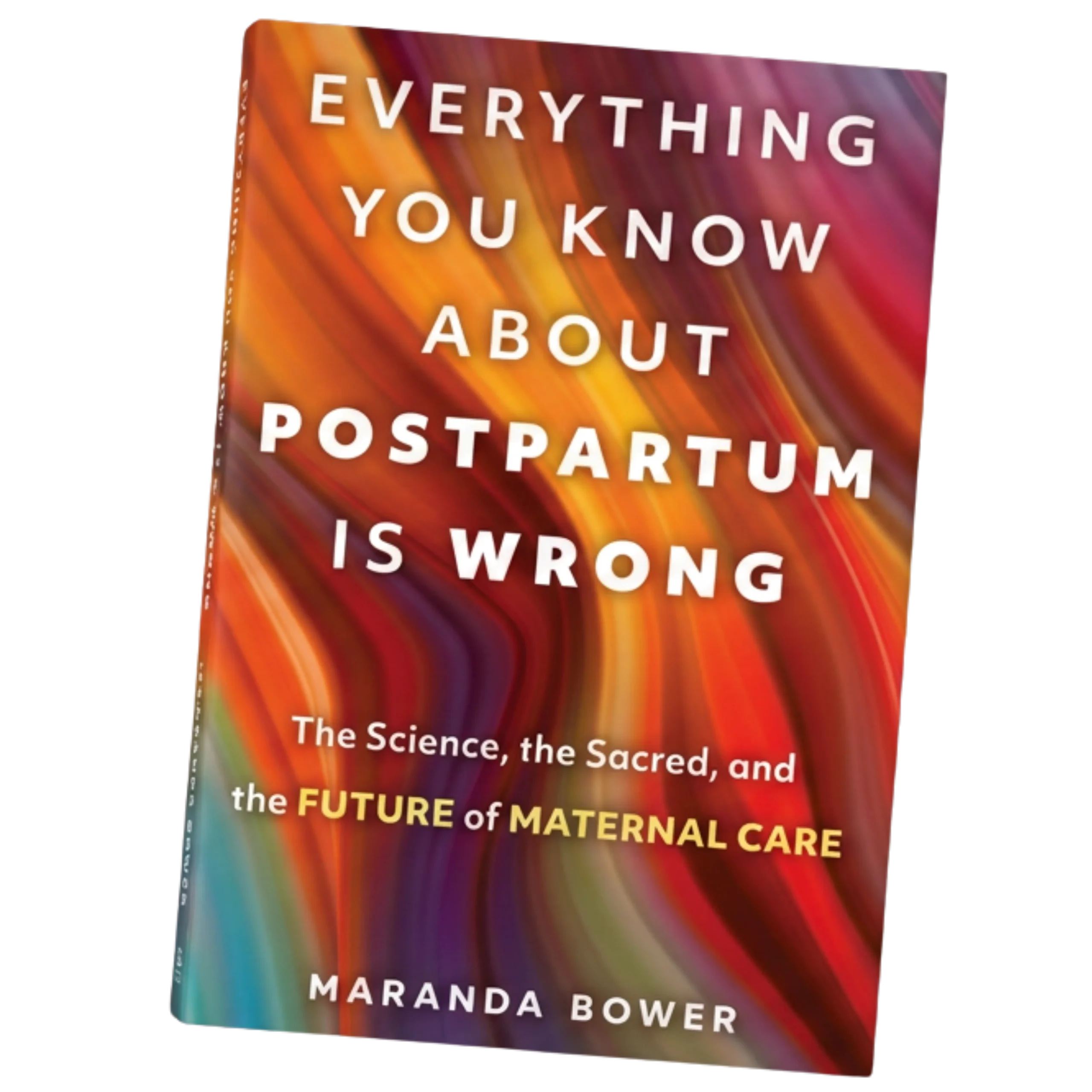
I spent years documenting this pattern across postpartum care for my book, Everything You Know About Postpartum Is Wrong, and menstruation may be the clearest example of it: the research exists, but it was never asking about HER.
What Happens Before Your First Period After Birth
“Getting your period back” makes it sound like a switch. Off through pregnancy and early postpartum, on again the day the first bleed arrives. That isn’t what happens. Your reproductive system doesn’t simply restart after birth. It recovers.
Nursing disrupts the pulsing signals from the brain that drive ovulation. This isn’t just “high prolactin shutting things off.” It’s an entire communication system between the brain and the ovaries running at reduced capacity, and it has to be restored before a normal cycle can exist again. That restoration happens in stages. First the ovaries are quiet. Then follicles begin developing but don’t mature enough to release an egg. Then ovulation returns, often imperfectly. Only after that do regular, fully functioning cycles settle in. First cycles are frequently long, with no ovulation or a luteal phase that’s too short (Prior, 2025).
So the first bleed isn’t the finish line, and on its own it doesn’t tell her how far along her recovery is. In a study that followed breastfeeding women in Baltimore and Manila with daily hormone testing, 45% of first periods in the first six months had no ovulation behind them (Gray et al., 1990).
It runs the other direction too. A woman can ovulate before she ever sees a period, which is exactly why pregnancy can happen before menstruation returns. In a cohort of Australian women breastfeeding long-term, a third of those whose period returned in the first three months had ovulated beforehand. Among those whose period returned after twelve months, 87% had (Lewis et al., 1991).
And when ovulation does return, it often isn’t ready. In the Baltimore and Manila study, 41% of first ovulations had luteal phase defects: a second half of the cycle that was too short or produced too little progesterone (Gray et al., 1990). This isn’t only a breastfeeding effect. In women who weren’t breastfeeding at all, 32% of first cycles had no ovulation, and 73% of the ones that did had low progesterone or short luteal phases, improving across the cycles that followed (Gray et al., 1987).
So a period at four months and a period at thirteen months can be very different events. The first may be a bleed with no ovulation behind it. The second is far more likely to follow a real ovulation. Both get called “my period came back.”
Why Your Period Returns at Different Times After Baby
Every mother has heard that breastfeeding keeps her period away. So she’s confused when it returns at five months while she’s still nursing, or when a friend who nursed just as long hasn’t seen a period at a year. Breastfeeding isn’t one thing. The body responds to the breastfeeding timing and pattern. How often the baby nurses, how long each feed lasts, whether there are long stretches between feeds, whether anything else is being fed to the baby. In the Baltimore and Manila study, the length of each feed, the number of daily feeds, and the share of feeding done at the breast each independently predicted how long ovulation stayed suppressed (Gray et al., 1990).
So when the baby starts sleeping longer stretches, or pumping replaces some feeds, or solids begin, the signal changes and the ovaries respond. Her body read a new message that changes her cycle.
How Breastfeeding, Energy, and Nutrition Affect Your Period After Birth
Feeding pattern doesn’t explain everything. Milk is expensive to make. A lactating body is financing milk production on top of tissue repair, immune recovery, sleep loss, replenishing what pregnancy and birth took, and everything else it takes to keep a mother functioning.
Researchers studying Toba women in Argentina proposed that ovarian function returns when a mother has enough energy available relative to what lactation costs her body. Insulin production rose as the demands of lactation eased, with a brief surge just before the period returned (Valeggia & Ellison, 2009). Across seven sub-Saharan African countries, undernourished breastfeeding women stayed without a period longer, even after accounting for how they fed their babies (Peng et al., 1998).
Even so, the gap was modest: undernourished women went about six weeks longer without a period than better-nourished women. And a well-nourished Australian cohort found no link between nutritional status and when the period returned (Lewis et al., 1991). Nutrition plays a role, but it doesn’t set the timing on its own, and a missing period is not proof of depletion. What the research does show is that her cycle responds to more than breastfeeding. Her body is weighing milk production against everything else it is still repairing, and in this model, her cycle returns when there is enough left over to support it. That’s why two women with the same feeding pattern can get very different answers.
What Your First Period After Baby Is Actually Like
Ask a room full of mothers what their first periods after birth were like and you’ll hear completely different stories. Heavier than anything she remembers. Clots she’d never seen. Cramps that got dramatically worse, or cramps that finally eased after years of painful periods. Spotting she couldn’t classify. A cycle that appeared once and vanished for months.
Patient handouts say all of this can happen. What doesn’t exist is research telling us who experiences which pattern, why, how long it lasts, or where normal reactivation ends and something else begins.
Even the most basic question like “is this my period or am I still bleeding from birth”, lacks a clean answer. Postpartum bleeding lasts far longer than the two weeks women are often told, commonly stops and starts again, and more than a quarter of breastfeeding women have a separate bleeding episode before eight weeks (Visness et al., 1997). Research draws the line for a “first period” at an arbitrary day 56. Most women are never told this, so they’re left guessing whether that bleed was actually their period.
Postpartum Periods, PMS, and Mood Changes
Women with a history of PMS or PMDD have roughly twice the odds of postpartum depression (Buttner et al., 2013), which suggests some women are especially sensitive to reproductive hormone shifts. Researchers have proposed that weaning and the returning cycle form another transition that may trigger late-onset depression in hormonally sensitive women (Burke et al., 2019). It’s a hypothesis no one has tested in outcomes.
Even as a hypothesis, it names something postpartum care keeps missing. Pregnancy is a hormonal transition. Birth is a hormonal transition. Lactation is its own hormonal state. Weaning is another transition, and the cycle coming back online is another. We’ve treated postpartum as one hormonal event that happens at birth and then fades. Women’s lived experience says it’s a series of them, and the later ones get almost no attention.
Your First Postpartum Period and Iron Depletion
The returning cycle also arrives inside a body that may still be rebuilding its reserves. In a Norwegian cohort, two-thirds of women had depleted iron stores at three months postpartum, with similar numbers at six (Sleire et al., 2026). Pregnancy drew those stores down. Birth drew them down further. Lactation continues to draw on them. Then her period returns and begins pulling from a reserve that was never refilled.
A heavy postpartum period in a woman whose iron is replete is not the same physiological event as that same bleeding in a woman who entered pregnancy low, hemorrhaged at birth, and has never had her iron rechecked.
When to Worry About Your Period After Pregnancy
The range of normal is wide. That’s exactly where problems hide, because when an absent or unusual period is expected, no one looks twice. These patterns deserve a closer look, not reassurance:
- No period after breastfeeding has substantially decreased or ended.
- Brown spotting that drags on after each period following a cesarean. A scar defect called a niche is common after cesarean, and women with one report this spotting at more than twice the rate of women without (Bij de Vaate et al., 2011).
- Very light periods, or none, after retained placenta was surgically removed. In one study of women who had retained tissue removed after birth or miscarriage, 40% had scar tissue inside the uterus three months later (Westendorp et al., 1998).
- A severe hemorrhage, then milk that never came in, then no period. That points to pituitary injury, Sheehan syndrome. When the missing period was the main clue, diagnosis took more than eight years on average (J Med Case Rep, 2021).
- Fatigue, temperature intolerance, palpitations, or hair and mood changes alongside cycle changes. Postpartum thyroiditis affects roughly 5 to 10% of women, and its hypothyroid phase typically appears four to eight months after birth, right in the window when many women are waiting for a period (American Thyroid Association).
“You’re breastfeeding, don’t worry about it” is a fair answer for many women. It is not a universal one.
What Your Period Can Tell You About Postpartum Recovery
“When will my period come back?” gets her a date range. The better question is what’s happening as her reproductive system comes back online. Is she ovulating? Are her cycles settling or getting more erratic? What is the bleeding like? What happens to her mood? What else is her body carrying right now?
Her cycle isn’t a diagnostic test that can tell us everything about her recovery. But it is information, and for far too long postpartum care has asked whether she can get pregnant again without asking what the return of her cycle says about her. Her cycle was never just a fertility timer. It’s one of the signals her body gives us about what is happening underneath. It’s time we started paying attention to it.
Reading what a mother’s body is actually communicating, from nutrient depletion to hormonal recovery, is what The Postpartum Body teaches. Whether you’re a mother trying to make sense of your own cycle or a provider who has felt the limits of “it’s normal, give it time,” this is where that gap gets closed.
Learn More About The Postpartum Body: thepostpartumbody.com
References
- American College of Obstetricians and Gynecologists. ACOG Committee Opinion No. 736: Optimizing Postpartum Care. Obstet Gynecol. 2018;131(5):e140–e150. https://pubmed.ncbi.nlm.nih.gov/29683911/
- American Thyroid Association. Postpartum Thyroiditis. https://www.thyroid.org/postpartum-thyroiditis/
- Bij de Vaate AJ, Brölmann HA, van der Voet LF, van der Slikke JW, Veersema S, Huirne JA. Ultrasound evaluation of the Cesarean scar: relation between a niche and postmenstrual spotting. Ultrasound Obstet Gynecol. 2011 Jan;37(1):93-9. doi: 10.1002/uog.8864. PMID: 21031351.
- Burke, C.S., Susser, L.C. & Hermann, A.D. GABAA dysregulation as an explanatory model for late-onset postpartum depression associated with weaning and resumption of menstruation. Arch Womens Ment Health 22, 55–63 (2019). https://doi.org/10.1007/s00737-018-0871-9
- Buttner MM, Mott SL, Pearlstein T, Stuart S, Zlotnick C, O'Hara MW. Examination of premenstrual symptoms as a risk factor for depression in postpartum women. Arch Womens Ment Health. 2013 Jun;16(3):219-25. doi: 10.1007/s00737-012-0323-x. Epub 2013 Jan 8. PMID: 23296333; PMCID: PMC3663927.
- Genetu, A., Anemen, Y., Abay, S. et al. A 45-year-old female patient with Sheehan’s syndrome presenting with imminent adrenal crisis: a case report. J Med Case Reports 15, 229 (2021). https://doi.org/10.1186/s13256-021-02827-0
- Gray RH, Campbell OM, Zacur HA, Labbok MH, MacRae SL. Postpartum Return of Ovarian Activity in Nonbreastfeeding Women Monitored by Urinary Assays, The Journal of Clinical Endocrinology & Metabolism, Volume 64, Issue 4, 1 April 1987, Pages 645–650, https://doi.org/10.1210/jcem-64-4-645
- Gray RH, Campbell OM, Apelo R, Eslami SS, Zacur H, Ramos RM, Gehret JC, Labbok MH. Risk of ovulation during lactation. Lancet. 1990 Jan 6;335(8680):25-9. doi: 10.1016/0140-6736(90)90147-w. PMID: 1967336.
- Jackson E, Glasier A. Return of ovulation and menses in postpartum nonlactating women: a systematic review. Obstet Gynecol. 2011 Mar;117(3):657-662. doi: 10.1097/AOG.0b013e31820ce18c. PMID: 21343770.
- Lewis PR, Brown JB, Renfree MB, Short RV. The resumption of ovulation and menstruation in a well-nourished population of women breastfeeding for an extended period of time. Fertil Steril. 1991 Mar;55(3):529-36. PMID: 2001754.
- Peng YK, Hight-Laukaran V, Peterson AE, Pérez-Escamilla R. Maternal nutritional status is inversely associated with lactational amenorrhea in Sub-Saharan Africa: results from demographic and health surveys II and III. J Nutr. 1998 Oct;128(10):1672-80. doi: 10.1093/jn/128.10.1672. PMID: 9772135.
- Prior JC. Postpartum lactational amenorrhea and recovery of reproductive function and normal ovulatory menstruation. In: The Ovary. Elsevier. Maternal-Fetal and Neonatal Endocrinology. Second Edition. 2020. https://www.sciencedirect.com/science/chapter/edited-volume/abs/pii/B9780443239403000454
- Sleire SN, Aakre I, Dahl L, Aarsland TE, Sandvik R, Kjellevold M, Markhus MW. Maternal and infant serum ferritin concentrations across pregnancy and postpartum: a longitudinal study in Norway. Food Nutr Res. 2026;70:14217. https://foodandnutritionresearch.net/index.php/fnr/article/view/14217
- Valeggia C, Ellison PT. Interactions between metabolic and reproductive functions in the resumption of postpartum fecundity. Am J Hum Biol. 2009 Jul-Aug;21(4):559-66. doi: 10.1002/ajhb.20907. PMID: 19298003; PMCID: PMC3305908.
- Visness CM, Kennedy KI, Ramos R. The duration and character of postpartum bleeding among breast-feeding women. Obstet Gynecol. 1997 Feb;89(2):159-63. doi: 10.1016/S0029-7844(96)00482-6. PMID: 9015013.
- Westendorp IC, Ankum WM, Mol BW, Vonk J. Prevalence of Asherman's syndrome after secondary removal of placental remnants or a repeat curettage for incomplete abortion. Hum Reprod. 1998 Dec;13(12):3347-50. doi: 10.1093/humrep/13.12.3347. PMID: 9886512.
This article is original research synthesis by
Maranda Bower, founder of Postpartum University®.
This research was originally published November, 2025.
You’re welcome to share excerpts or discuss these ideas publicly. When doing so, please credit the original work to Maranda Bower / Postpartum University® and link back to this article when possible.
To cite this article:
Bower M. Getting Your Period Back After Baby: What Your Postpartum Cycle Is Telling You. 2026. https://postpartumu.com/research/period-after-baby/