

In a world brimming with the hustle and bustle of modern life, the profound journey of postpartum often goes unnoticed. But it wasn’t always this way. Long ago, across diverse cultures, postpartum was revered.
It was celebrated and embraced as one of the most sacred phases of a woman’s life. It was a time of transformation, not just physically, but spiritually and emotionally as well.
In times past, postpartum was marked by rituals, wisdom, and a deep connection to the sacred.
These are times when communities understood the significance of supporting a new mother as she transitioned into her role and where traditions held the key to a holistic approach to healing.
We need to look at the bigger picture of how we’ve overlooked a crucial element in this journey for this scientific understanding.
As we explore the sacredness of postpartum experiences we discover that reliance on science alone has led us to lose sight of the spiritual, emotional, and deep human aspects of this transformative period.
In this exploration of making postpartum sacred, it’s time to challenge the status quo.
We need to question the conventional wisdom that often leaves mothers feeling overwhelmed and unsupported during this crucial time.
In our modern world, the concept of sacred can sometimes seem elusive or even misunderstood.
It’s a term that evokes various images, emotions, and deeply personal experiences in each of us.
It’s crucial to lay the foundation by exploring what the sacred truly means in the context of this transformative experience.
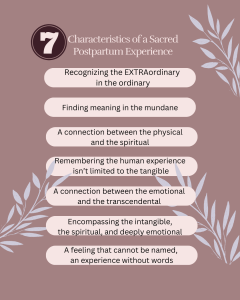
At its essence, the sacred is about recognizing the extraordinary within the ordinary.
It’s about finding profound meaning in the seemingly mundane aspects of life.
It’s the deep connection between the physical and the spiritual, the emotional and the transcendental.
It’s a reminder that our human experience is not limited to the material and the tangible.
It encompasses the intangible, the spiritual, the deeply emotional.
Oftentimes this cannot be named. It’s a feeling.
It’s an experience that doesn’t have words.
So why does this matter in the realm of postpartum?
Why the Sacred Experience Matters in Postpartum
Postpartum isn’t just a physical recovery.
It’s a profound emotional and spiritual journey as well.
It’s a time when a woman undergoes a remarkable transformation both in her body and her identity.
It’s a time when we’re vulnerable.There’s growth and rediscovery.
Within this journey lies an opportunity to infuse that sacred,
acknowledging the spiritual and emotional dimensions of this life-altering experience.By making postpartum sacred, we honor the full spectrum of this transformation.
We create a space for emotional healing, spiritual growth, and deep connection.
It’s an approach that goes beyond the medical and physical aspects of healing.
It encompasses the holistic well-being of the mother and her family.
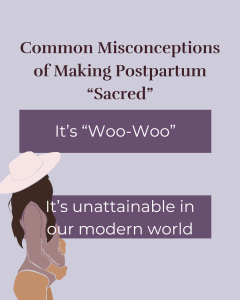
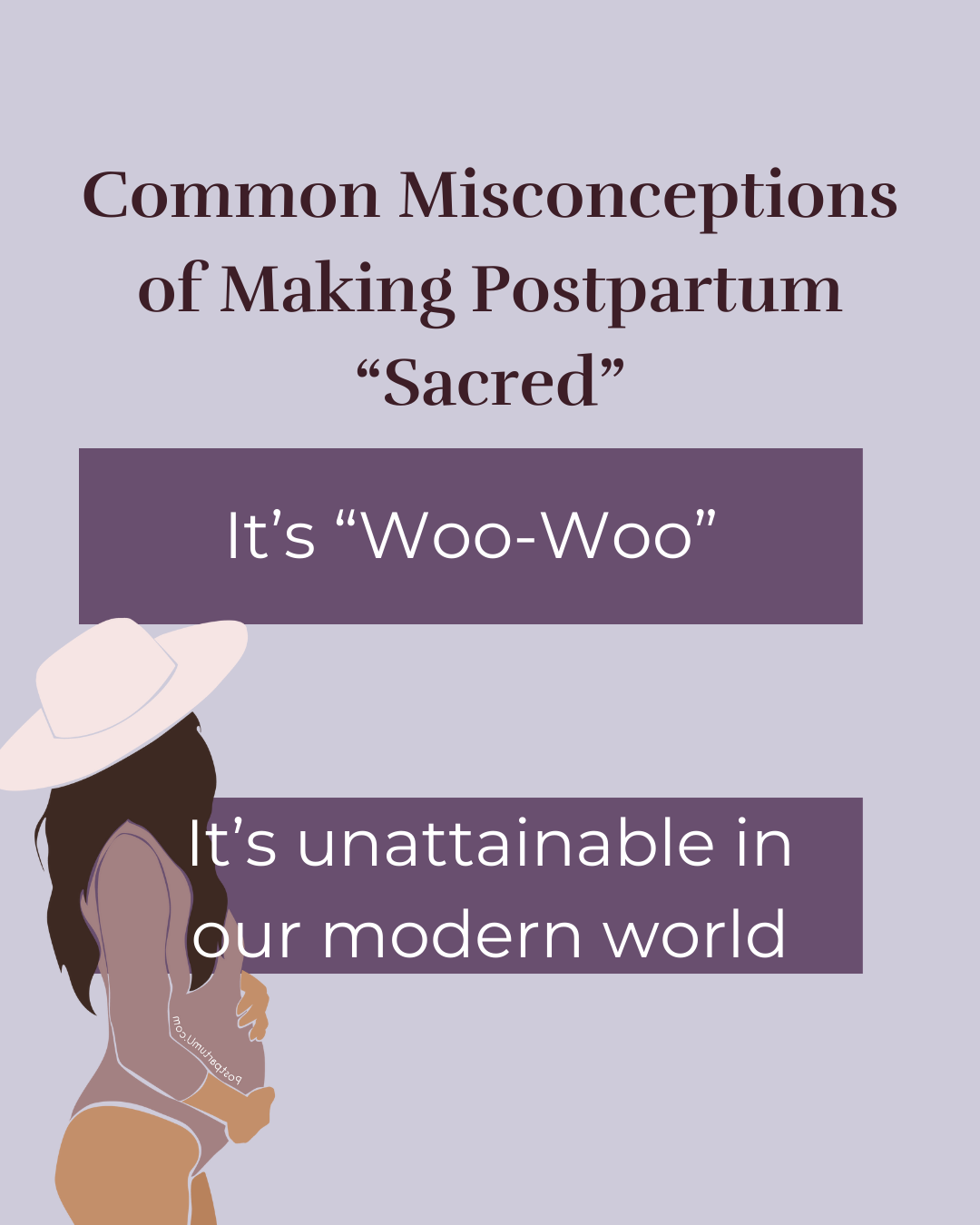
Two Common Misconceptions About the Sacredness of Postpartum
1 It’s “Woo-woo”
One common misconception is that embracing the sacred in postpartum is some sort of woo-woo kind of thing or it’s an impractical concept, something reserved for those who subscribe to this alternative or mystical or new age belief system.
The truth is, making postpartum sacred isn’t about pursuing those esoteric or unattainable ideas.
It’s really about recognizing this deeply human, emotional, and spiritual dimension of postpartum.
It’s about acknowledging that this transformation period is natural and significant and deserving of care and reverence.
2. It’s impossible in our modern life.
There are so many demands on us these days.
It’s too fast-paced, we’re technology-driven and this leaves little room for that reflection, ceremony, and ritual.
However, this misconception can be challenged by understanding that sacredness is found in those everyday moments.
It doesn’t always require these grand rituals or elaborate practices.
It can manifest in small, intentional actions.
The way we prioritize and honor the postpartum experience is a reflection of this.
While misconceptions about postpartum sacredness may exist, it’s essential to recognize that this concept is accessible.
It’s meaningful and within reach of anyone willing to embrace it.
It means reclaiming a holistic approach to postpartum care, one that nourishes not only the body but also the spirit and the soul.
The History of Postpartum Rituals and Ceremonies
Sacred postpartum is not new.
History shows us a place where the roots of our modern beliefs and practices are entwined within this sacred postpartum.
Throughout history, across many diverse cultures around the world, postpartum was a revered profound sacred period.
It was a time when communities came together to embrace the arrival of new life,
but also a new mother.
It wasn’t just about this physical recovery of the mother, it was a holistic, conscious support system that recognized the emotional, spiritual, and social facets of this transformation.
There were eras when rituals and traditions were very much woven into the fabric of postpartum.
They were moments of connection, reflection, and healing.
Communities understood the intrinsic link between nurturing the mother and nurturing the newborn.
It was a time marked by profound respect for the strength and resilience of women.
In ancient cultures, the sacredness of postpartum wasn’t a concept that needed to be explicitly labeled or consciously cultivated. It simply was. It was a natural and intrinsic act.
It was part of the seasons and rhythms of life itself.
Postpartum care and reverence for this transformative journey of motherhood were woven into the fabric of these societies.
It wasn’t a matter of questioning whether this period was sacred.
It was a shared understanding that this arrival of a new life demanded profound care, ritual, celebration, and deeply rooted recognition.
It was a testament to the interconnectedness of the community, and the innate wisdom that resides within us all.
In Reclaiming Postpartum Wellness, I dive deep into the history, culture, and anthropological views of postpartum.