Welcome to the Postpartum University podcast, where we support you and your provider in understanding the science, the art, and the sacredness of healing after birth. I’m Maranda Bower, your host, your Postpartum Nutrition Specialist, and homesteading mom with four wild kids. It’s time to get you the holistic, whole-body healing that works.
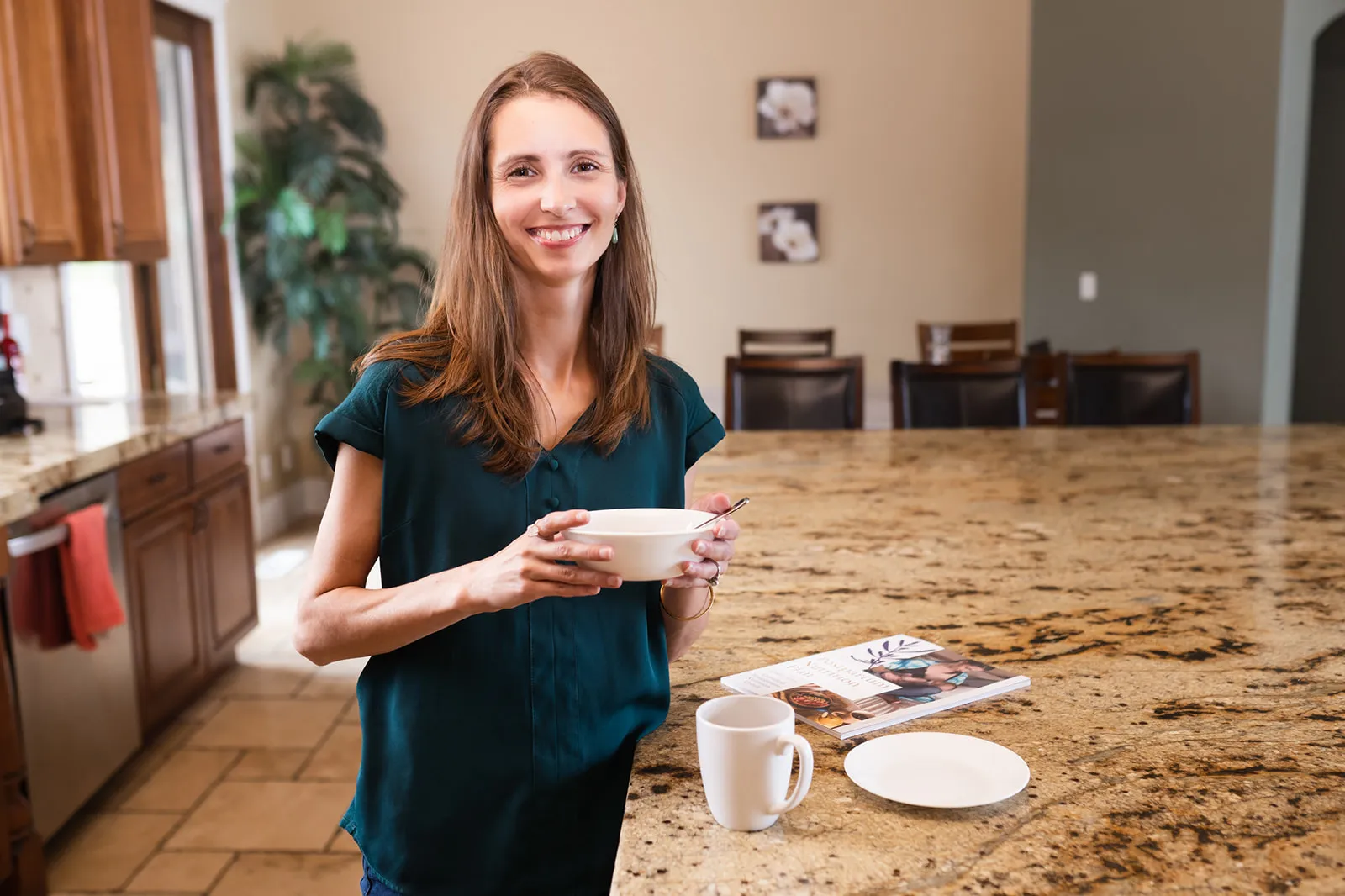
Hello, and welcome to the Postpartum University podcast. welcome to the podcast. It’s Maranda Bower and I have here a very special guest, Kira Whitham. She holds a Master’s in Health and Nutrition Education and has an extensive training in functional medicine, mind, body connection and lab analysis. This is key all because she is here for a very special reason. I was actually just chatting with Kira and we had a conversation with Kira and we had a conversation with Kira were trying to figure out how do we know each other? Like we’ve been in each other’s space for so long and I have watched her business grow over the years and recently she’s been sharing quite a bit about the power of minerals and so I had to have her on the show. Kira, welcome.
Kira: Thank you. Thank you so much for having me.
Maranda: Yeah, can you share with everybody? how you got started in this, what’s your story?
Kira: Man, how much time do we have? No, I’ll keep it short. So I was the kid with chronic digestive issues, always complaining of stomach pain, continued well into my 20s, got beyond frustrated because it was seeing every doctor, trying medications, let’s run, you know, more lab tests, nothing looks wrong, we’re just gonna stop. slap a label of IBS and call it good. And so I never paid attention to food until I started doing CrossFit way back then. And they were talking about Paleo diet and why aren’t you watching what you eat? And I said, well, I work out so I can eat whatever I want. Like, isn’t that what people do? So when I did start paying attention, I was like, oh my gosh, like this makes a difference in my digestive system. issues. Who would have known? So then I started studying nutrition, went back to get my degree. And by the time I finished, I realized this is actually what I’m supposed to be doing. So at the time I was a middle school teacher. And then led further down the journey when my husband was diagnosed with a couple autoimmune disorders, learned about functional medicine, started studying that and the journey has not ended. And this is really how I got started. started, too. And maybe this is why we connect so well, because that was my journey. I mean, even from infancy on, I was the colicky baby. Something was always wrong with me. I was in and out of hospitals for intestinal bleeding. And they were just like, oh, you know, IBS, there’s nothing wrong here. We can’t figure anything out. And back then, food allergies and those conversations weren’t being had. No, I didn’t. know anything until I was in my adulthood and searching for answers. So I totally relate to that. One thing that I absolutely love about you is that you, like myself, you’re a seeker of the root cause, right? Disease pathology, which is what doctors are trained in. They’re searching for disease. They’re searching for something to diagnose you. you with. But that is not what you’re doing here. You’re searching for the root. Why are these symptoms happening? Why is this something that we can label as a disease? Why did it occur? And you talk a lot about minerals and the role in which that plays in our overall health. Can you explain to everyone what minerals are, the power of minerals within the body? body and everything related as we can have in this episode. ‘Cause I know you’re still full of wisdom. We’ll take it slow.
Kira: Yeah, I mean, let me just start with minerals. I don’t know why, but I feel like this is an ignored area. I mean, people talk about nutrition and eat your vegetables and get these foods in and do this, but people don’t really pay attention to why. Why are we asking people to do that? It’s vitamin D, vitamin D, vitamin D, vitamin D. it’s minerals, but people tend to pay more attention to vitamins. Let me take a multivitamin. I need some vitamin D. I’m low in this, but if we really look at minerals, they are responsible for so many functions in the body. I mean, somebody used the analogy of spark plugs in a car. It’s the same thing. It’s what’s allowing us to run. And when we look at the female body and hormones and child birth and all of those wonderful things, it’s the same thing. things you talk about minerals are heavily depleted when we have a baby and then you tack on more than one baby and they’re depleted even more and that’s then impacting our hormones, our energy levels, our stomach acid, how we absorb our food and how that’s broken down into amino acids like it literally ripples into so many different areas.
Maranda: I didn’t ask you this and I should have before we got started, but do you know on the top of your head what the stats are, especially in our Western world for women coming into this, into pregnancy and postpartum, how many of them are actually depleted and why so many?
Kira: Oh my gosh, I don’t have a number. I don’t even know if I could find one, but I can tell you in my own practice, 90% of women coming into pregnancy after having children within five years are depleted. And when I’m talking depleted, it’s not just, oh, you need a little bit more magnesium. They’re flatlined, like across the board.
Maranda: Yeah, that’s exactly what I see every single time. And I know a lot of these women are coming to us with chronic issues and illnesses. But that has become the normal in motherhood. Yeah, right. We have labeled motherhood as a mediocre experience in which we are meant to feel terrible. And so I truly believe, even though like you and I, we have a lot of people who are coming to us who are not well, that it’s a really great representation of the general population at hand. And so why is this occurring? Why are so many women depleted of these key men?
Kira: I think for multiple reasons. I mean, just if we look at our food sourcing, that’s one big thing. I mean, if we look at food supply in 1975, I have a graphic of this, so I’m just thinking of it off the top of my head, but like apples have 45% less vitamin C and broccoli has like 50% less magnesium and calcium and everything is depleted. whether it’s topsoil erosion or the hybridization, I don’t really know. I’m a dug into that. But food choices themselves are depleted. So it’s almost like we have to double up on everything to get the same amount that we used to be able to get. And then childbirth, there’s not enough people like you talking about it. Like no one guided me through it, right? My midwife just said, take a prenatal. Okay, I’ll take a prenatal. And then… as soon as I had my child, I’m like, “Okay, I guess I’m done because I had my baby.” No one explained that the postpartum period was like five years and that my body would be depleted for that length of time. So I think that’s a piece of it is women just don’t know how to fuel their bodies and then how to supplement appropriately when you are having a baby.
Maranda: So let’s talk about supplementation because this is a hot, hot topic. And I know that you’ve heard me talk about this too Is it really effective? Are we doing ourselves a service? By taking supplements every day and thinking that this is this is the way that we’re gonna get what we need.
Kira: Yeah, no I mean and from a functional medicine standpoint, I know many are like none of those supplements are needed Don’t get me wrong. I’m not anti supplements. I take supplements. I do suggest supplements supplements, but there needs to be a reason behind it. I mean, I have clients coming to me, no joke on 25 to 30 supplements. I’m like, do you even know why you’re taking these things? That’s not fixing the problem, you still feel poorly. So tell me, like, how is the $300 a month that you’re throwing away working out for you? So I think there’s a need, but it needs to be strategic, and then it goes back to the why. If you’re taking… all these things, what is the reason? Like if you’re chronically low in vitamin D even, which we see everyone supplementing with, why is that? Can we figure out what the root of that is? You don’t have to supplement with 5,000 IUs every day for the rest of your life.
Maranda: So what happens when we are actually depleted and maybe our supplements aren’t working, maybe we’re not getting the food that we need into our bodies, what happens to our body? body, especially in pregnancy and postpartum?
Kira: Yeah, so, gosh, okay, if we think of this from like the most basic standpoint, we have reserves in our body, right? That’s why we tell people like 85% whole foods or whatever. There’s a reason why we have reserves and the body will pull from the bloodstream and stuff that’s in there. If there’s not a enough, if we haven’t been replenishing those lost minerals and vitamins, then the body’s pulling from other reserves, soft tissue, bones, like it starts almost eating itself. And I hate to use that term, but it’s pretty accurate. If there’s nothing left, your body’s gonna be so depleted, there’s nowhere else to pull from. You’re not gonna have any energy. You’re gonna feel poorly across the board, whether that’s rippling or not. sleep and hormones and mood, and it affects everyone so differently. Can we talk a little bit about breastfeeding?
Maranda: Yeah. Because I feel like this is such a controversial topic and we don’t talk about it enough, right? Breastfeeding or breast milk is always enough. However, if you’re depleted, your baby is not going to get the minerals from your milk. If your body has nothing to give, it will not have it, no matter how amazing breast milk is. And yes, you should always continue. If that’s what you want, like that, I think that’s super important. It’ll always be better than, but let’s also have a real conversation and speak the facts here that your body can’t make minerals.
Kira: Yeah. Yeah. It doesn’t just happen. right? Like you don’t just like wish more magnesium on your body or assume that I’m, you know, you have to put that into your body, whether it’s, I’m gonna eat a ton more pumpkin seeds or I am in a supplement or whatever that looks like, you’ve got to have those minerals in place for your breast milk.
Maranda: Because if you don’t have them in your reserves, how are you giving them to your baby? You’re not.
Kira: And this is why so many women in postpartum are struggling in… Yes, it impacts everyone so differently, but this is also why we have depression, anxiety, autoimmune issues, struggling with sleep. Our babies are having significant issues themselves, right? This is a constant, and I’m not saying that this is the only reason, right? There’s a multitude of reasons out there, but this is huge. This is one that we need to talk about. And, And you talk specifically about why we should and shouldn’t run blood work. And this is a huge conversation because now let’s switch to, okay, what do we do? How do we figure out what we’re imbalanced in and what do we do about it? If you’re a birth and postpartum professional who wants to give the families you serve some solid holistic evidence-based information regarding nutrition, repletion, and nourishing your body after baby, this is for you. I have 18 beautiful pages in a handout form that is completely free. Free full guide to nutrition completion, common misconceptions, supplement support, favorite recipes, 30 healthy and quick snacks. and so many more. You can download your free collection with handouts at postpartum.u. That’s the letter u.com/handouts. This is a hard conversation because again, I’m not looking from a diagnostic standpoint. I’m looking from like a functional nutrition standpoint. I will have clients that come to me with blood work. and their doctors have told them that everything looks great. And I’m sure this is a common theme here. Everything looks totally fine. I’m looking again for patterns. So sometimes I can see things in blood work like, hey, you’re low in potassium. But the problem is a lot of times when blood work is run, they’ll look at something like sodium or potassium or magnesium, just basic minerals run in a panel and everything looks fine. And I’ll say, okay, but did you take a supplement three days ago? Did you eat pumpkin seeds? Did you have coconut water the night before? Because levels in blood are going to look good if you’ve been doing those things consistently. Blood is only measuring a few days versus if we’re running something like a hair test, which is looking at approximately the last three months. So people are interested to see like, I’m looking at my blood work and it looks okay. And then I look at it. my mineral test and I’m flat lined. Why is that? Well, that’s why over the past three months you’ve been flat lined. You might’ve had some supplementation yesterday you took your prenatal, your blood work is gonna look amazing.
Maranda: I love this. So how do we decide whether or not testing is right for us and what kind of testing do we need?
Kira: Yeah, that’s a hard conversation and it depends on someone’s symptoms. I mean, if you – been dealing with something for a long time, you had a child a year later, you’re still struggling, that’s when you probably want to start exploring something. And I mean, I tell people, by all means, start by going to your doctor, get the basic blood work, see if anything stands out to them. But if you’re told it’s in your head, it’s just what you get with being a mother, oh, your hormones have shifted or everything looks fine, then it’s time to dig a little bit deeper or because… you know your body, like you know you’re not supposed to feel like that. So is it a mineral test? Do I need to explore some additional testing? Like there’s so many different options out there, but I mean, I tell people, if you’ve been struggling for a while, it’s time to dig. You don’t deserve to feel that way.
Maranda: I’m so glad that you said that because that’s often what we’re told. And the reality is is that a lot of providers providers, they’re doing their best. They’re not trained in this information. They’re not given this information. And when we look at even the studies of nutrition and we look at the needs of minerals in a woman’s body, a lot of those are based on men’s studies that were reduced for a smaller female. or a smaller human, i.e. a female, right? It’s so sad.
Kira: I know, and it doesn’t take into consideration like you’ve grown a child, so there’s a second body in you or things called like burn rates. We have a magnesium burn rate. If you’re under stress, you’re gonna have a higher need and you’re having a baby, you’re under more stress.
Maranda: Significantly more stress, right? And you can have the best outlook and feel amazing with that. within your emotional capacity and your mental health, yet your body is still stressed because you’re growing a human. Not all stress is bad. So, okay, let’s just say that we are able to find a provider that is very supportive and helpful. We run the blood work. It comes out that we are indeed deficient of many key minerals. What do we do to fix that imbalance?
Kira: I mean, I always start with food. Can you get those nutrient levels up with food? I mean, potassium is one. There’s not even any good potassium supplements. I mean, I laugh, most of them are 99 milligrams. We need 3,500 to 4,700 milligrams a day, which is an insane amount. Again, if you’re breastfeeding, guess what? That number is even higher. And if you’re imbalanced and you don’t have enough and you’ve been depleted, that number is even higher. Yes, and it’s going to take a while to build up those stores again. So yeah, food choices. I mean, I always say, okay, here are the food choices. How much are you eating? How much can you commit to eating? And this is where the supplement conversation comes in. If someone’s like, I can’t do that. Okay, well, what’s… are some options then that we can talk through? But I always start with food. And I mean, I don’t wanna say Dr. Google, but for something like this, if you find out and you look at blood work and you’re being told, my potassium’s low, my sodium’s low, like what can I do? Get on Google and find a list of foods and just start there.
Maranda: I love that. Food is healing, right? We go back to Hippocrates. Please, I think I said that. right. Hippocrates. I’m like, Socrates, Hippocrates. We get back to Hippocrates, and he had said specifically that food is healing, right? And we have come so far. I mean, when I was a kid, I remember hearing all the time that we are what we eat. I don’t hear that anymore. As a matter of fact, I hear the opposite. I hear I hear food has no effect on our overall health, right? I have a dear friend who’s going through cancer treatment. And she asked her provider, what foods can I eat to help myself through this process? And they said, don’t even worry about it. Again, many providers are not trained in this at all.
Kira: No, they have like, I mean, if you look at the, there’s an hour to one course of nutrition training and they don’t know, I mean, for them, it’s like just go pick up a magnesium bottle at Walmart. Well, then let’s talk about the quality of what you’re getting on top of that. So yeah, they have like no nutrition training.
Maranda: Yeah, and the bioavailability of those key nutrients, are they actually going to be absorbed in your body? And if you’re deficient of a few key minerals, minerals that are responsible for helping that one mineral absorb, well, then you’re literally flushing your money down the toilet, right? Yeah, I mean, that’s an important one. People think like, again, I’m just going to go take magnesium. That’s my favorite one because most people are deficient in magnesium. That’s another conversation. But there are cofactors like boron. If your boron is rock bottom, go good luck. You’re going to keep taking magnesium and spinning your wheels, but those levels are never going to go up. And then that’s rippling into vitamin D. And we’ve just created this nice little dynamic of depletions. Yeah. Yeah. OK. I am so grateful that I am here chatting with you, everyone, if you’re listening, and this is really important stuff. And I hope that you take what we are saying here to heart. Thank you very much. you’re experiencing any sort of symptoms and you feel like this might be something for you, if you just have that gut feeling within you, or like, I really need to look into this, I highly recommend you connect in with Kira. Kira, where can people find you?
Kira: Facebook is probably a good spot. I mean, you can find me Kira, whether or my business page is a nourished place. nutrition. And then I do have a Facebook group, which I’ve now brought in three other amazing practitioners. So there are four of us, it’s not just me, lots of different expertise in there. And that’s called the holistic healing space.
Maranda: And of course, we have those links in the show notes. So be sure that you take a look at those. Kira, thank you so, so much for your time. I’m just, I’m super grateful that you’re here. here and I know that this conversation is going to change the lives of many. Thank you. Thank you so much. Of course. If you guys enjoyed this conversation, please, please, please leave a review and then follow up by joining Kira and her group and on her website.
Love this episode. Let us know by leaving an amazing review. Your support for it. everything. Want more? Head over to postpartumu.com, that’s postpartum, the letter u.com, and explore how we support moms like you and holistic whole body healing that’s specific for the unique needs of mamas in the years postpartum. See you there.