TRANSCRIPT: The Mother-in-law problem
Welcome to the Postpartum University podcast where we support you and your provider in understanding the science, the art, and the sacredness of healing after birth. I’m Maranda Bower, your host, your postpartum nutrition specialist, and homesteading mom with four wild kids. It’s time to get you the holistic, whole-body healing that works.
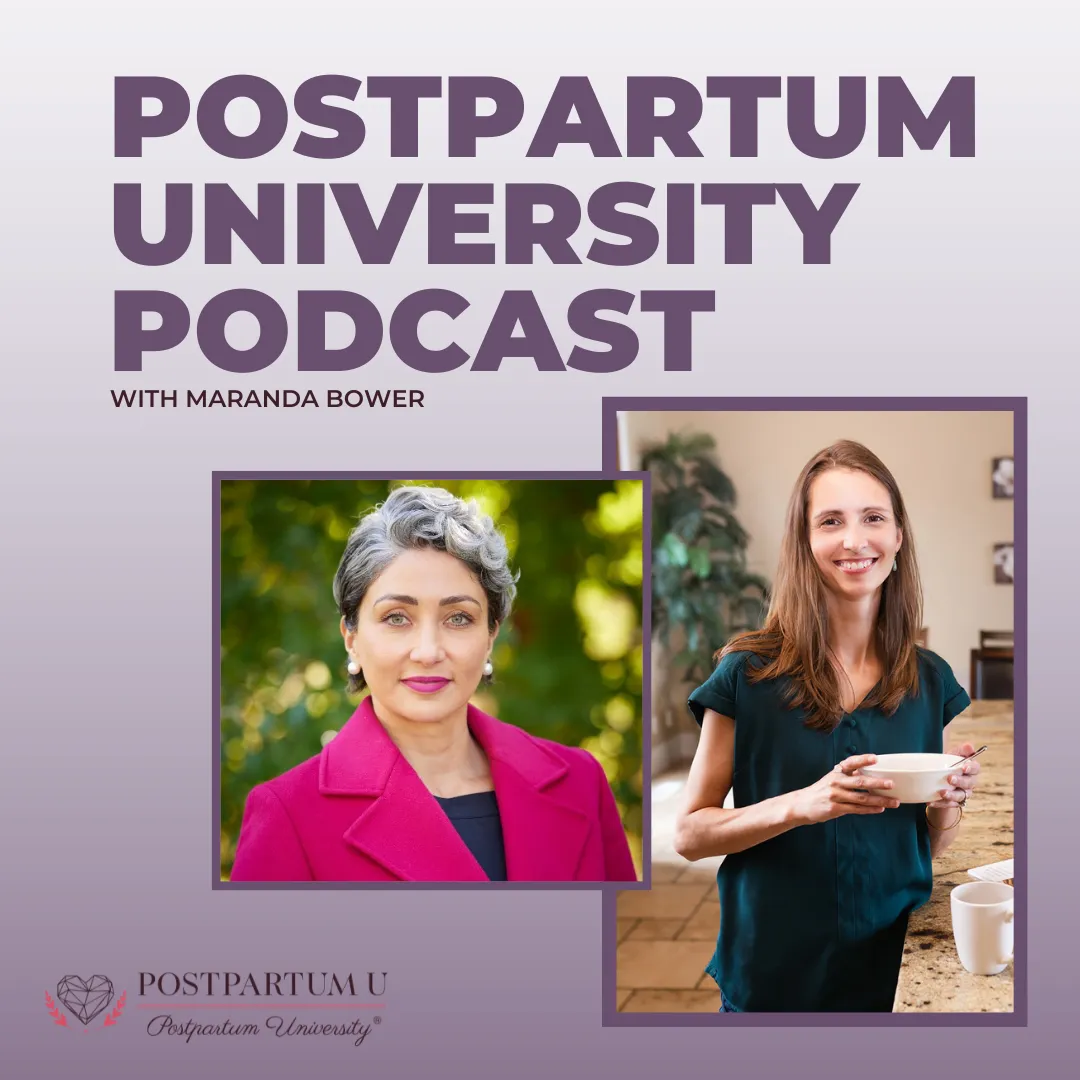
Hello, everyone. Welcome to the Postpartum University podcast. I’m Maranda Bower, your host, and I have a very amazing guest here today. Her name is Dr. Joanne Scott. She’s a licensed psychologist and owner of In-Law Psychological Insights. In-Law Psychological Insights, y’all. She’s a therapy provider dedicated to supporting clients working through challenges with in-law relationships. So as you can tell, I’m pretty excited for this conversation. Joanne, welcome.
Joanne: Thank you. Thank you, I’m excited to be here.
Maranda: Yeah, how in the world did you get started in such a specialized area?
Joanne: It’s a very good question. I think once I had my first son, some challenges started to come up in my relationship with my own mother-in-law and I was also at the time going to mother’s groups and it was a very frequent topic of conversation that would come up and I was fortunate enough to connect with a small group of mothers and we spent a lot of time with each other. And they would talk about challenges they were having with their mother-in-laws. And at one point we actually kind of all went out, we socialized with, they brought their mother-in-laws, I brought my mother-in-law. And all these stories that I heard didn’t quite add up to these mother-in-laws that I were meeting. I was hearing these stories of these horror stories (laughing) of what was happening. Their mother-in-laws seem to be very nice, reasonable people, and there seem to be some kind of a challenge in that connection. So I started to wonder about that. And then when I wrote my dissertation, maybe five or six years later, I decided to really dig in and understand that better. This is fascinating because we’ve truly, I mean, there’s so many jokes about the in-law relationship. There are entire Instagram accounts dedicated to making fun of the mother-in-law, right? We have so much going on in our society in regard to this negativity between the mother and the partner’s mother. What’s the deal? What’s the specific characteristics of in-law relationships? And why are they so challenging?
Joanne: That’s a great question and it’s a very, you know, it’s not, there’s not an easy answer. You know, there’s actually, they found dating back to Roman times, jokes about the in-law relationship. So this is, it’s what we call archetypal in the, this is a very long-standing pattern. In-law relationships are involuntary, you know, we have relationships with our neighbours or our bosses and we wouldn’t necessarily choose them, but they’re not triadic in that they’re not mediated through a third party. So it’s the combination of these two challenging dynamics in the same space that is thought to be what makes the indoor relationship just particularly challenging. So we have this triadic effect, which we don’t necessarily have a lot of control over. Exactly, which it can be really challenging, right? Because a lot of us, and I am, I am the A-type personality, obviously, if you all don’t know, listening to me on my podcast, right? And control was a very big deal, and sometimes is, I can catch myself and those things. And so we bring those to our relationships. Is that what you’re saying?
Joanne: Well, you know, yes or that you’re really in Western society for the most part we don’t choose our mother-in-law. You know there are cultures where the mother-in-law is probably quite influential in choosing who her daughter-in-law is going to be but we don’t get that very often in Western culture and so you might end up being in a relationship with somebody who has a very different cultural, theoretical, philosophical approach to all kinds of things. And I think for many people, you know, a lot of the clients that I see in my practice will say that there was some difficulties prior to having a child.
Joanne: But I see I would say probably more daughter-in-laws than mother-in-laws, although I do see mother-in-laws. But what a lot of daughter-in-laws would are things that in our culture right now we don’t promote and a lot of the generation above these were normal things and so if you’re coming from two different perspectives and your baby is the kind of focus around that I think that that’s kind of where a lot of the challenges lie there’s those very significant differences that consulate around this newborn that’s got all your focus.
Maranda: That is so true because the way in which our world has developed over the last several generations, really, or just even one generation, we’ve changed the rules in regards to parenting and raising our children so drastically. So how our parents raised us is very different than how we are raising our own children. And then you’re saying the cultural differences on top of that can lead to quite a bit of differences in parenting. Yeah, cultural in terms of generational and cultural in terms of just where people were raised and their ethnic culture. You know, I, my practice is in Orange County, and it’s very ethnically diverse. And so many people have, have my brain lost. -laws that had a very different cultural upbringing and maybe carry some very different expectations of the role that the daughter-in-law will play in the family and that can lead to it can lead to in the best case scenario just this kind of new understanding and this appreciation of diversity but in some cases you know it can lead to a lot of challenges challenges and conflicts. And, you know, as I said, when it comes to our babies, it can be so much harder to incorporate or encompass something that doesn’t feel as part of how we would want this to happen. You know, it makes it so much more, the stakes are so much higher.
Maranda: It is. And also, not only is it with our child, but also with who we are as a mother. And so often I see, and this was my experience too, with my mother-in-law, I needed someone to back me up. I needed someone to tell me that I was doing a good job. When really it’s, no, you should be doing this instead. And that hurts greatly, especially when you’re in such a vulnerable state. when we truly need that, that emotional and mental support, we need people to tell us we’re doing a good job, we need people to validate our intuition so that we can continue growing that intuition and trusting our intuition and taking care of our babies in the way we know is best. And oftentimes, that’s that’s one of the biggest challenges. So with that said, what are some tips for managing this conflict? How do we go about this relationship? And is it possible to have a really successful, healthy relationship?
Maranda: If you’re a birth and postpartum professional who wants to give the families you serve some solid holistic evidence-based information regarding nutrition, repletion, and nourishing your body after baby, this is for you. I have 18 beautiful pages in a handout form that is completely free. Free full guide to nutrition completion, common misconceptions, supplement support, favorite recipes, 30 healthy and quick snacks. and so many more. You can download your free collection with handouts at postpartumU, that’s the letter you .com /handouts.
Joanne: You know, I think, you know, what you were just sharing, it kind of gives me goosebumps because it’s so true. And in fact, a psychologist, Daniel Stern, he wrote a book called The Birth of the Mother. you’re absolutely right in terms of what you’re looking for as a new mother is just someone that’s going to be warm and reassuring, you know, not kind of in a way that disregards things that you might be doing that might not be ideal. But if they do want to kind of give support or have some suggestions, you know, that they’re given in a way that can be metabolized because new mothers are typically so sensitive to anything that… is perceived as criticism. The role of the husband has a huge impact on this in terms of insulating the partner against any kind of criticism that might be experienced. So it’s really important, you know, when I have clients come in and they have these challenges, you know, to find out where’s the… partner in this? You know, they might not be married, but what’s your partner doing in this? How are they responding? If they’re seeing things in the environment that appear to be criticism, are you feeling like they’re standing by you and they’re supporting you?
Joanne: Or are you feeling like you’re kind of ganged up against? Because, you know, my research showed very clearly that it’s not so much whether the partner kind of… agrees offhand with what his mother is saying, but it’s the perceived sense of support that the mother has from the partner that makes it makes all the difference in how this is experienced.
Maranda: That is such a good point and bringing in the partners experience and relationship as well into this triangular relationship, right the triadic relationship. And how can we have our partners support us? In what ways can, I guess I’m asking, how can we communicate what it is that we need? What is it that we need and how can we communicate it?
Joanne: Gosh, that’s, I mean, that’s such a great question. And it’s a very individual question as well. It really depends on, you know, some women, when they hit the ground running in terms of, you know, you can’t kind of obviously say this is what a new mother needs because our needs are so different. But what the mother needs from their partner is just that, and they need the same thing that they really need from their mother-in-law, they need to feel supported, you know, they need to feel like they, they are doing a good job. You know, obviously, motherhood, it’s a time and it’s vulnerable emotionally but it’s also vulnerable financially for a lot of women you know a lot of women will give up work or put work to one side and for the first time maybe in their lives their dependence on their spouse to support them financially and that in itself can bring up some vulnerabilities and so understanding that you know isolated on their own and it’s them against the world. I don’t know if that answers your question.
Maranda: Yeah it does and it sounds like you know taking some time to really consider what is the support that you need, what does that look like and then speaking from that space and I strongly feel that boundaries is another topic that we could probably get into as well. How do we communicate our boundaries?
Joanne: Yeah yeah and that’s a really good question and it’s and it’s its nuance as well, you know, it does depend a lot on cultural expectations of what that looks like. You know, there are some researchers, the Gottmans, I think come to mind, they share in their book, I think it’s the seven principles of marriage. They share that it’s absolutely essential that it’s the husband that could that articulates the boundaries, so that it’s really. really, and you know, mothers need this, they need that buffer because they’re exhausted and they’re not necessarily coming from a place of having a huge amount of psychological energy to deal with huge relationship challenges. You know, they, so they need that kind of buffer and in the Gottman’s book they talk about, you know, it really needs to be the husband that acts as that buffer. a lot of guilt around this because they feel like, oh, you know, I might be hurting. I might be hurting my mother-in-law by setting this boundary. But I think in terms of when you’re realizing, okay, this boundary needs to be set. I don’t want my baby to be put on there, Tony, and that’s a boundary for me. Knowing that in articulating the boundary, what you’re doing is protecting the relationship ultimately from resentment. And so, you know, you’re not doing it to hurt the relationship or to hurt your mother-in-law, you’re doing it because the resentment that will come from having that boundary violated is going to be very disruptive.
Maranda: Yeah, detrimental to the relationship. That is such a different perspective. I appreciate that so much. So if you’re listening in, like this is not, you’re not hurting, you are preaching. that’s it’s mind-blowing to have that understanding that you’re not just protecting your relationship with your mother-in-law you’re protecting your future your child’s future relationship with their grandmother you know and that in itself you know it’s a huge gift for a child to be surrounded by people that care about them and love them and it’s a huge loss if somebody gets kind of left on the outside because there was too many boundary violations and so it’s kind of protecting the generations to come.
Maranda: I love this conversation so much and I am just absolutely so grateful for you taking the time to do this. Where can people get in touch with you?
Joanne: So you can email me. My email address is dr.joannescott@gmail.com. So that’s dr.joannescott@gmail.com.
Maranda: And we will have that in the show notes. Absolutely get in touch with Dr. Joanne if you need any type of support with your in-laws. She’s absolutely amazing in her work and I highly recommend connecting. And thank you so much for your time and your wisdom. I have learned so much from this conversation.
Joanne: I will also say I work at the Cottonwood Psychology Center and that is we work with perinatal mood disorders and challenges. So if you know people want to look up on the website, then I’m on that website as well. They want to get in touch with me through that. Thank you. Gorgeous. And the show notes, y’all. Thank you so much.
Maranda: Thank you so much. Love this episode. Let us know by leaving an amazing review. Your support is everything. Want more? Head over to postpartumu.com. That’s postpartum, the letter u.com, and explore how we support moms like you in holistic whole body healing that’s specific for the unique needs of mamas in the years postpartum. See you there.